White Guilt, and the Overcompensating Western Gaze: Examining “This Magnificent Cake!” and “Souvenir, Souvenir”
Even when pursuing a decolonial approach, the 'Western gaze' still shackles narratives from fully reckoning with the horrors of colonialism.
In 1999, German filmmaker Werner Herzog, dubbed as "the pioneer of New German Cinema", read his “Minnesota Declaration: Truth and Fact in Documentary Cinema,” a self-authored 12-point manifesto of his musings on the “truth” (verité) in documentary filmmaking. In this declaration, he outlined his theory of “ecstatic truth”, a truth that “is mysterious and elusive, and can be reached only through fabrication and imagination and stylization.”
It is within the nuances provoked by Herzog’s philosophy that some academic practitioners have theorized about the power of animation as a medium to question notions of reality, truth, and fact in the realm of filmmaking.
Transcending the limitations of camera technology and traditional filmmaking as a whole, animation presents filmmakers with the opportunity to reimagine the world and manipulate its parameters ad infinitum. However, this take on animation is an extension of theoretical work dating back to the early years of "feature-length animated cartoons", whose production was pioneered by the likes of Walt Disney Productions in the 1920s onwards.
Some 50 years before Herzog bestowed his manifesto at the Walker Art Center in Minneapolis, Soviet film director and theorist Sergei Eisenstein, a self-professed fan of Disney animation, was drafting his own theories on animation in a series of essays, later published as a collection of unfinished works titled "On Disney". Eisenstein described early Disney characters as having “plasmaticity,” a freedom of form that did not adhere to physical realism, breaking from the confines of material reality. From this launching point, Eisentein not only saw aesthetic value in this plasmaticity, but also a political one, a breaking free from standardized and mechanical existence, a “fantasy of freedom.”
Eisentein then goes on to describe these animated works as tools for escapism; however, taken in the context of a broader theoretical framework, the filmmaker’s writings suggest that the medium could be used to create and imagine new realities, allowing viewers to interpret animated stories through their own personal perspectives and cultural contexts, paving the way for discourse on animation as a tool for subversive storytelling.
One of the most important forms of subversion today is decolonization. Decolonization, the 'undoing of the colonial', is a process that has emerged in multiple aspects of our lives, no more so than in animation. Colonialism is a brutal and traumatic experience for most of the "Global South" and still continues in multiple forms to this day. Much of the animation presently remains dominated by a hegemonic narrative, often described as "The Western Gaze", and is more and more being challenged by a process of "decolonizing animation". Yet still, much of these forms of "decolonial animation" arise from and are still shackled by the 'Western' point-of-view.
This article aims to examine the contours of two pieces of decolonial animation work to specifically unpack how Western animation filmmakers have utilized the animation medium to tell stories of decolonisation, string together common themes, and highlight the limitations of the Western gaze on itself in the realm of decolonial storytelling.
“Decolonization is always a violent event” - Frantz Fanon, The Wretched of the Earth
The story of the Democratic Republic of Congo’s journey for independence from Belgium in 1960 was preceded by a blood-soaked chapter in the country’s history authored by King Leopold II. The king’s colonial quest to establish the Congo Free State in 1885 is estimated to have killed about half of the Congolese population through nutrition, punishment, and torture.
Leopold’s famous declaration of wanting “a good chance of getting a slice of this magnificent African cake” is the inspiration behind Marc James Roels and Emma de Swae’s 2018 stop-motion animated short, "This Magnificent Cake!", a visually stunning unfazed exploration of the brutality of a 23 year period often overlooked in Africa’s history. An anthology piece of five parts, the film follows several interconnected characters: King Leopold himself, whom the film opens on as he plans his conquest, a Congo native named Ota who works at a hotel serving colonizers (as a literal ashtray), Belgian baker Von Malle who has squandered his family’s stolen wealth in the African country, his nephew Pierre, and an army deserter with whom he teams up to track down the baker.
The film plays out like a fever dream for the most part, with the characters acting almost arbitrarily to move the absurd plot forward. The fact that the peculiar-looking characters are personified as puppets made out of woven woolly fabrics, often situated in lighting situations that accentuate their fuzzy qualities, makes their action's bizarrity even more uncanny. The king is a toddler-acting tyrant, often needing consolation from everyone around him. The baker is a drunk and, at some point in his story arc, befriends a snail. The actual toddlers in the film are casually malicious, one of them pushing a piano over a ledge onto Ota. With absurd fantastical elements peppered throughout the film, viewers are left to question if what’s happening on the screen is real, part of a dream, or possibly both.
All of these weird qualities mesh together nicely and make for an engaging watch. After all, the film’s satire label makes it clear that the director duo's intention was not to educate their audience about King Leopold’s atrocities. Nevertheless, there is no shortage of violence in the film, which, when paired with the childlike behavior of the white characters, makes a strong case for the lack of clear-cut intention beyond semi-critical satirization in "This Magnificent Cake!". In turn, this doesn’t help in painting the indigenous characters of the film as anything but a mere tool for a very self-aware gag.
The first instance of unbridled violence in the film comes in its third chapter, which sees a group of Congolese workers fall through a break in a wooden bridge to their death into a waterfall. The scene represents, for the most part, how "This Magnificent Cake!" falls short of humanizing its subjects and portraying them as anything more than noble savages. Even in their brief interactions with one another, like in a scene where Ota is secretly visited by his brother, to whom he hands a baguette to take back to his mother, the indigenous characters are portrayed as purely kindhearted and subservient, with no potential of going beyond their status as helpless enslaved peoples.
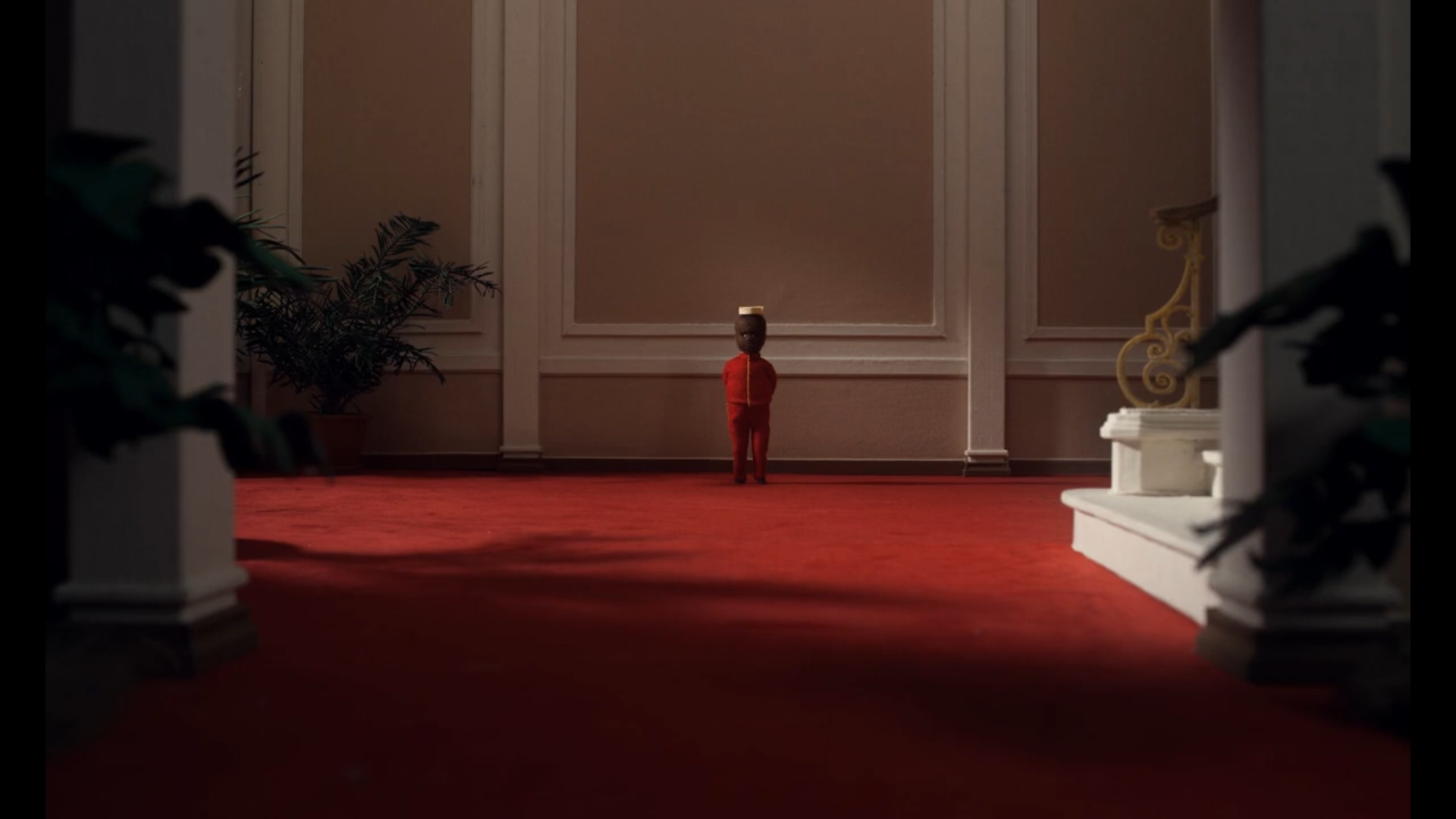
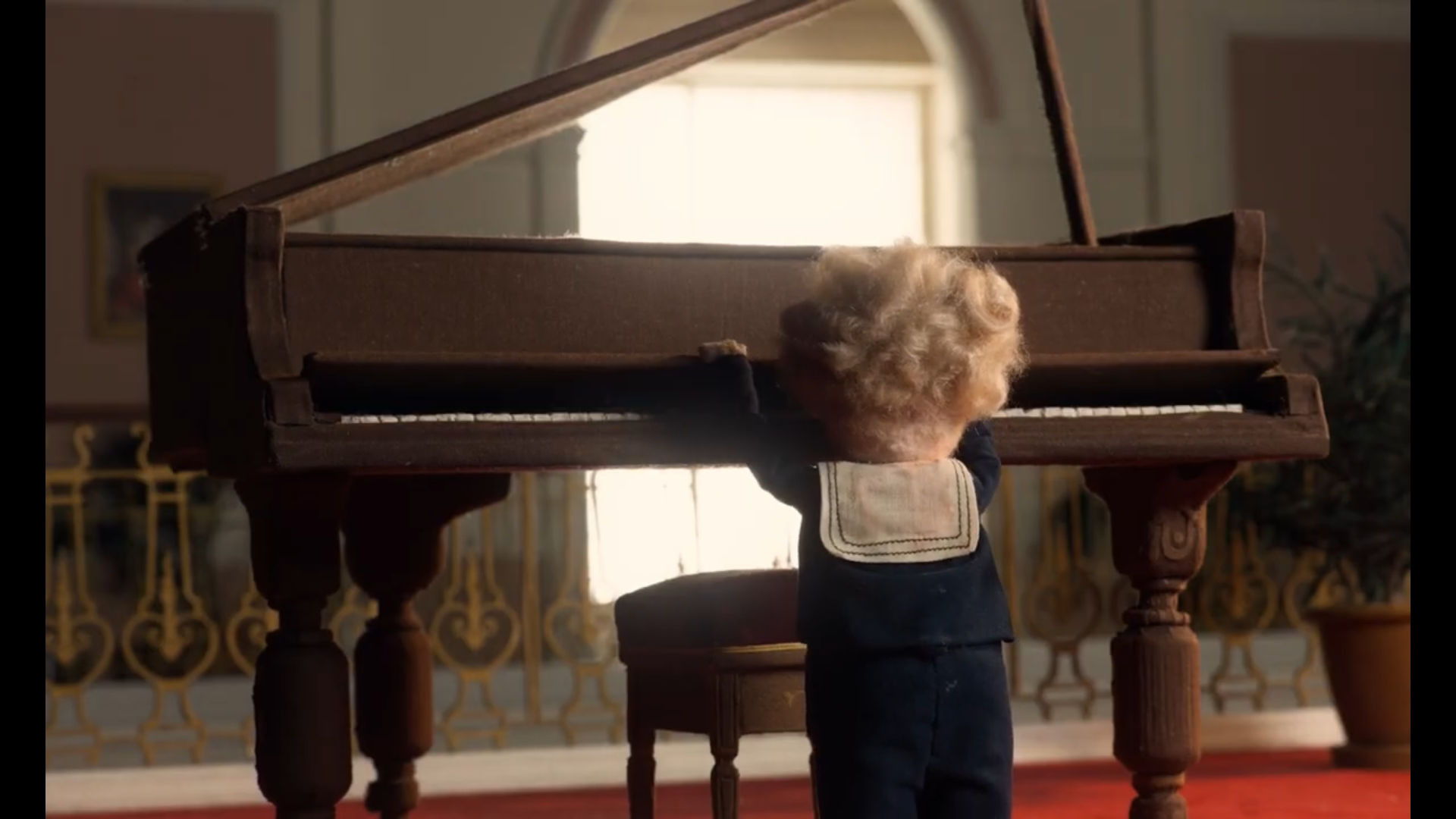
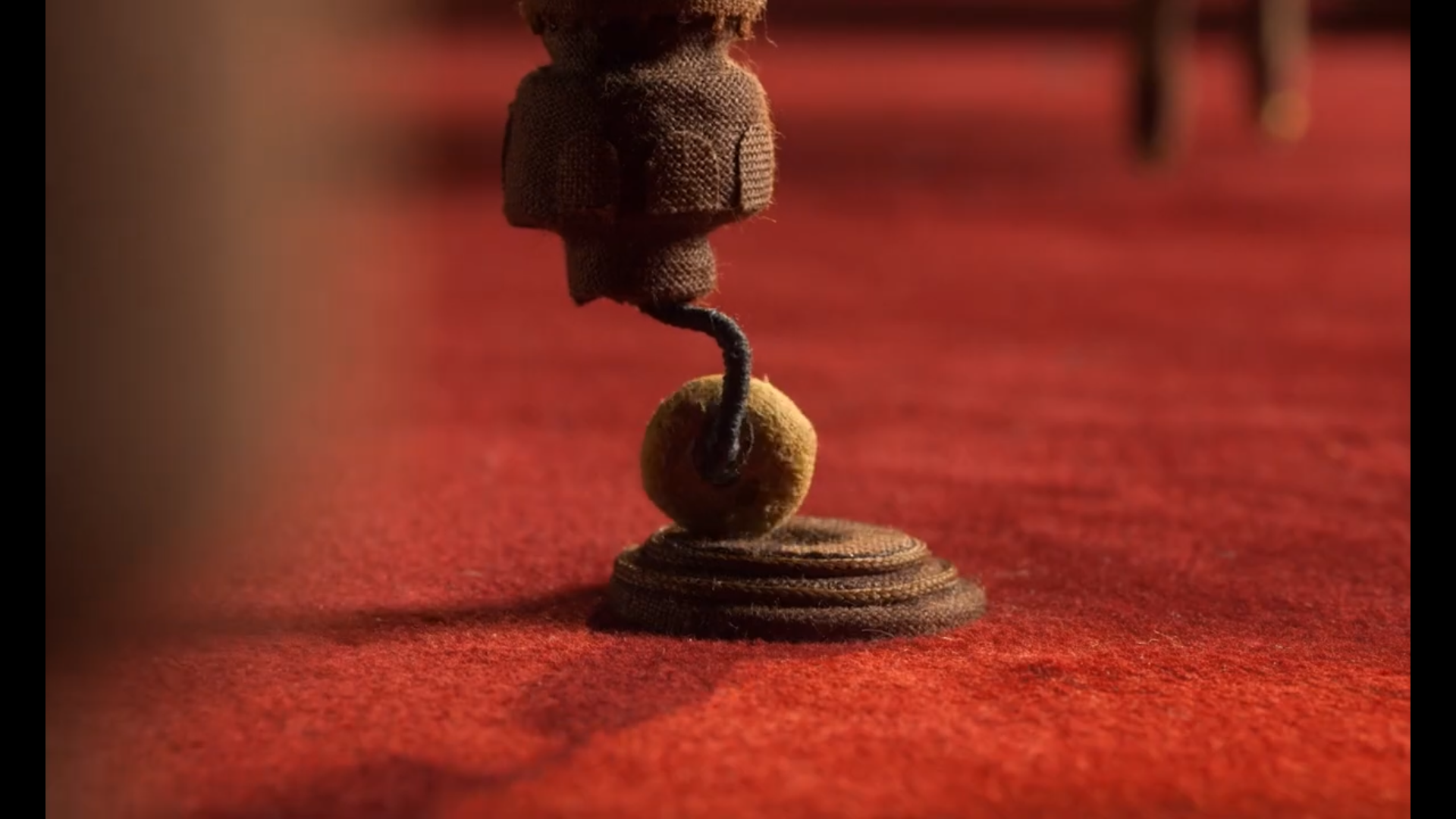
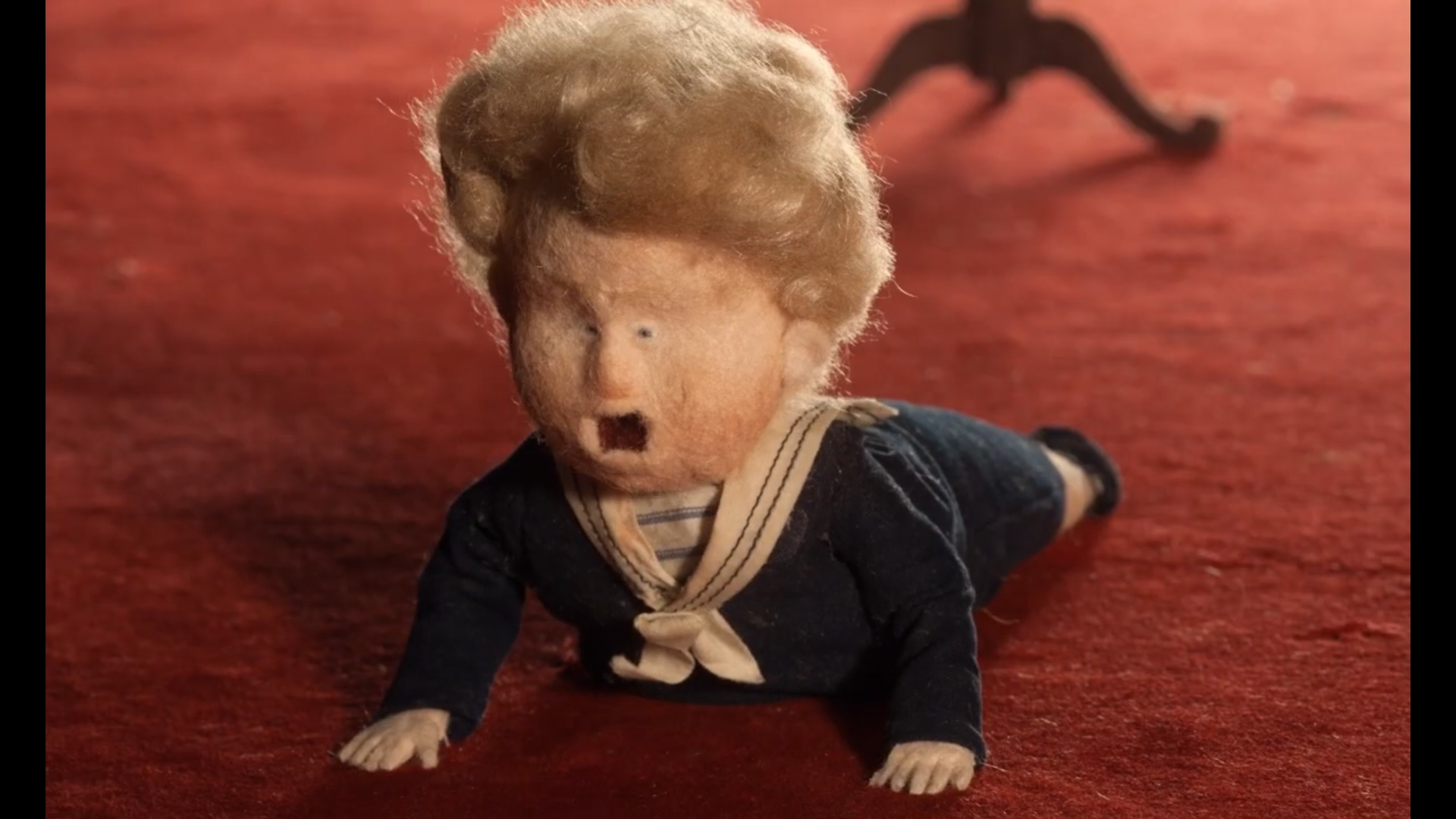
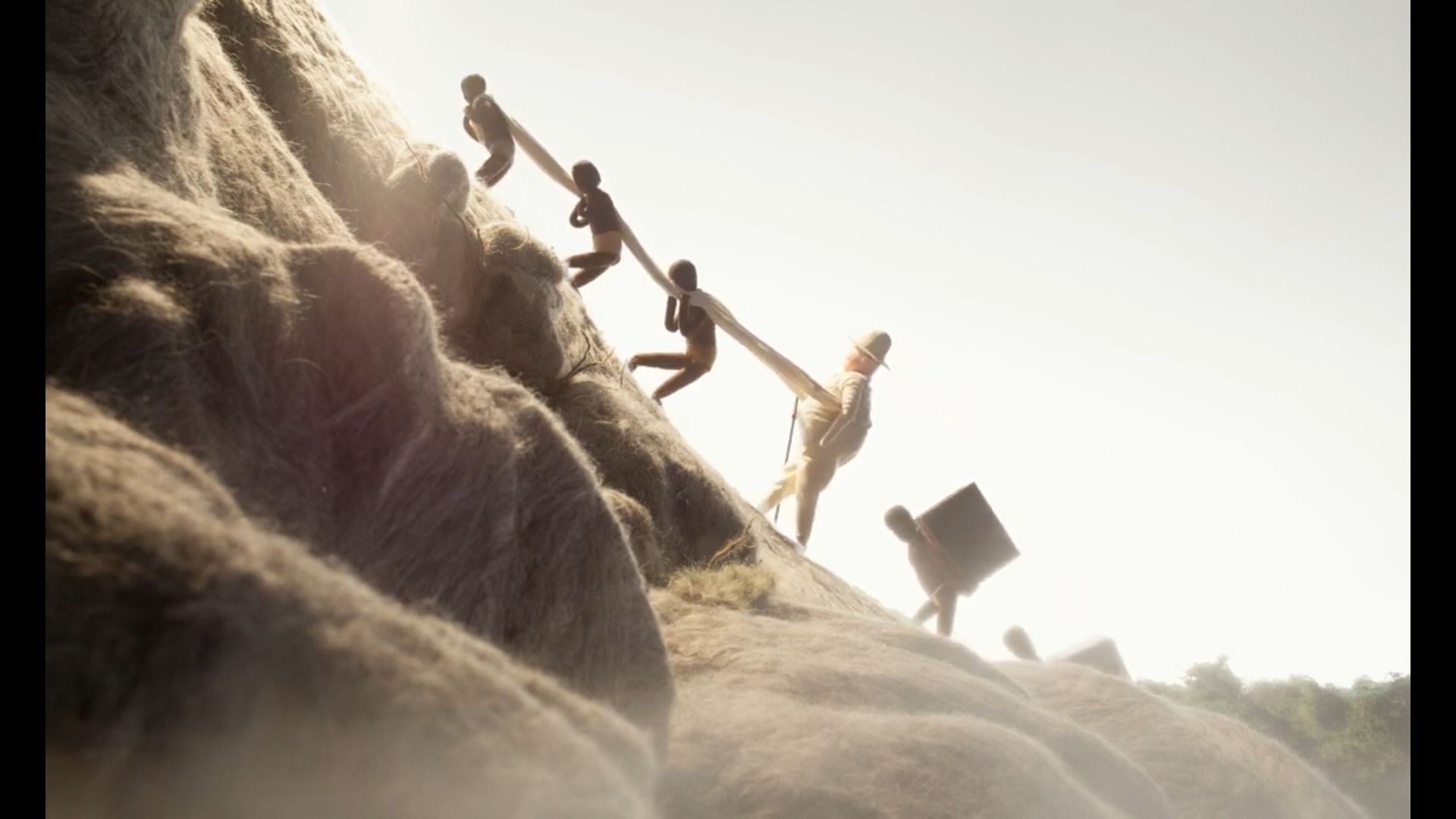
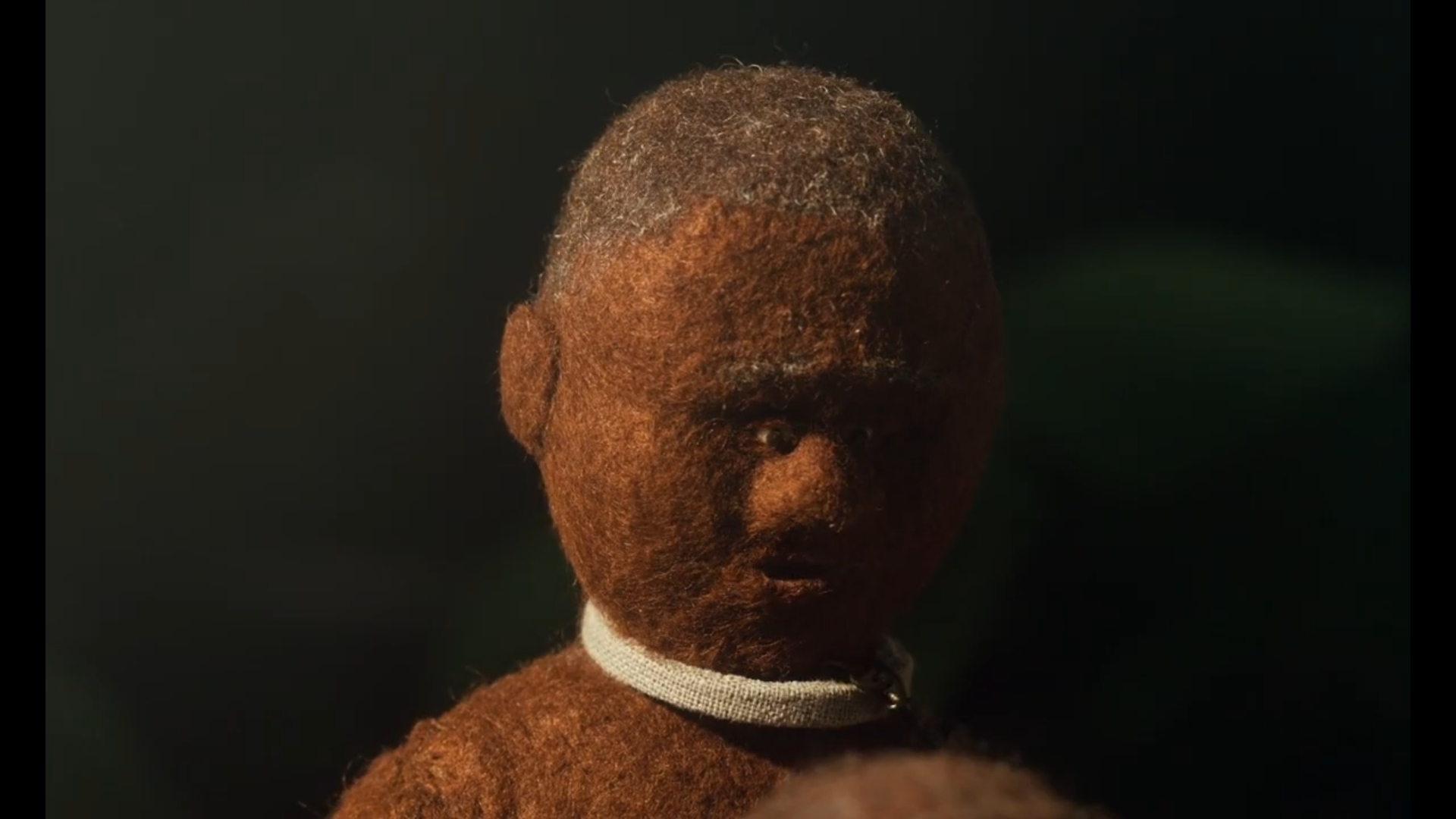
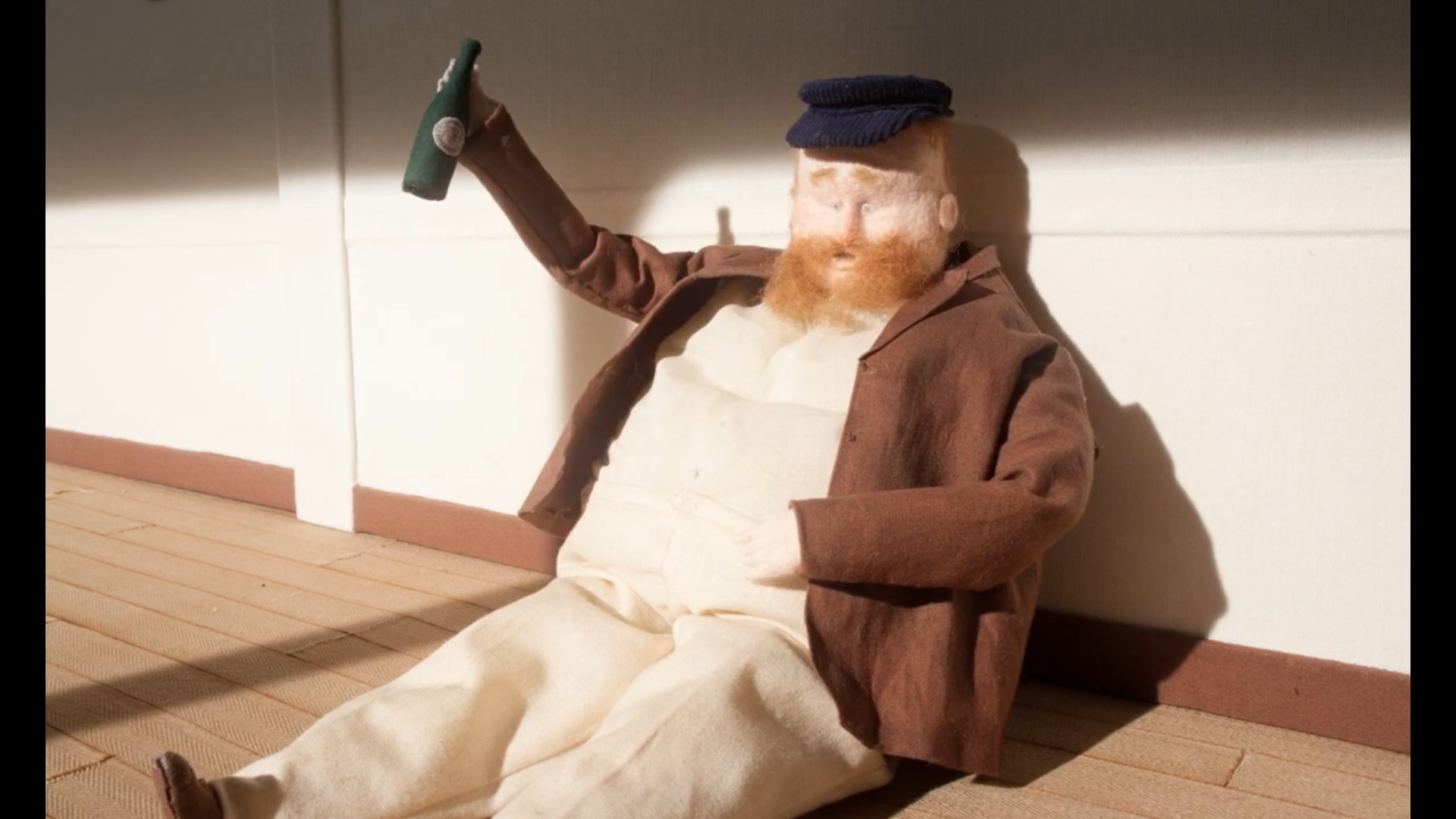
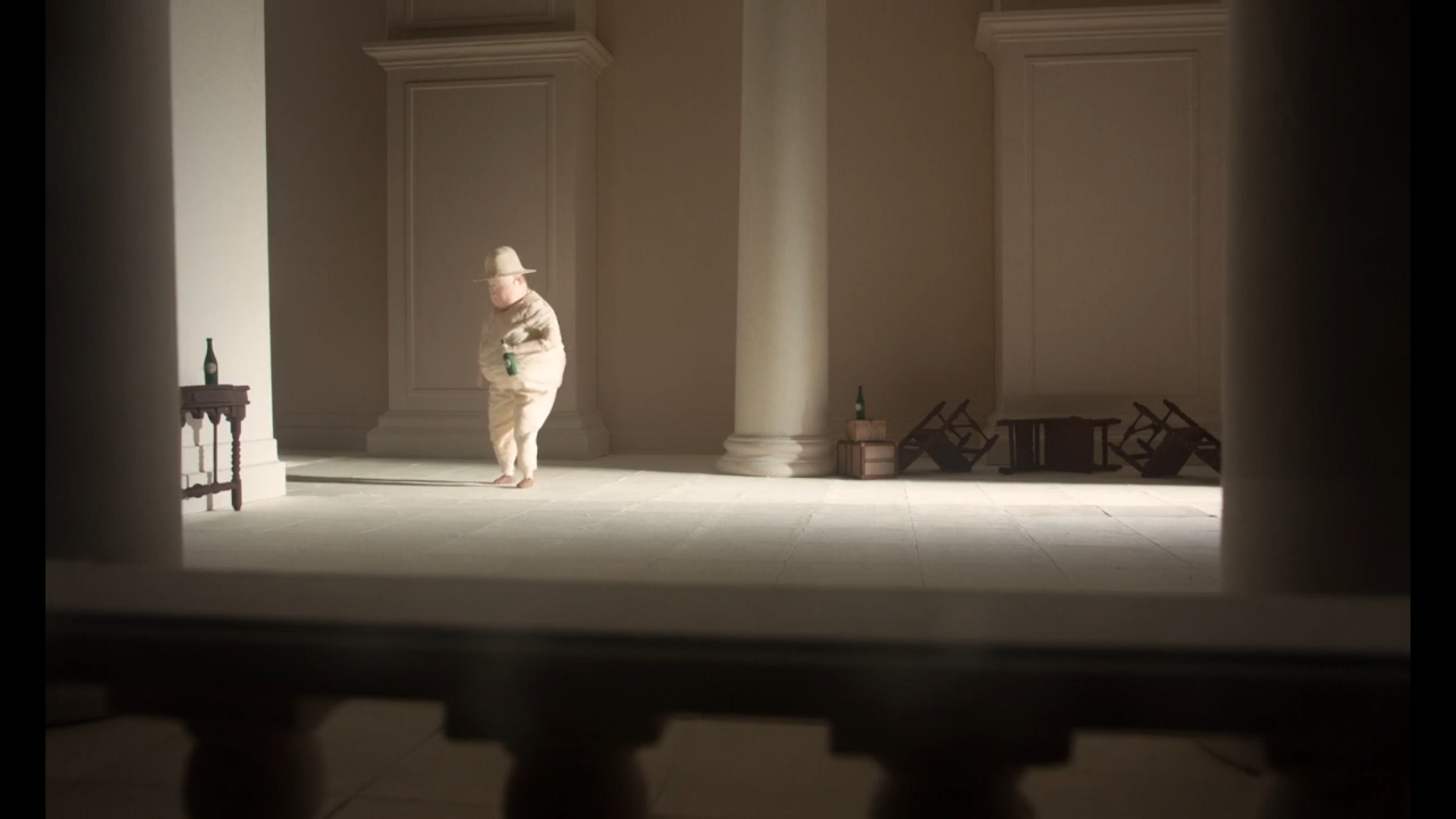
Screenshots from "This Magnificent Cake!"
One could argue the sense of alienation that the Congolese characters feel, portrayed by their dispensability, does accurately reflect the horrors subjected to them under Belgian colonization. However, on one hand, this representation of the colonial subjects as devoid of any revolutionary potential situates them in an over-indulgent fantasy where their assigned role is depressingly unchanging and stagnant, making for a piece of colonial critique that discounts the colonial subject’s ability for resistance. On the other hand, depicting the colonizer as childishly single-minded — evil for the sake of evil — also rids their colonial conquest of context and intention.
“Each generation must discover its mission, fulfill it or betray it, in relative opacity” - Frantz Fanon, The Wretched of the Earth
Congo gained full independence from Belgium in 1960, following over 50 years of political unrest. It still suffers from the impact and trauma of colonialism to this day. Meanwhile, in the northern part of the African continent, another war against colonialism was raging in Algeria between France and the Algerian National Liberation Front, which ultimately won the country its independence from French occupation in 1962.
Bastien Dubois’ 2020 short autobiographical documentary animation "Souvenir, Souvenir", is set against the backdrop of the eight-year Algerian War and finds the director digging deep into his family’s history to understand his grandfather’s involvement in one of the more well-documented colonial crimes in France’s long and bloody imperialist history.
Considering the sensitivity of the subject to the French public, "Souvenir, Souvenir" treads carefully, as it follows Dubois’ years-long conquest to extract any details from his grandfather about his time in Algeria. However, his grandfather only retells the same mundane anecdotes of going hunting with friends and organizing dance balls.
SOUVENIR SOUVENIR by Bastien DUBOIS. Memories of the Algerian War. from bastiendubois on Vimeo.
“Since my grandfather refused to talk, I decided to make a film in which I could imagine the worst,” Dubois announces at the beginning of his film. He is describing what ended up being "Souvenir, Souvenir’s" unfinished spiritual predecessor, a provocative and hyper-violent imagination of the war. After conducting more research, he had to reckon with the realization that what he had imagined was “the worst” was actually closer to reality than he thought.
What started out as a fictional reimagining (or rather imagining) then turned into the documentary that is "Souvenir, Souvenir", the actual production of the film and Dubois’ personal inquisition into his family’s history being the heart of its 15-minute runtime.
The film employs two different art styles to tell a layered story that jumps between two timelines. The fast-paced war sequences are portrayed in a rough cartoonish style, often showing the French troops in an almost animalistic zombie-like state during their violent excursions, an aesthetic fitting for the ferocity of those scenes. However, the majority of the film is set in the present, drawn in layered and subdued 2D sketches, which act as a beautiful visual aid to the thematic heaviness of Dubois’ journey.
“We were conscripts; we had no choice” is the only direct answer Dubois receives from his grandfather. As the film reaches its end, viewers get a glimpse of a looming confession from the grandfather, but not in the way they (or Dubois, possibly) would have hoped.
Over lunch, the elderly man’s lips finally unseal themselves. Talking to himself, he tearfully describes a weapon made by someone in his regiment, a tailor-made mace. The family brushes off the incident, and that’s the closest thing to an admission that Dubois would ever get.
The director is left to wrestle with this detail. His internal struggles are verbalized in scenes with his therapist, who helps him rationalize his family’s blissful disregard for his need for answers. “What you are facing with your grandparents is shame. Unspeakable shame, which is usually protected by the first generation and often questioned by your generation,” his therapist tells him in one of their sessions.
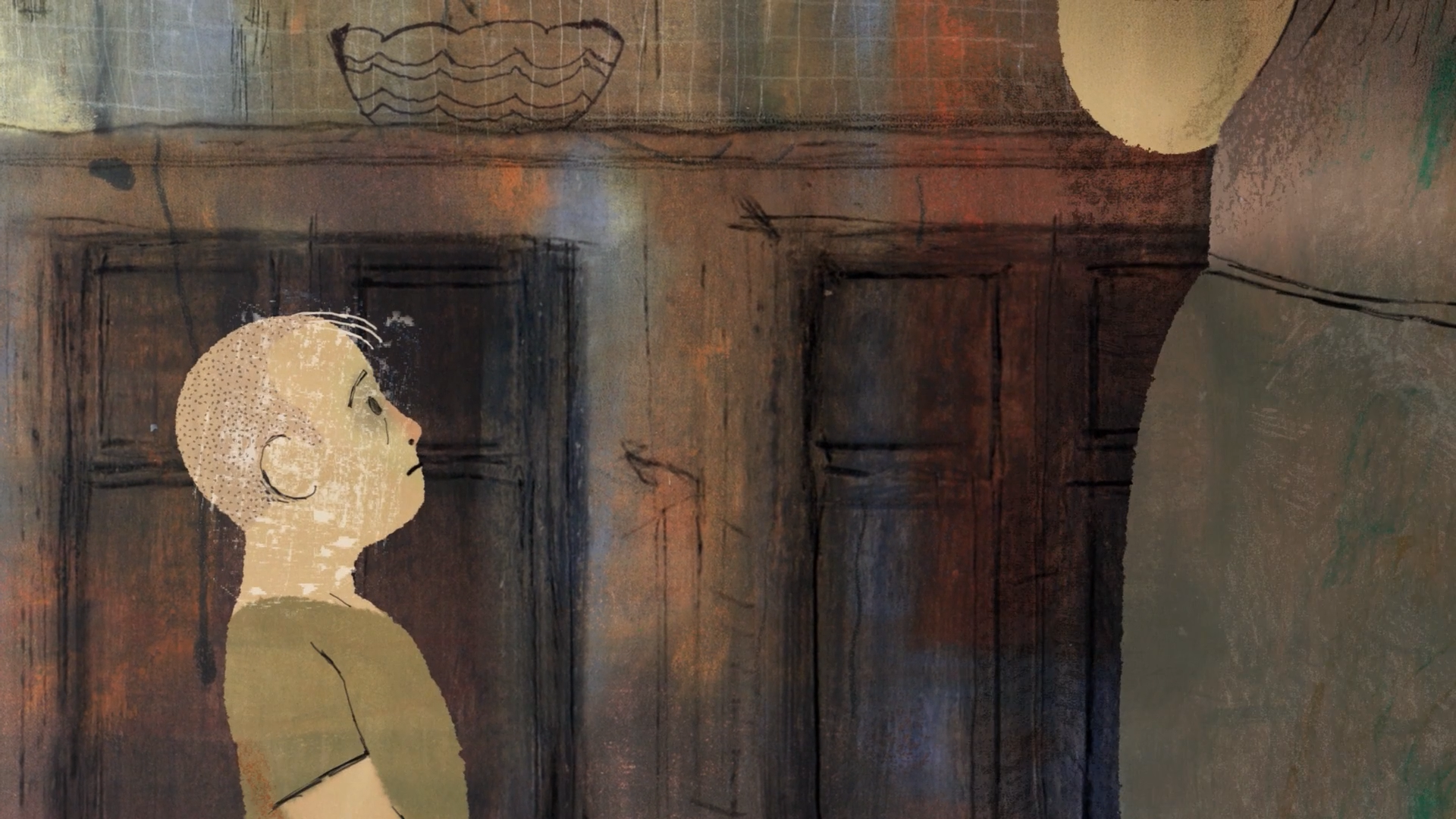
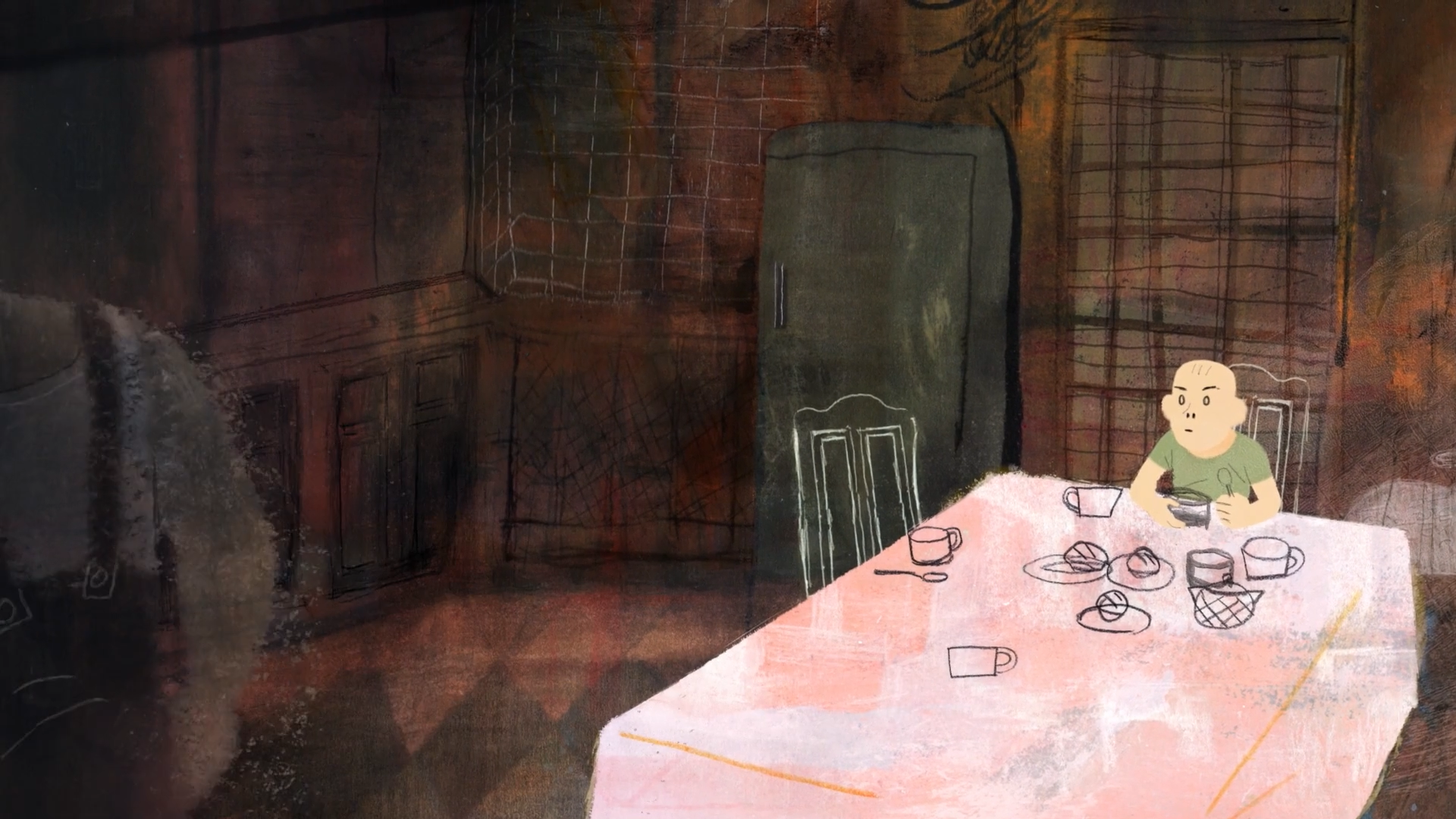
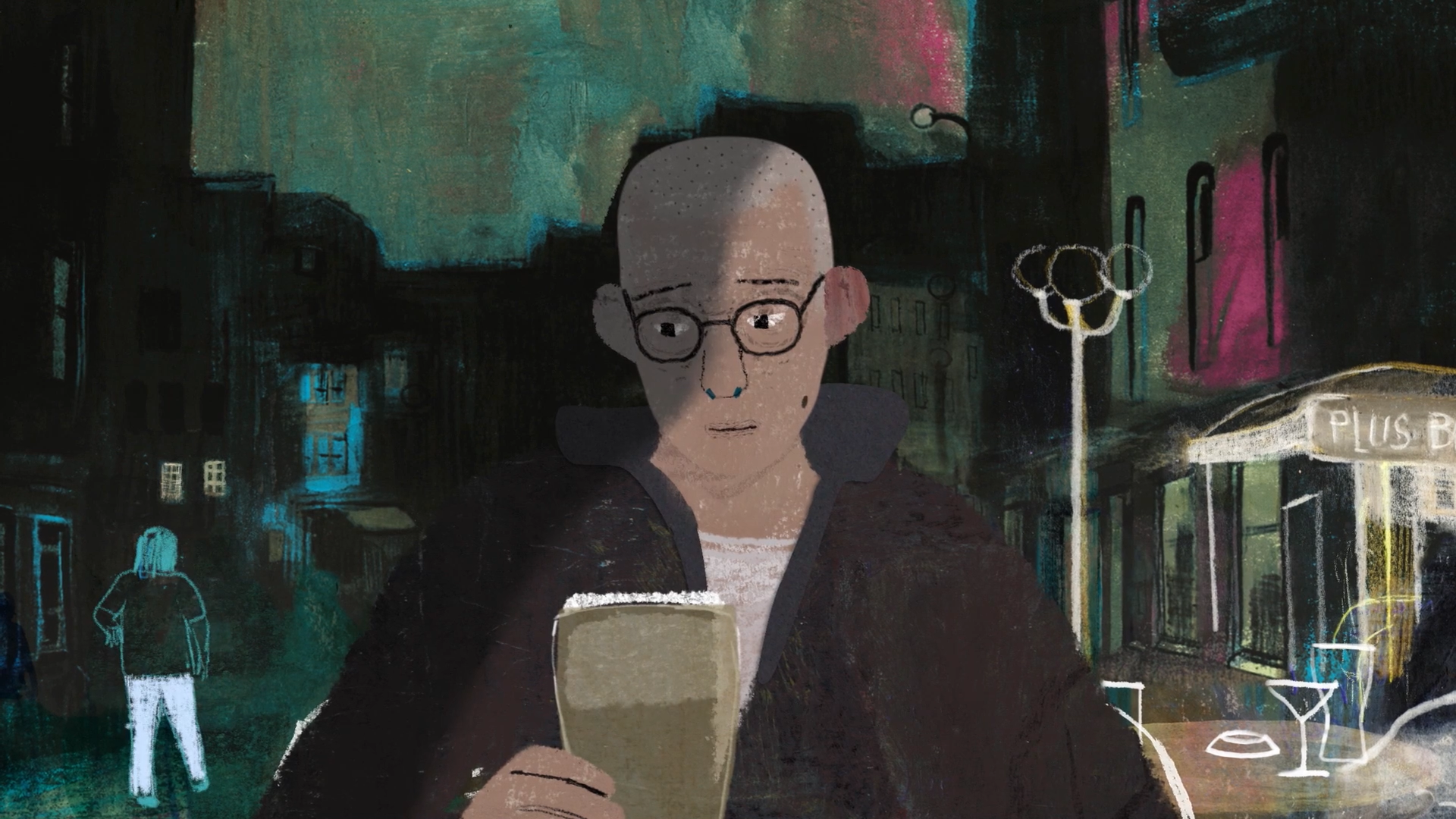
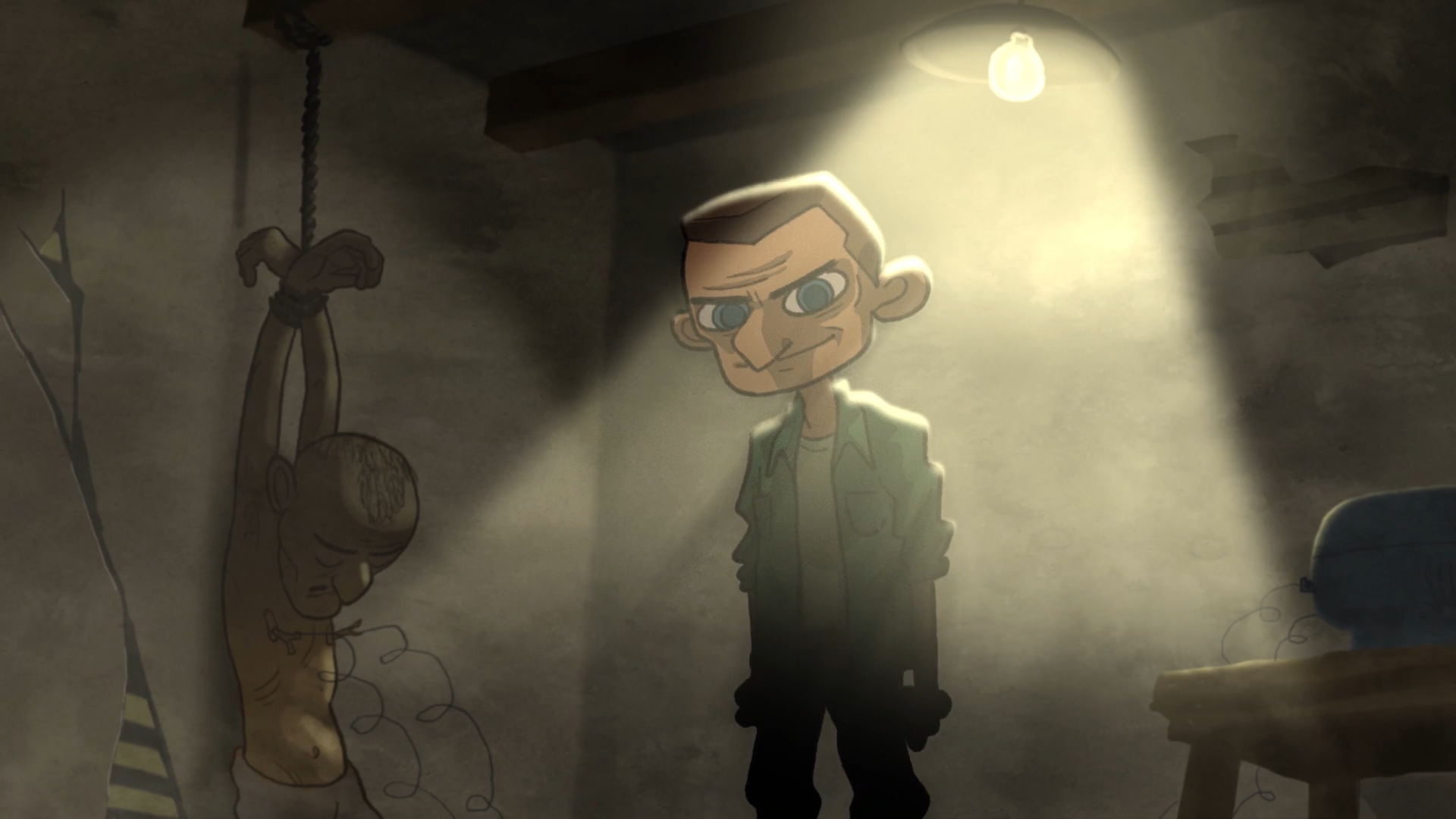
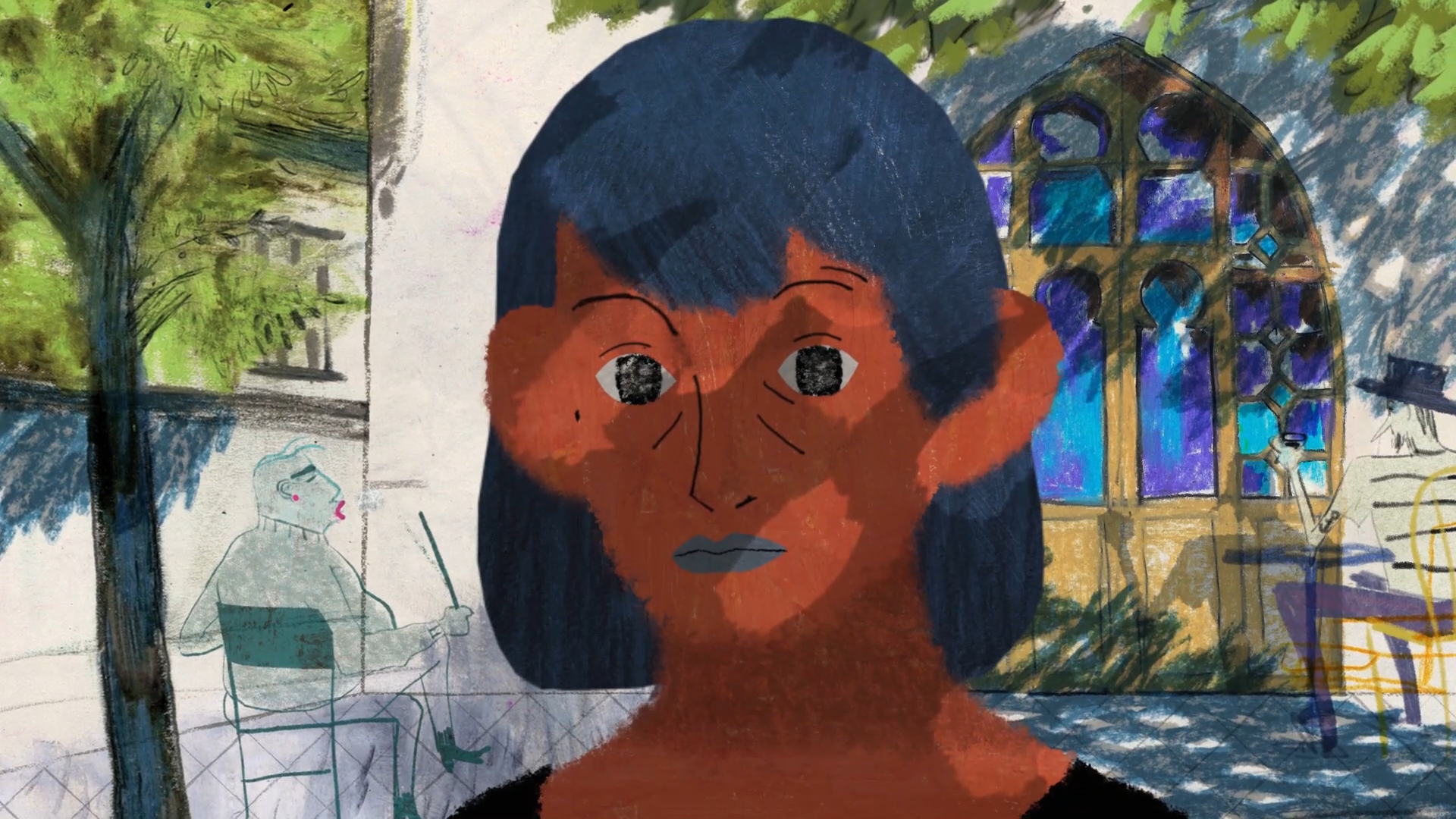
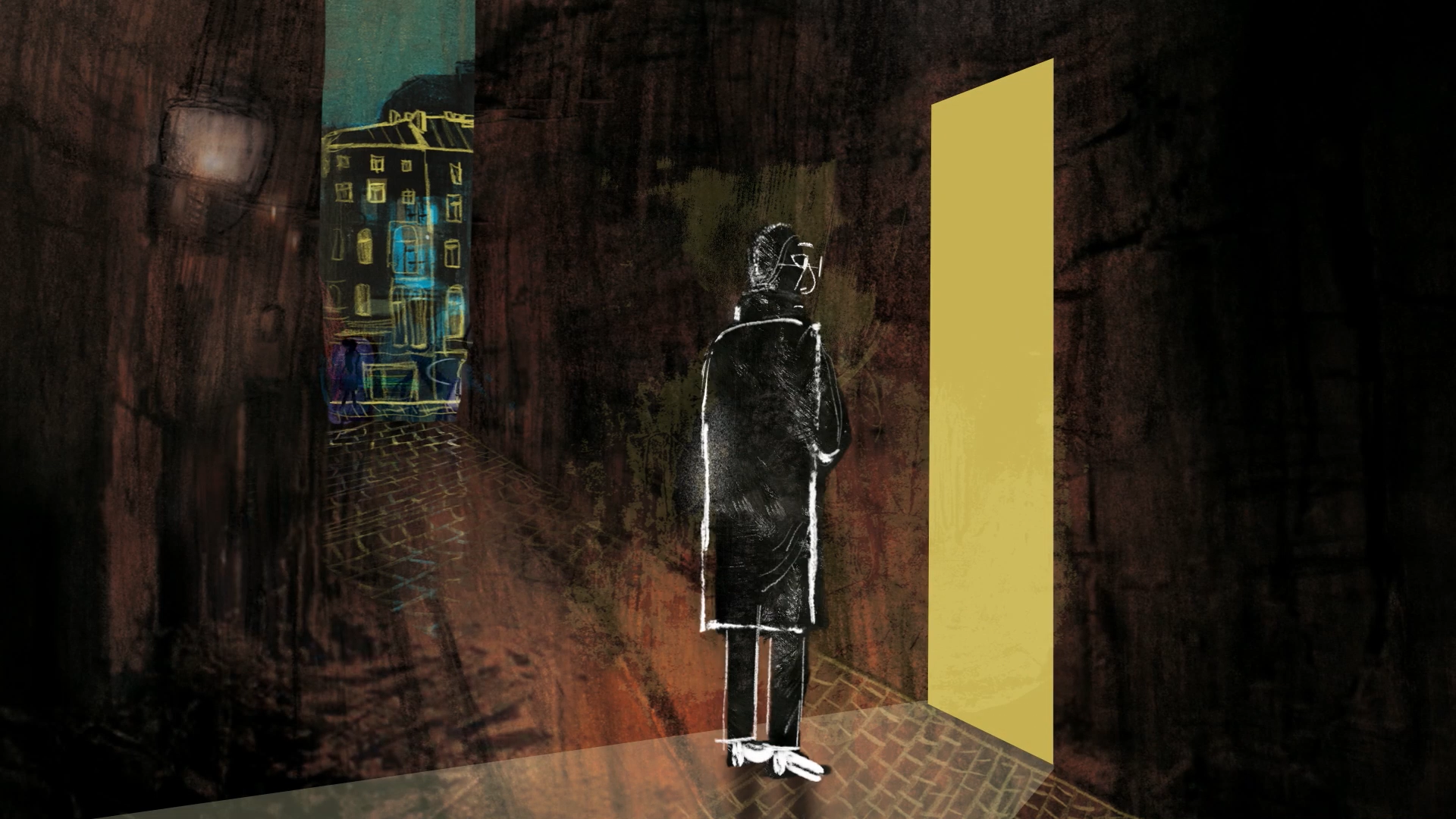
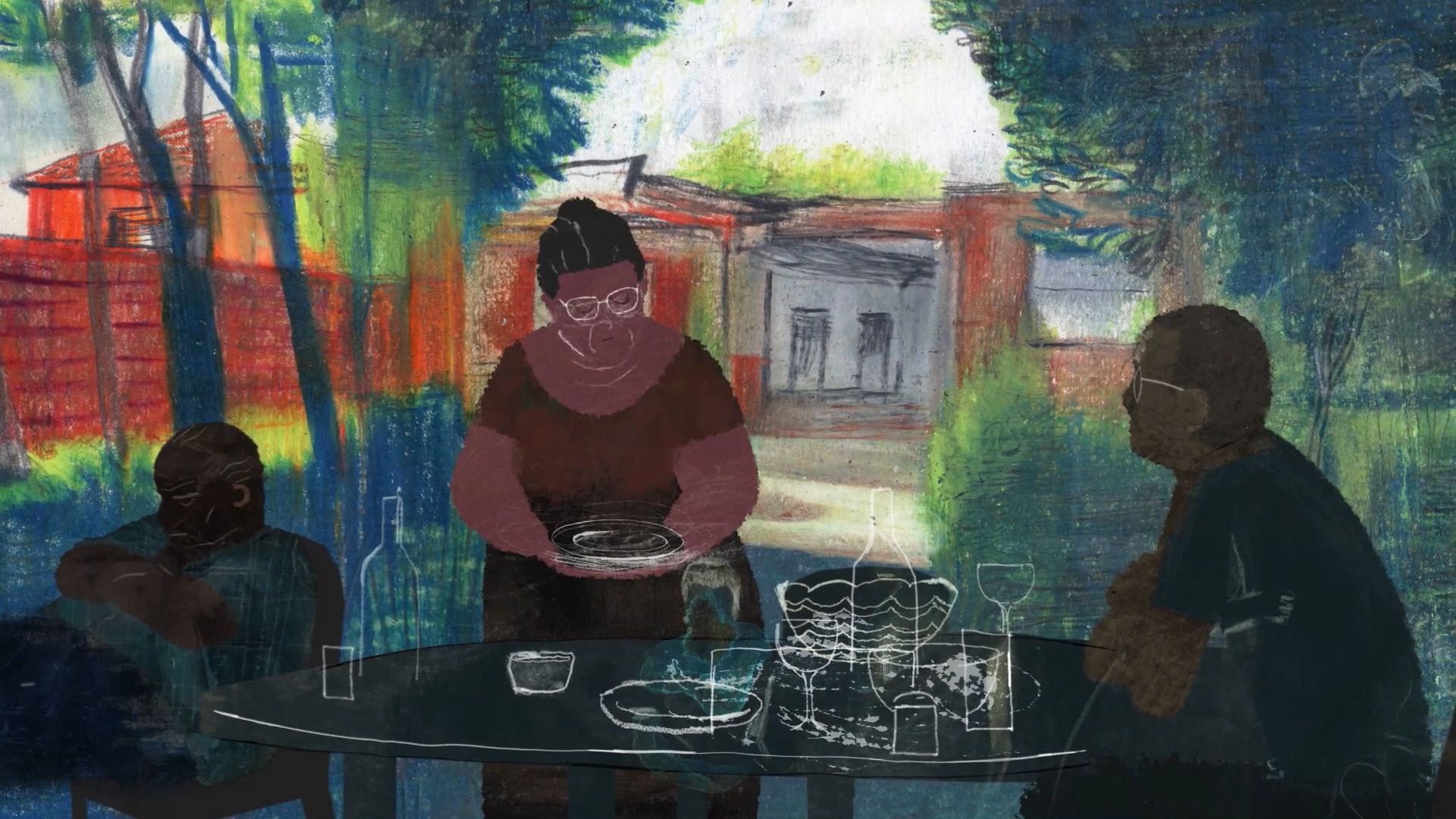
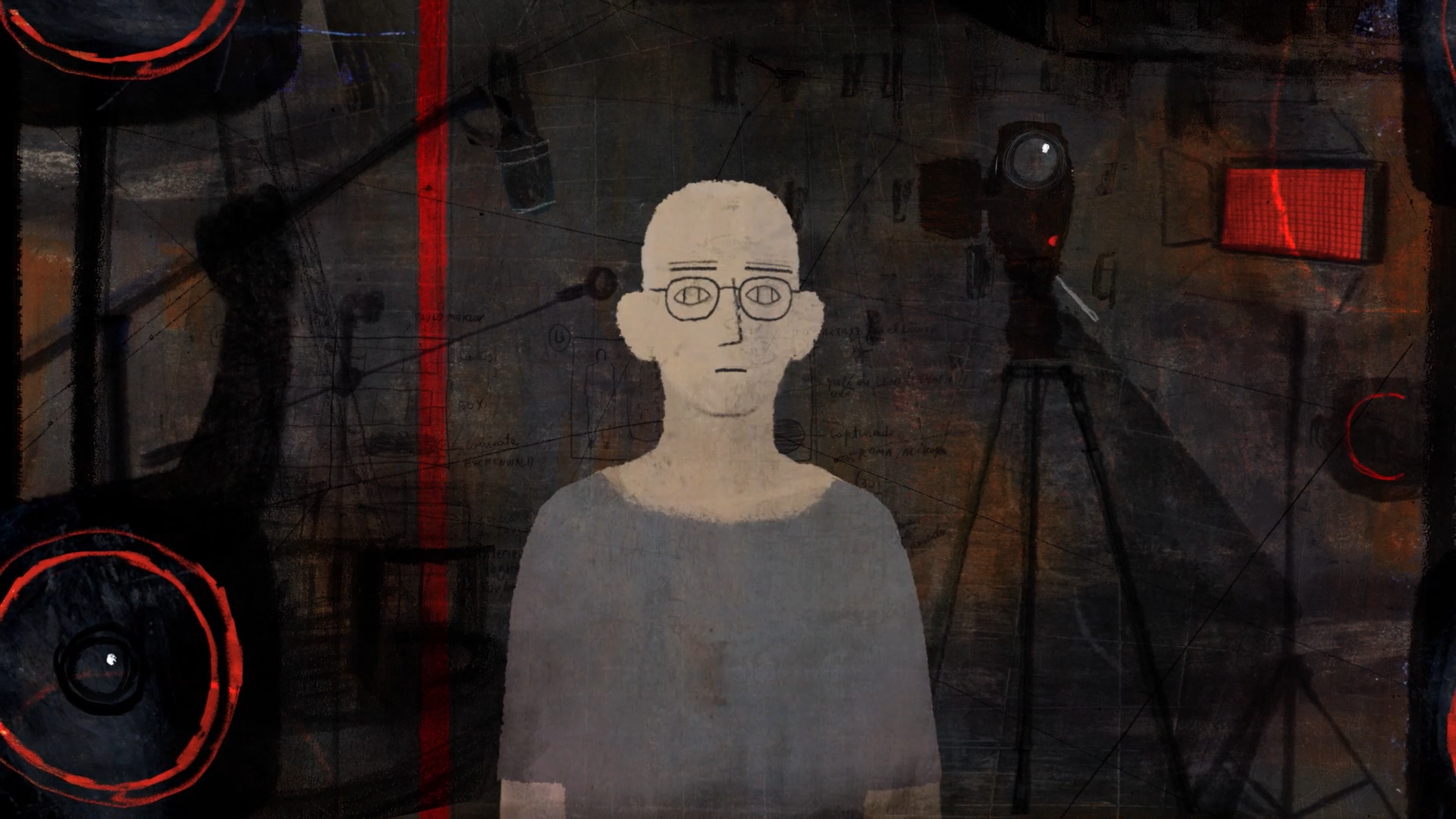
Screenshots from "Souvenir, Souvenir"
There is no closure in "Souvenir, Souvenir", but that is not one of its end goals.
The Western gaze falters in the face of tackling colonialism head-on, especially in the medium of animation, because it cannot imagine a reality that its people have not lived nor predict that assumed reality’s real-life consequences.
If anything, the film is a stark reminder, mostly directed toward a white audience, that colonialism is not a ghost of the past. Its aftermath still persists as a lived experience, more so for the people of the “Global South.” Dubois’ weariness about telling a “superficial story” is what drives him to turn his film into a documentary, a realization that he is only able to tell his story alone. This extreme self-awareness in Dubois’ approach is what gives "Souvenir, Souvenir" its edge, an unannounced recognition of the pitfalls of narrative appropriation, telling stories which are not yours to tell.
However, that in and of itself is one of the limitations of the Western gaze as it looks at itself, no matter how self-aware the approach may be.
“In the colonial context, the settler only ends his work of breaking in the native when the latter admits loudly and intelligibly the supremacy of the white man's values.” - Frantz Fanon, The Wretched of the Earth
The white man’s 'awakening' to his place and direct connection to colonialism, among other oppressive structures, often turns into a personal, individual problem — with no prompt for collective action. However, that could be too ambitious of a cause for something like a 15-minute documentary short to take on. At the same time, the other side of the coin reveals the absolute need for more voices and more funding and resources poured into stories of decolonization, as told by those who have suffered and continue to suffer from colonialism; a non-Western gaze, per se.
Reading into Western works like "This Magnificent Cake!" and "Souvenir, Souvenir" reveals the need for decolonial storytelling that stretches beyond the realms of satire, white guilt, or any mode of storytelling that is rooted in an attitude of compensation for the oppressed. The Western gaze falters in the face of tackling colonialism head-on, especially in the medium of animation, because it cannot imagine a reality that its people have not lived nor predict that assumed reality’s real-life consequences.
Sticking to telling the stories of the colonizer, no matter how factual or subversive, will not bear fruit unless, at their core, these films amplify or include the voices of the oppressed peoples whose suffering is the raison d'etre for their production.
Categories: Decolonizing Animation