The Parallel Reality of RexChouk: Saudi Arabia in Motion
In an interview with mt7rk, the Saudi Arabian multimedia artist RexChouk talks about his journey to fame and his recent deep dive into animation.
One finds themselves staring back at their own face during a video call with Saudi Arabian multimedia artist RexChouk, who keeps his identity anonymous (and his camera off).
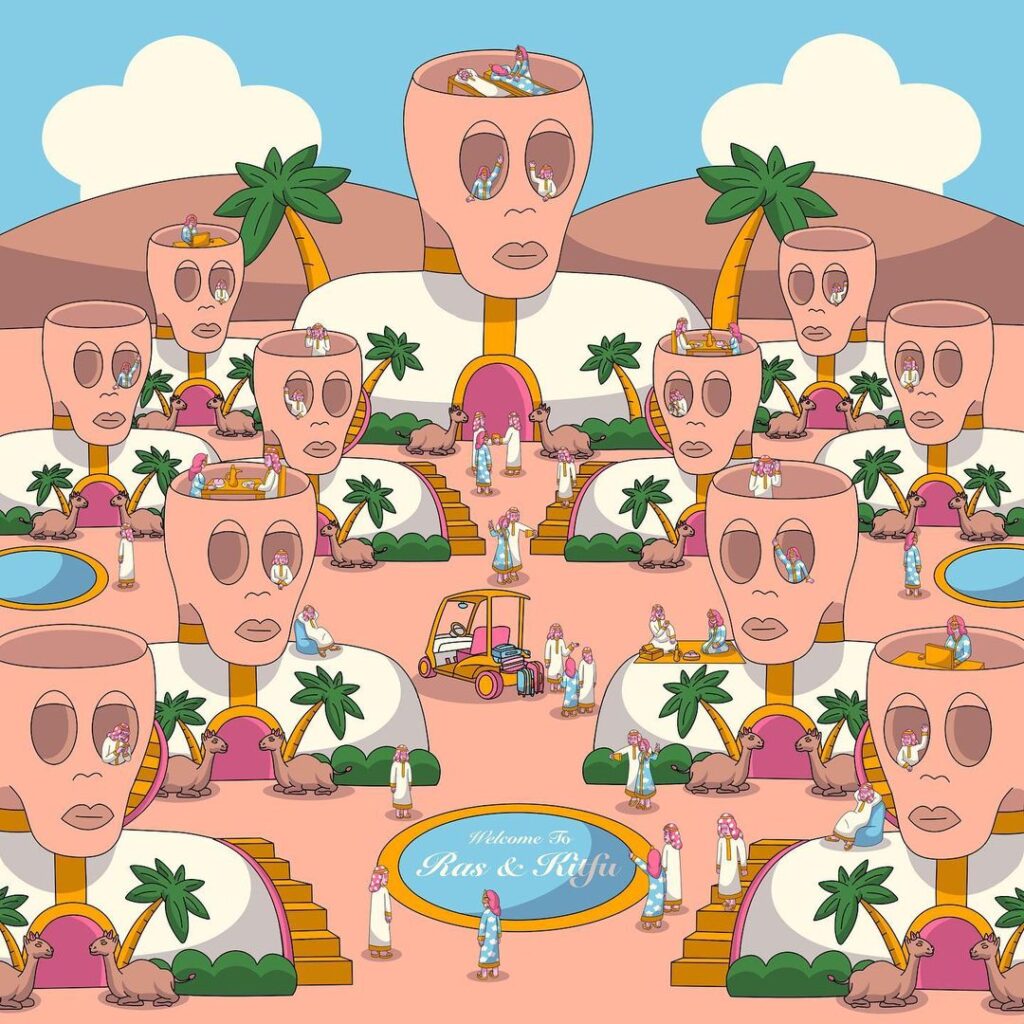
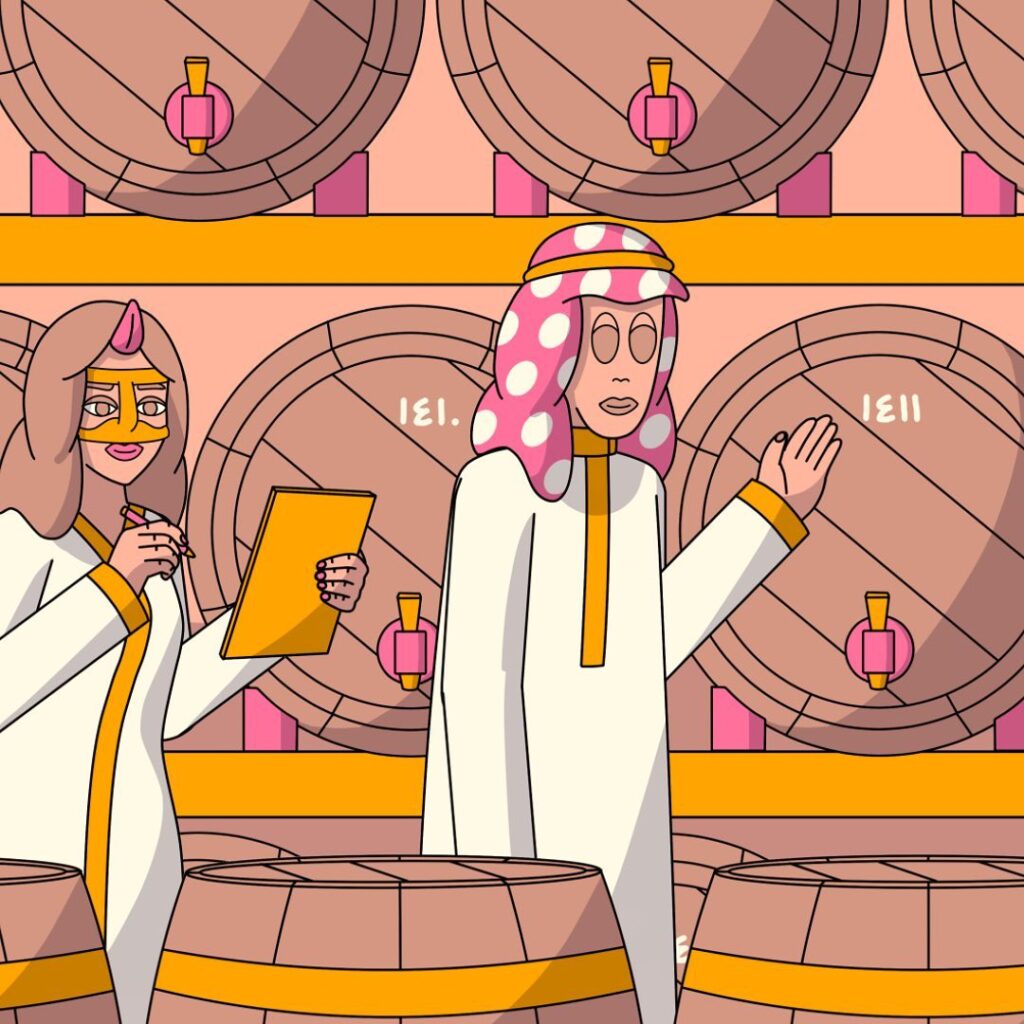
Rex, who moved back to Saudi Arabia from New York in 2017, has built a substantial online following in the past six years, taking the country by storm with his illustration and graffiti work. His zany art style and sharp commentary on Saudi culture quickly set him apart as an unconventional figure with a hysterical edge - a quick look at his Instagram is immediate proof of his peculiarity. His character, Rex or Choomy/Chouka, is always center stage, dressed in his white kandura and ghutra, and often thrown into absurd scenarios. In one scene, he is arrested for flirting with a female cop. In another, he visits the hair salon with his girlfriend to get his headwear washed. Coupled with pop culture references, which are subtly injected in a mise en scène of traditional Saudi imagery and iconography, and witty one-liner captions, Rex's works are striking not only in their vibrancy and oddly designed characters but also in their referentiality.
However, the artist's sensibilities are firmly anchored in his understanding of his home country, his work humorously sailing through the nuances of religion, gender, and culture in a famously conservative country. In his recent work, Rex has ventured into animated work, enlivening his explorations and characters with movement, which he says has helped him broaden his neverending world-building.
In an interview with mt7rk, RexChouk maps out his journey, talking about his work and inspirations, his rise to popularity, creating for social media, creativity in the digital age, the "new" Saudi, and, most importantly, his recent deep dive into animation.
The following is an edited transcript of the interview:
You're originally an illustrator. How did you get into the field, and what were some of your inspirations when you started?
I'm trying to tell stories about what's around me. In a way, my work is a journal; it's not really about my personal experiences or anything that's happening to me, but instead, what's happening around me.
REXCHOUK
People who know me today think I started as an illustrator, but I think of myself as an artist and creator. When I first started, I had so many ideas but never knew how to get them out. The first "creative" expression was clothing. As time went by, I started delving into photography, which I thought was a way to continue growing that interest. That didn't last very long, though. Soon after, I started painting on canvas, which was my first "real experience." I was inspired by an exhibition for Keith Haring that I visited at the time. So, I did that from 2014 to 2017, when I moved back to Saudi Arabia from New York.
And how did that work shift from paint on canvas to digital art on social media?
In New York, I had my own studio and heavily relied on nearby art shops and whatever supplies they had to produce my work. So, when I moved back to Saudi, a lot of these pillars were not there. I no longer had my studio; there were no art shops near me. Also, the inspiration factor, arguably the most important, was not the same. My tolerance for staying in a studio for 9 hours was not there anymore. When I first started, I wasn't posting anything on social media. When I moved back to Saudi, I didn't even have a social media page. But, I had this obvious realization that digital work looks better on digital devices and that it could attract more attention and help me grow. Also, most importantly for me at the time, it cost less to create [digital art] than to create original artwork on canvas. You just have to make a one-time investment of buying an iPad, and then you could take it from there. So, in a way, that was my gateway into the digital world and social media.
That obviously was a big shift. How did you navigate all these changes?
A big thing for me when I was just starting was that I did not want to compromise the prices of my original work. So even though I did have price points confirmed through gallery purchases, I was coming to Saudi at a time when there was no collector base where people would be willing to pay the amount I was expecting for my originals. So, part of the reason I delved into the digital realm was that I was planning on producing some digital prints, and I was offering them at 90% less than my original work, and the medium allowed me to sell my artwork to more than one interested person. I studied finance and entrepreneurship, so that background came in handy when strategizing and building something out of my work into a full-time job. I was forced to leave my personal preferences behind and do what made the most sense to me.
You draw a lot of inspiration from Saudi culture and imagery while injecting your own sensibilities and bringing in references from Western pop and consumer culture. How did you land on this approach?
A big part of my art is self-realization and self-awareness, trying to raise points for discussion without trying to sway opinion in any direction. So, if you think about it, my work is pretty much that of a globalized citizen who happens to live in and understand this region of the world. That's why many non-Arabs living in the Arab world relate to my work, as do Arabs living here. Saudi aesthetics inspires my work, and honestly, what a time to do that and be here! My work aligns more with my personal experiences and those around me. I'm not really trying to marry two cultures together. It's more like, okay, these things happen here despite some widespread stereotypes about the country that make it seem like these things are foreign or Western. A lot of the things I draw inspiration from are things that happen around the corner from where I live, and it's not a way to comment on the open-mindedness of the people here or say, "Hey, come experience this crazy lifestyle." I'm trying to tell stories about what's around me. In a way, my work is a journal; it's not really about my personal experiences or anything that's happening to me, but instead, what's happening around me.
your work could sometimes be considered "edgy" or "controversial" because you tackle these stereotypes. What considerations do you keep in mind when doing this kind of work?
I like to leave anything I'm portraying with an open ending; open to interpretation. I don't like to create artworks that represent one side of the story, even if visually they do. Sometimes, the caption could give you a different perspective; sometimes, a male could look at an artwork and see it differently than a female. Or even if it's someone from Saudi looking at it and interpreting it differently. What I like to keep in mind is that my opinion is irrelevant, and what I'm trying to share here is not my opinion. I'm just highlighting events. Also, I wouldn't say I like to offend; that's never my intention.
And that's the thing about putting your work out on social media: It's examined under a microscope. So it's interesting how you're able to walk that line. Looking more into your recent work, social media, and collaborations with Lacoste and Cadillac, your shift into animation seems pretty intentional. Why are you making that move, and why animation in particular?
When I was doing original artwork, it quickly became apparent that when I displayed one canvas alone versus displaying 20, it immediately made a different impression. The way my art is based on my character plays a significant role in this. Seeing the character moving in various settings with added context gives the viewer a greater sense of relatability to the work and the character. You're able to provide a backstory and thread the different frames together. And then, when I moved on to digital illustration, I started moving into four-frame artwork because I wanted to create a sense of continuity. The stories I wanted to tell were a bit more layered, so after doing that for a while, I wanted to see some movement. That inspired me to work on these small clips, and it took me some time to find and build the right team and operate as a studio. It's a lot of trial and error, and many of those trials are posted on my page. I see my character as someone who is, as I have it in my bio, based on a parallel reality, so I wanted to add more life to the work and share more than just still images. It's very exciting to think of the possibilities or how this could evolve, so this decision to delve into animation is me continuing to build the world for this character and tell different stories. Hopefully, with time, I can include more elements in these animations or possibly tell longer stories; it's the next step in the evolution.
As you described, there is so much manpower that goes into creating animated work. Could you tell us more about how your studio came about? Take us through this trial-and-error process.
The way it came together is similar to my approach to everything when it comes to my work. I'm not a graphic designer. So, the moment I bought an iPad, I downloaded all the Adobe apps and somehow fell into Adobe Draw. I'm honestly not even good at YouTubing stuff. I literally navigated the whole thing alone, step by step. So, when I first got into digital illustration, my files were horrible for printing companies. They were unorganized; everything was in one layer. It was a nightmare. When I first wanted to start making prints, I found a production house here and built a relationship. Moving on to my graffiti, I work with one of my best friends who's also an artist, and we came up with this formula where they lead production, and I lead creative. Taking a similar approach, and maybe it's my background in business and strategy, I wanted everything to be cost-effective but also high quality. As time went by, I tried to work with a few animators and eventually found someone I could trust, and that relationship eventually grew from working together to operating as a studio. I now have the support I need in terms of production capacity and working with big brands. It's the confidence of operating as a creator without being shy to establish an operation behind the work to handle big capacity. To me, the work is the most important thing. So, it's a team effort across the board to make it happen.
Speaking of brand collaborations, why do you think these big brands are gravitating, in the context of social media, towards animation-oriented projects and animation in general as a medium to explore?
Honestly, I don't think animation always works. When I first started out, brands would come to me and tell me that they loved my work but that I needed to boost my number of followers from 5,000 to 20,000. So I was like, okay, I never thought numbers were so important…I still don't. So, in a way, I think the main factor is the audience. An idea could be created based on what the "influencer" wants - I don't think of myself as an influencer, but I guess brands look at me as one, as someone unique with a following. From a creative standpoint here in Saudi, my audience is definitely the people who enjoy my work, and they are a unique mix. But it's a very clear target market, and brands see that. When I started out and was doing the same thing repeatedly, I was not getting the same traction as I am now. I guess this is the kind of work that people in the region want to see right now. The second determining factor is creativity. For me, the opportunity to represent the "new" Saudi is really exciting. Everything that's happening right now in Saudi in terms of newness and edginess, and Saudi's global approach when it comes to promoting youth and culture, I think that is very prominent in my work… and it happened by chance. Of course, it's a matter of production and adaptability; I think brands understand that now. The [medium of animation] is appealing to the audience; it's fresh, and that's why I think this shift is happening. Also, people are always on social media, so having those platforms be your main channels makes sense.
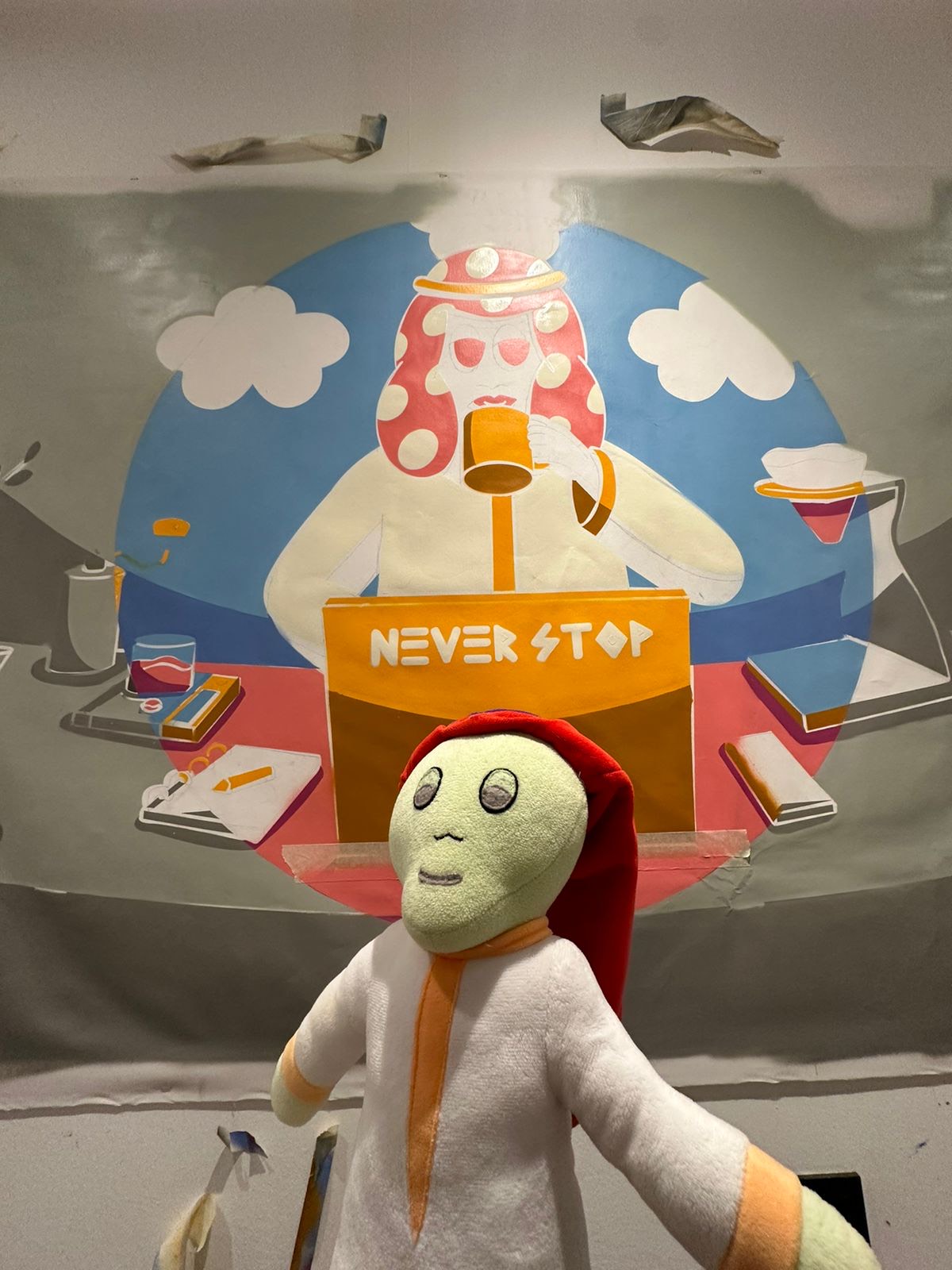
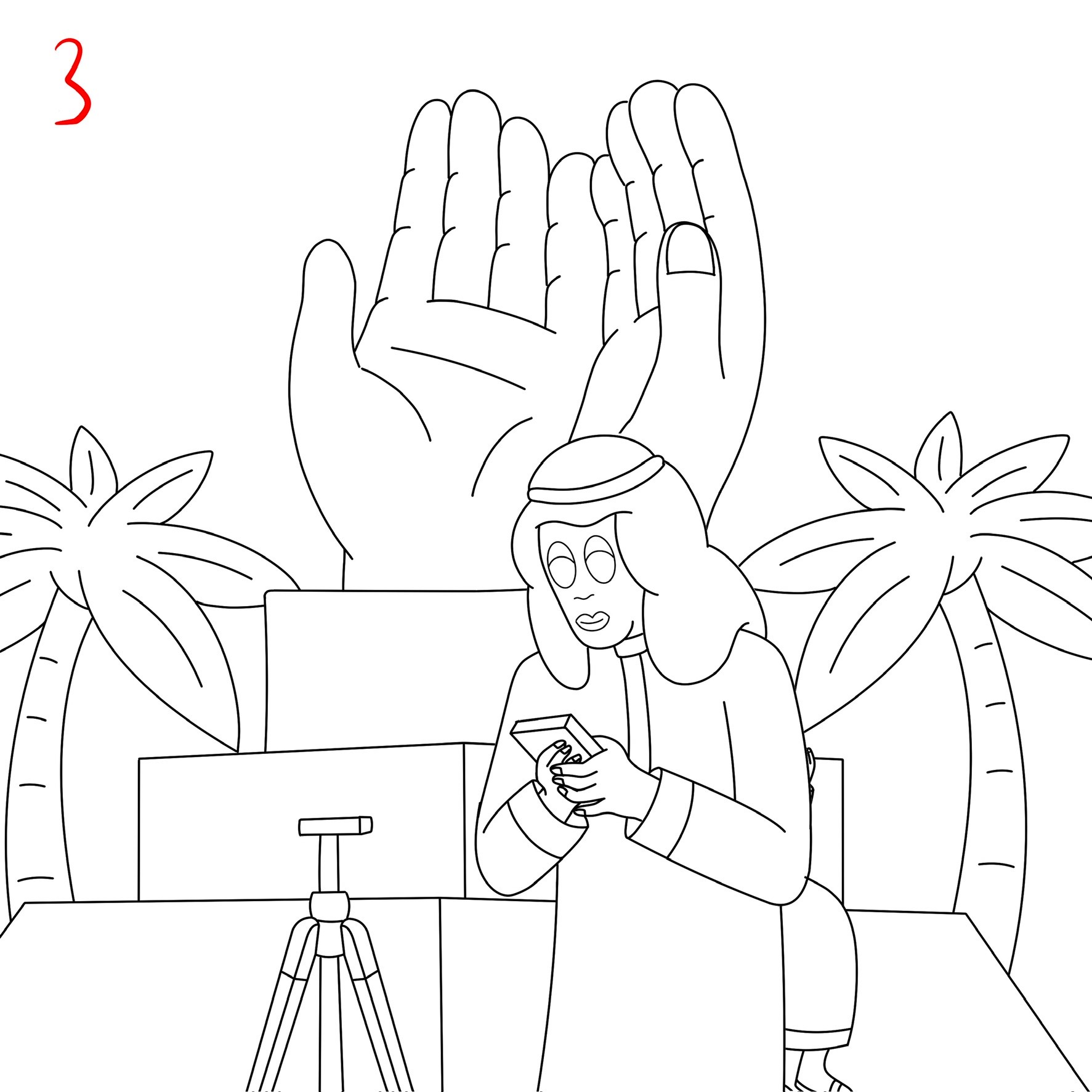
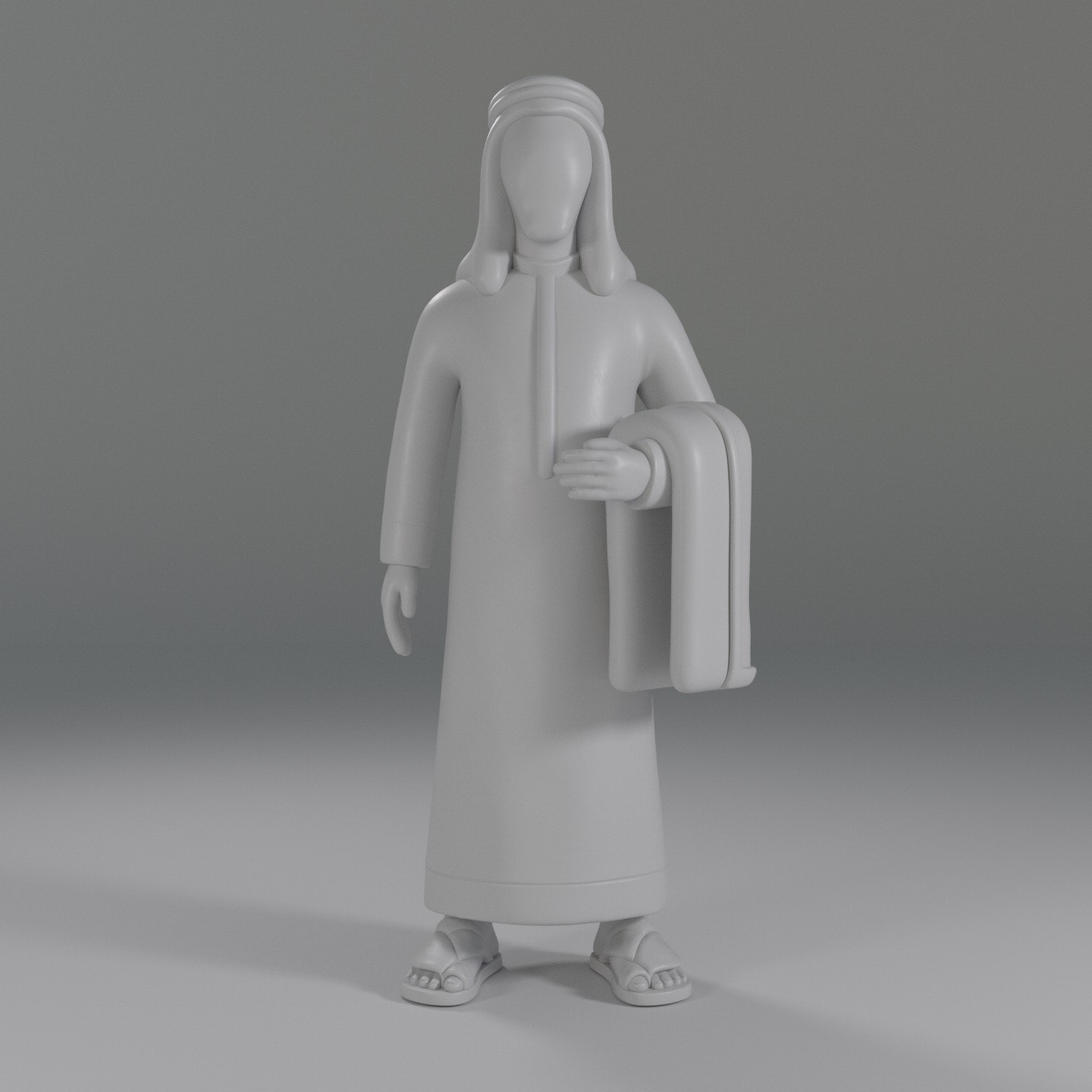
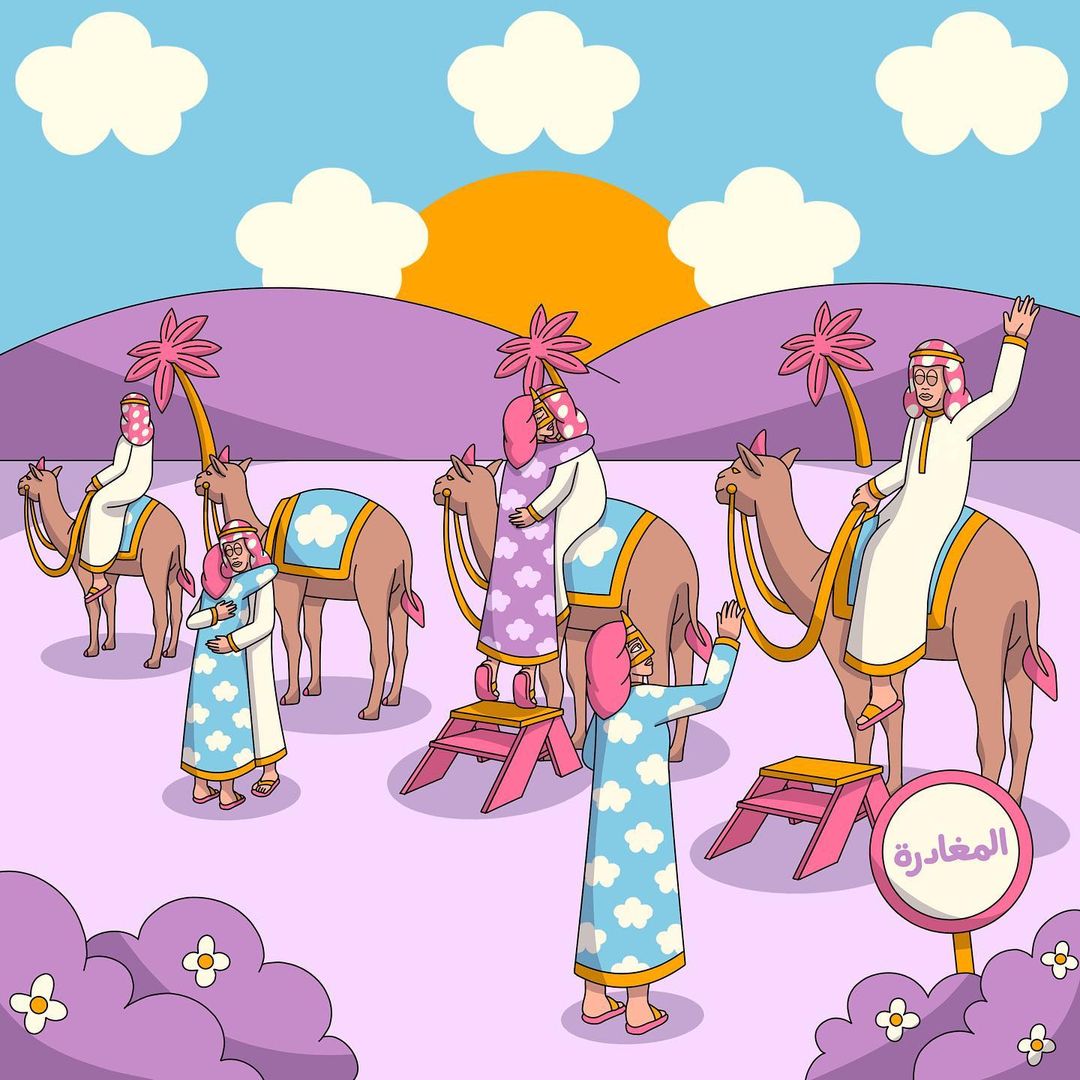
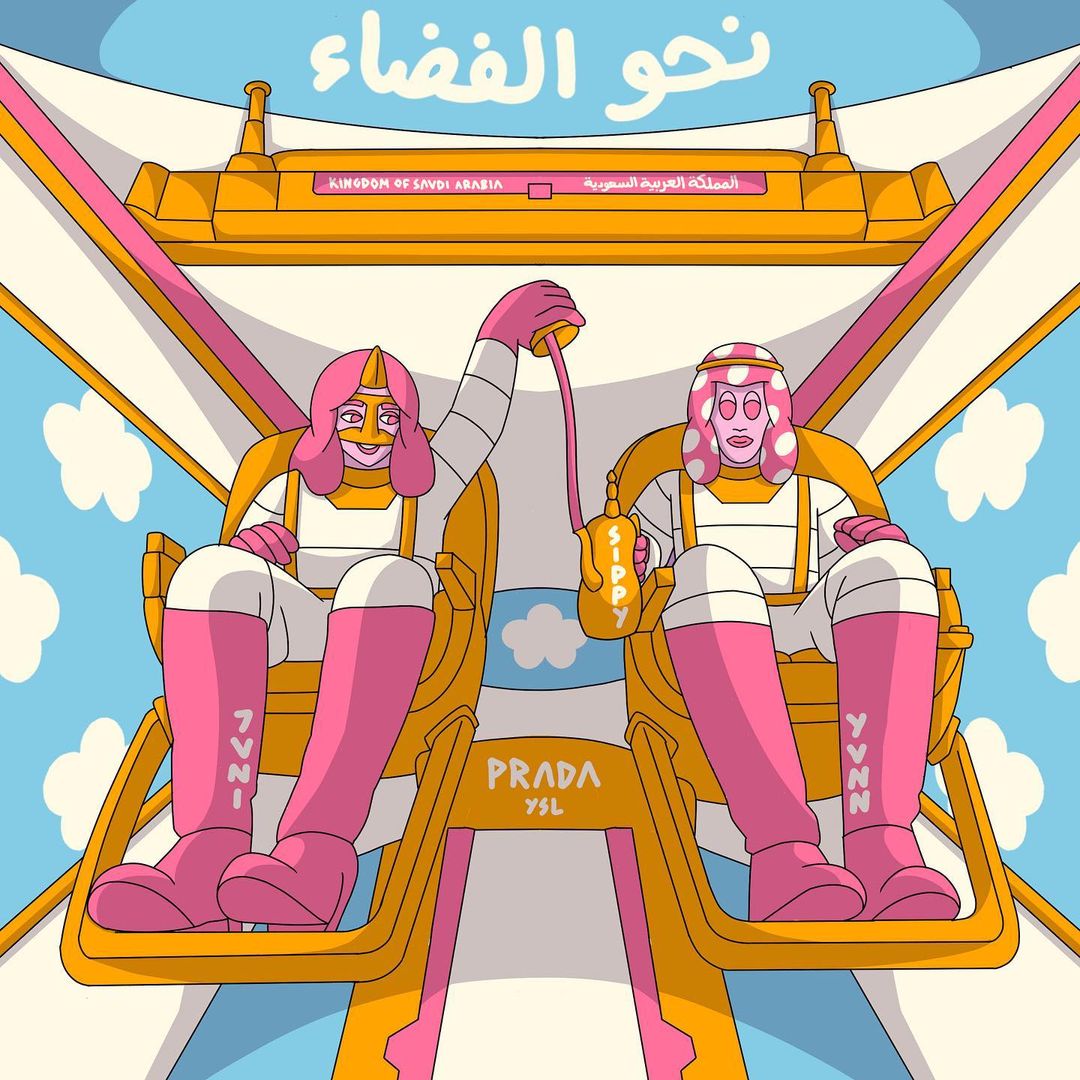
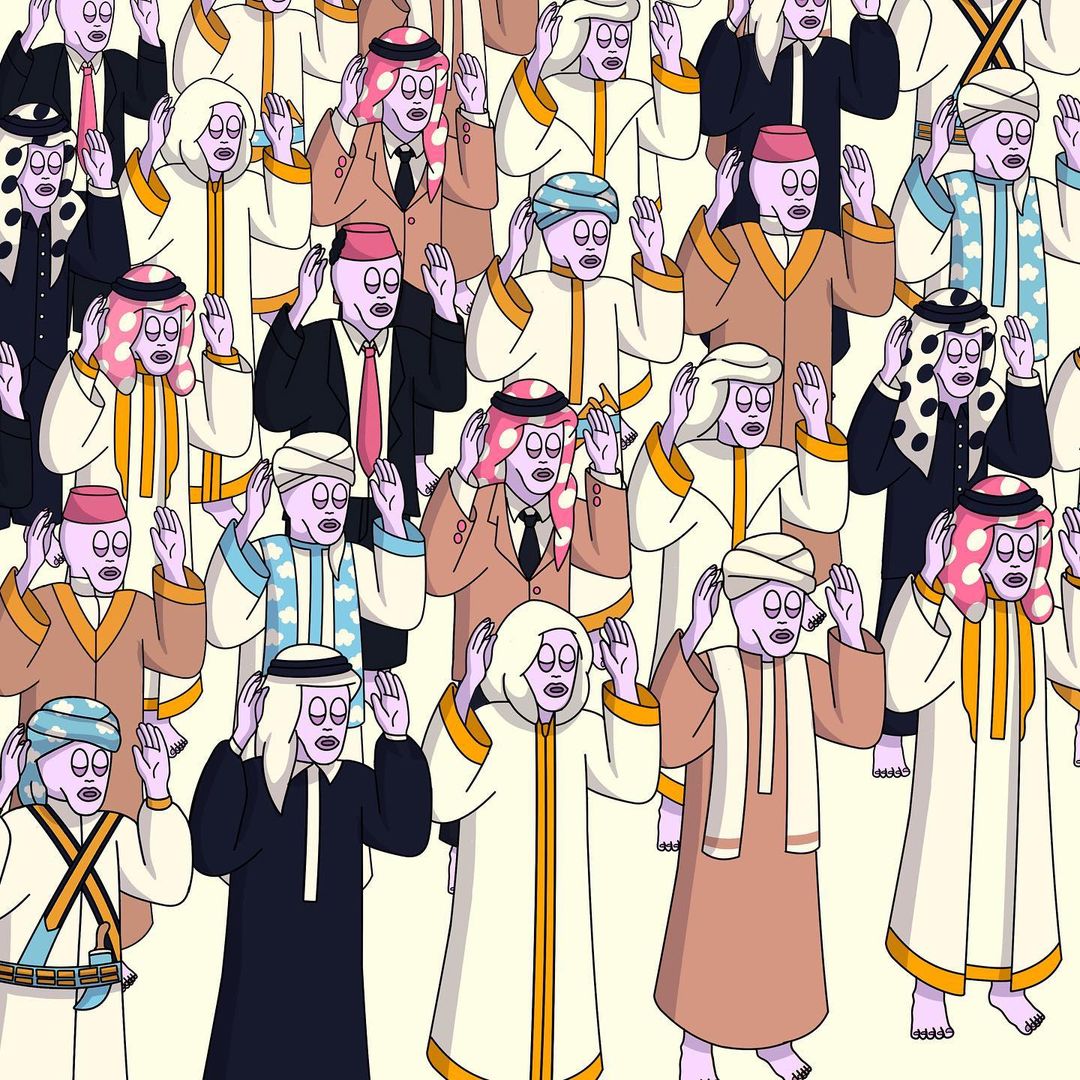
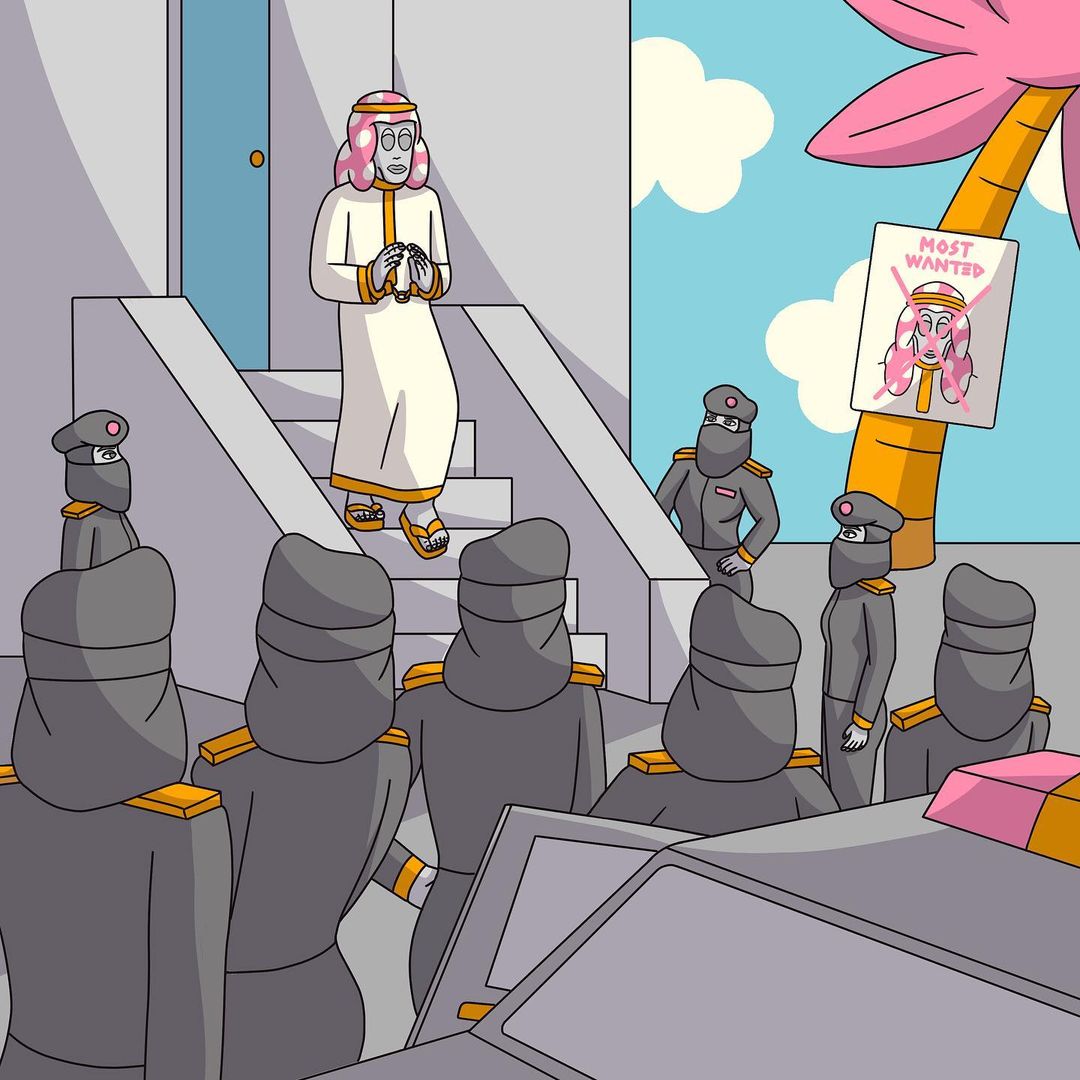
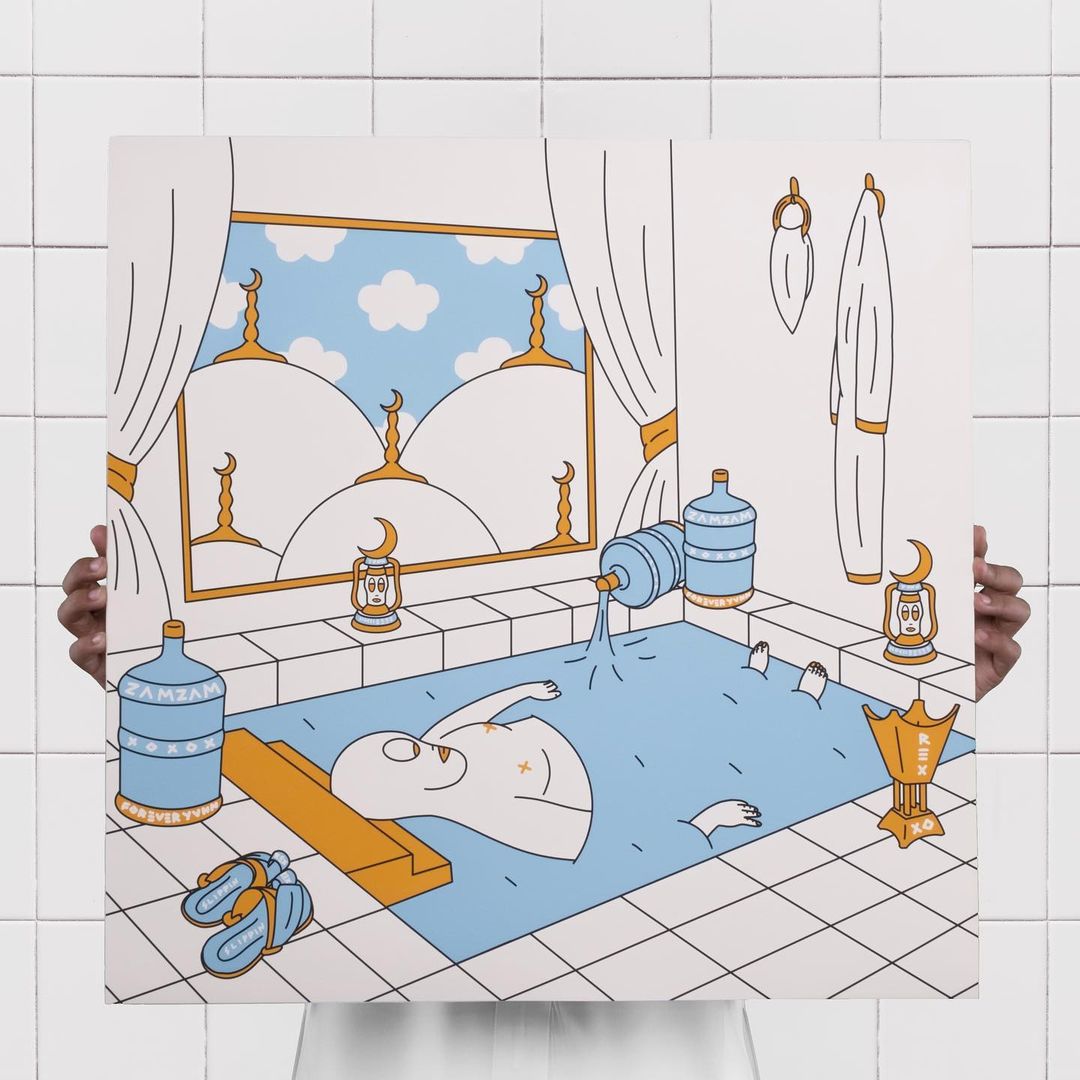
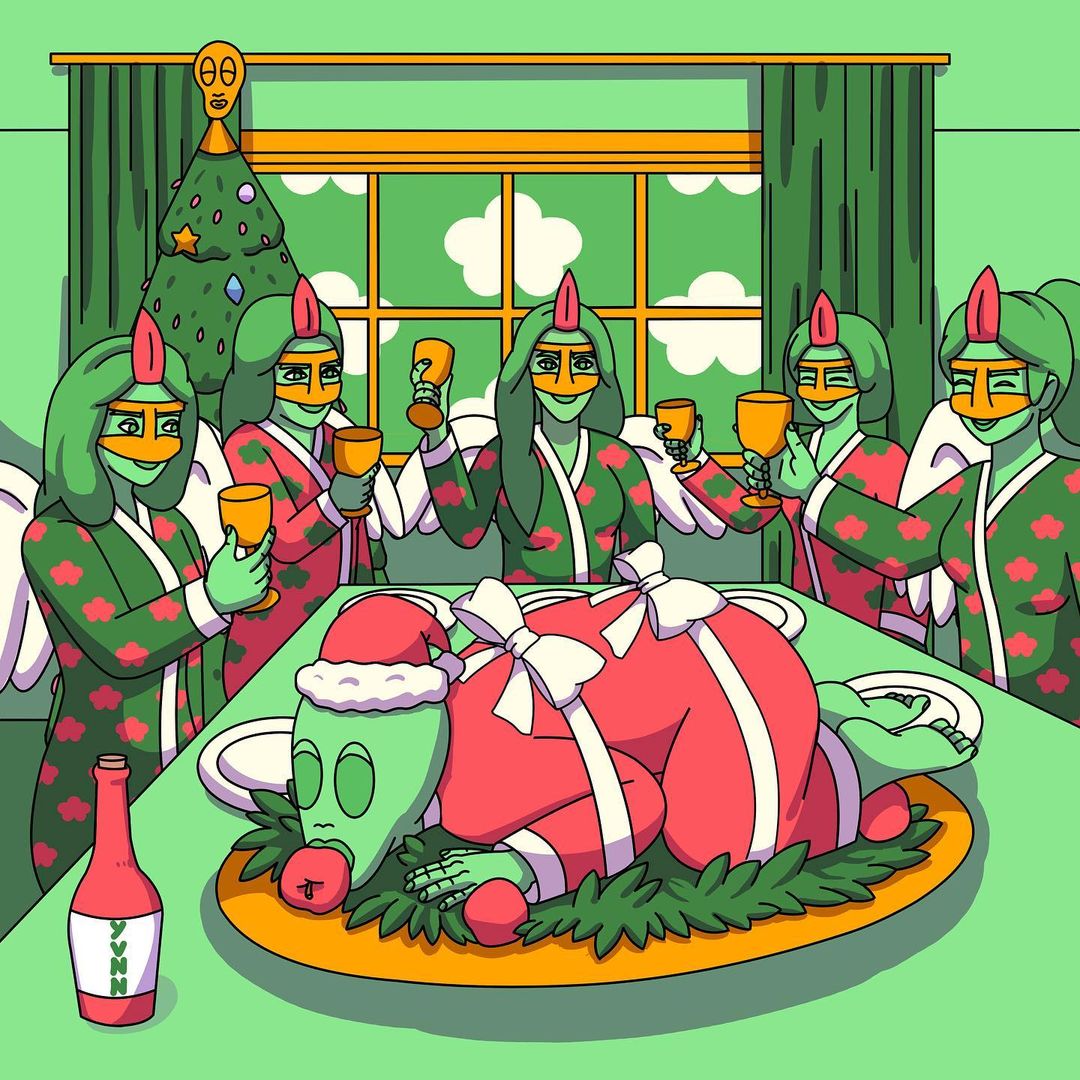
Various works by RexChouk.
It's interesting that you mention all these factors, Saudi's shift towards promoting culture and entertainment being one of them, because there's a boom now in original animated content creation in the country where there are full-length feature films like Manga Productions' "The Journey" (2021) being produced and heavily promoted. Why do you think there's this sudden interest in original animated content in Saudi Arabia?
I think it's mainly because this generation has followed animated content for so long. You have these animes that Saudis actually, really love. It's also our generation; we grew up in the '80s and '90s and decided to watch cartoons and eat cereal for the rest of our lives! Some of it is definitely nostalgic, but I think everything is booming in terms of creativity right now in Saudi. Even the technology and business that is supporting the creative field is booming. You have platforms like Shahid and film festivals popping up everywhere (referring to the Red Sea Film Festival), which recently hosted figures like Jackie Chan. All of a sudden, it feels like a switch has been flipped. It's like New York now, where there's something for everyone in business, art, and much more. There are entrepreneurial conferences and film festivals where they provide workshops for animation - so many groundbreaking projects. The country is attracting so much attention, and many creatives use that to their advantage.
For me, the opportunity to represent the “new” Saudi is really exciting.
RexChouk
What's next? Will there be more animation? Lay out a mini master plan for us.
I don't have a master plan; that's number one! But, my ideas on the animation are geared towards growing and improving. I want to expand on that end. Maybe a platform like mt7rk could be one way to do that! I recently discovered the Sharjah Animation Conference, which took place not long ago… and so these are the things I want to be a part of to learn and continue to grow. I'm still very early in my journey. Unfortunately, I didn't make it to Sharjah, but I would love it if we had something similar here in Saudi. Otherwise, when it comes to my original work, I want to return to doing shows. Back in the day, I would put together shows and put myself out there, but ever since I moved to Saudi, that has not been the case. Back in New York, I curated several shows and participated in a few international shows, but now I've lost the excitement of putting myself out there and showcasing my work. That's something I want to get back to. Believe it or not, I would love to produce more original work and put together shows rather than collaborate with the next big brand. At the same time, I do love collaborating with brands; it's very exciting for me because many of the brands I've worked with are brands I've grown up with. But honestly, I want to build a sustainable, enjoyable path associated with creating artwork for myself; that's a different challenge, and it's something I'm constantly thinking about.
Categories: Interviews