So, What Makes An Animation ‘Islamic’? Part One
Our voyage into Islamic animation begins with Saudi Arabia's Osama Ahmad Khalifa, the passionate mind behind the most prolific Arab company to produce feature-length animations.
"Islamic animation" might sound controversial because of the long-held assumption that Islam is hostile to figurative images, particularly the depiction of the Prophet Muhammad.
Yet, Islamic animation has emerged as one of the most flourishing animation genres in the Arab world, celebrated by its creators as a means to challenge Disney's cultural dominance and influence. These productions promote identities that transcend national boundaries and extend their reach to distant Muslim markets, inadvertently becoming a medium for Arab cultural influence.
Islamic animation has emerged as one of the most flourishing animation genres in the Arab world, celebrated by its creators as a means to challenge Disney's cultural dominance and influence.
So, what makes an animation "Islamic"?
First, beyond representing Muslim characters and Islamic architecture, as many Arab animations do, Islamic productions focus on moral guidance presented in religious terms or with Islamic legitimization. Secondly, specifically, Islamic topics are treated, whether religious discussions, historical evocations, or even the presentation of material from the sacred texts themselves, directly from the hadith to the Qurʾan.
Indeed, the Muslim world is far from united, and rivalling notions of religion result in distinct animated texts.
This time, our journey begins with Saudi Arabia.
Saudi-style Islamic animation emerged in the mid-1990s, supported by producers from Gulf countries. While many stopped production after releasing a single show, not everyone gave it up quickly. The foremost persistent author of the genre is Osama Ahmad Khalifa, born in 1956 in Medina and studied management in the United States. He became fascinated with animation when living in Canada and decided to develop an industry in his homeland to present Islamic values to Muslim children. And so Muʾassasat 'Alla' lil-Intaj al-Fanniyy (Ella Endowment for Art Production) was born in 1992 as a non-profit project.
Khalifa raised financial support from private individuals and charities and invested significant money. Khalifa decided to keep the production process in the Muslim world to underscore the Muslim identity of his productions rather than outsourcing it to Western studios. He moved the production to Turkey and later signed a contract with the al-Najm studio in Syria. Very soon, Ella became the most prolific Arab company to produce feature-length animations. Ella's significance lies in being the sole company producing several films and in the constantly evolving technical level of the animations.
Before rebranding to OK Toons in 2011, Ella produced over a dozen works with improving visual quality. History was among the primary inspirations. Ella's first show, released in 1995, was Mohammad al-Fatih (Mohammad the Conqueror), a nearly two-hour-long animated epic on the life of the Ottoman Sultan Mehmet II that paved the way and became a model for subsequent Islamic animations. Visually, the film mimics Disney characteristics: a hyper-realistic visual style and lineament mirroring the characters' personalities. The dialogue includes Islamic idioms and expressions, and the narrative is rich in Islamic references (such as prayers), as the show blends Islamic values with moral lessons. As it is a Saudi production, we hear children's and men's choirs singing nasheed-like songs instead of instrumental soundtracks. The language is exclusively fusha Arabic, the language of the Qurʾan and official Arabic religious discourses. Such features became a standard of Saudi-style Islamic animation.
A set of animations based on historical events followed the first film, like Rihlat Al Kholoud (The Boy and the King, 1996); a story adapted from the Quran, Sayf al-Qutuz 'ayn Jalout (1998) telling the life of Sayf al-Qutuz, the Mamluk Sultan of Egypt; Fath al-Andalus – Tareq ibn Ziyad (The Conquest of Andalusia – Tareq ibn Ziyad, 1999) on Tareq ibn Ziyad, the conqueror of Andalusia.
Khalifa also Islamized non-Islamic narratives by adding religious phases to the lines and, in some cases, the narrative as it was a case of Hikayat al-Amm al-Hakim (Stories of the Wise Uncle, 1999), a tale based on the Fables of Khalila and Dimna; Jazeerat al-Nur (Island of the Light) an adaptation of Ibn Tufayl's Hajj Ibn Yaqzan, an eleventh-century philosophical "Robinson Crusoe" story; and al-Qarasina wa Kanz al-Dhahab (The Pirates and the Gold Treasure, 1995), an adventure story resembling Sinbad as recounted in Arabian Nights.
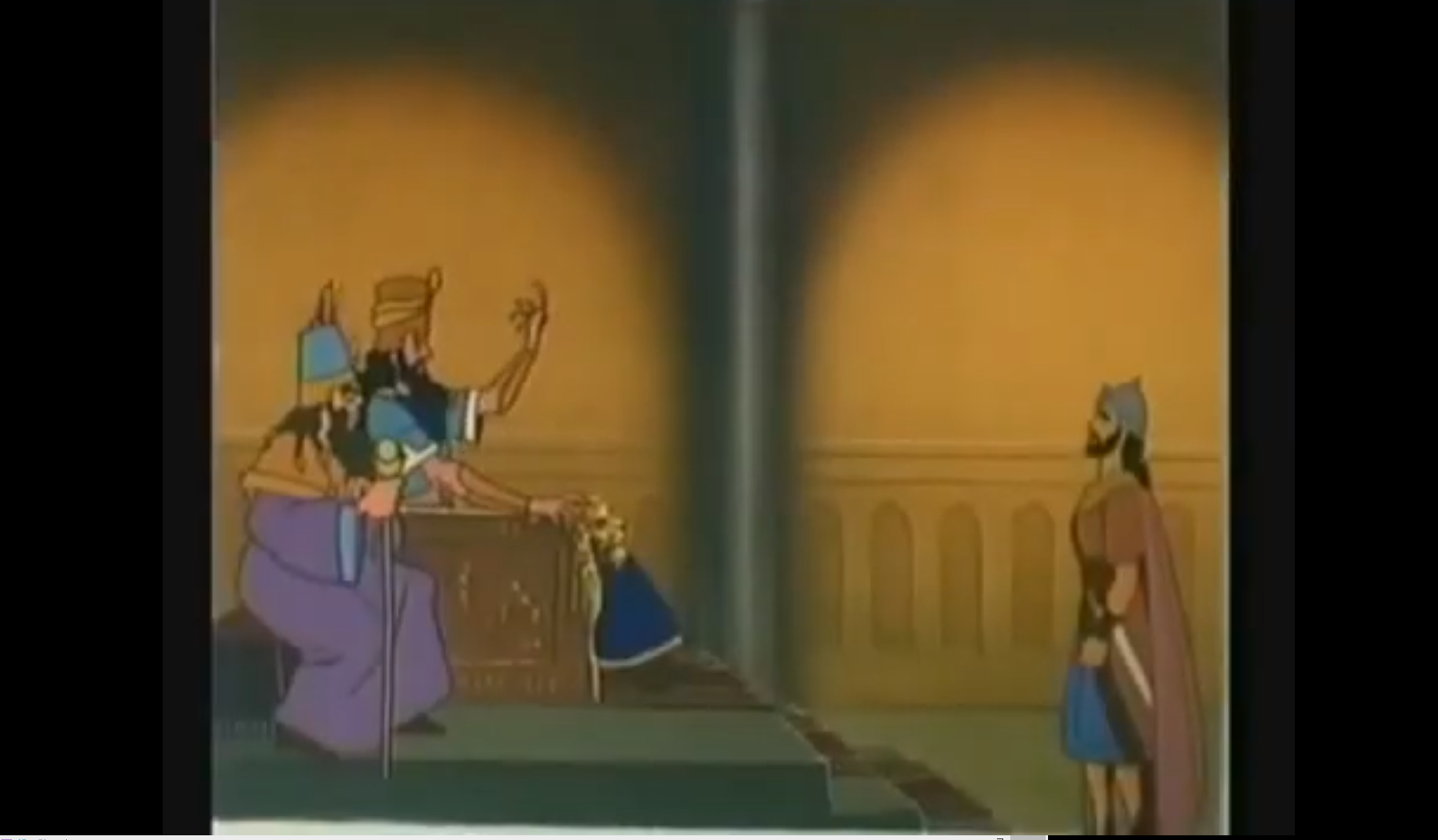
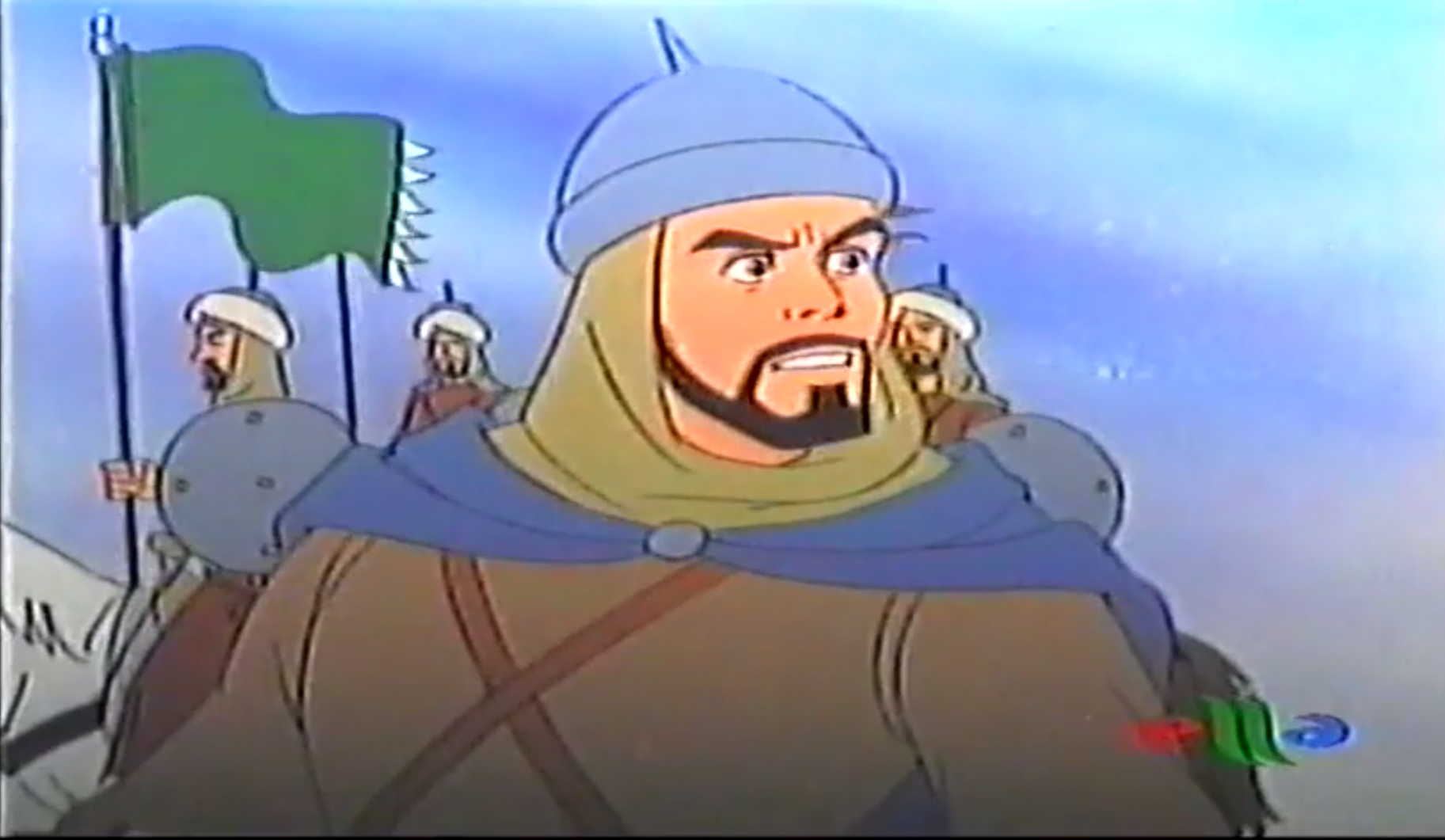
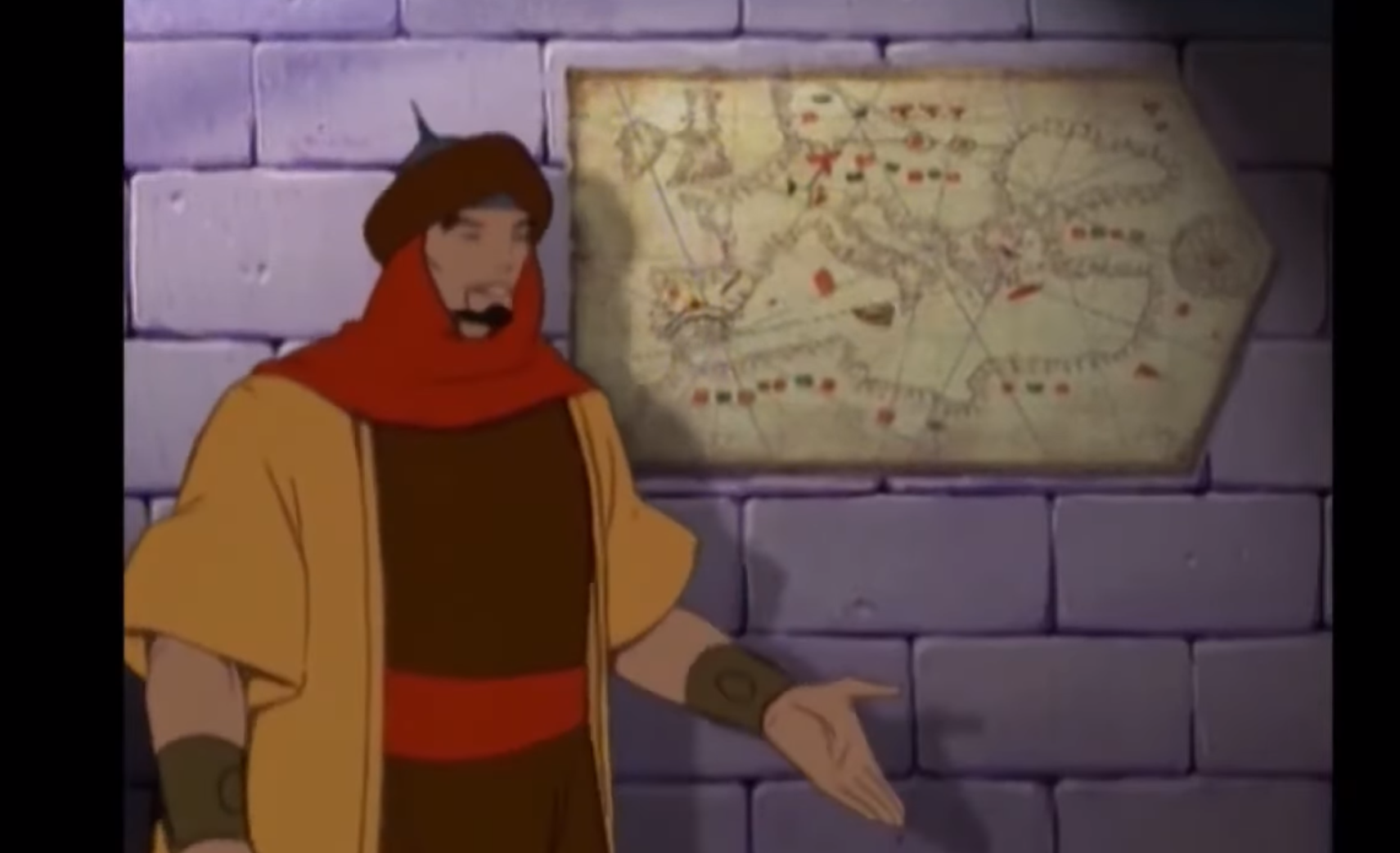
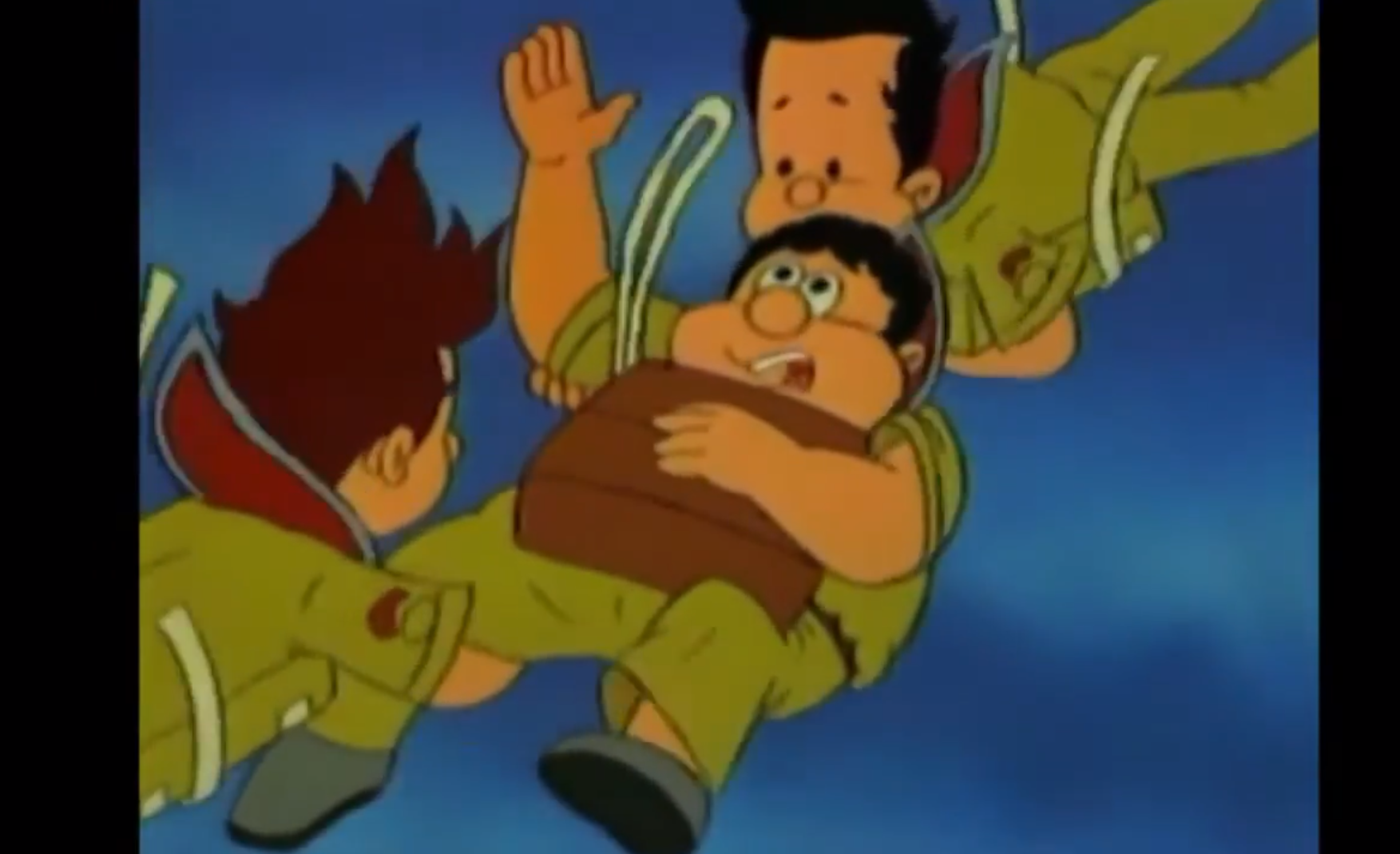
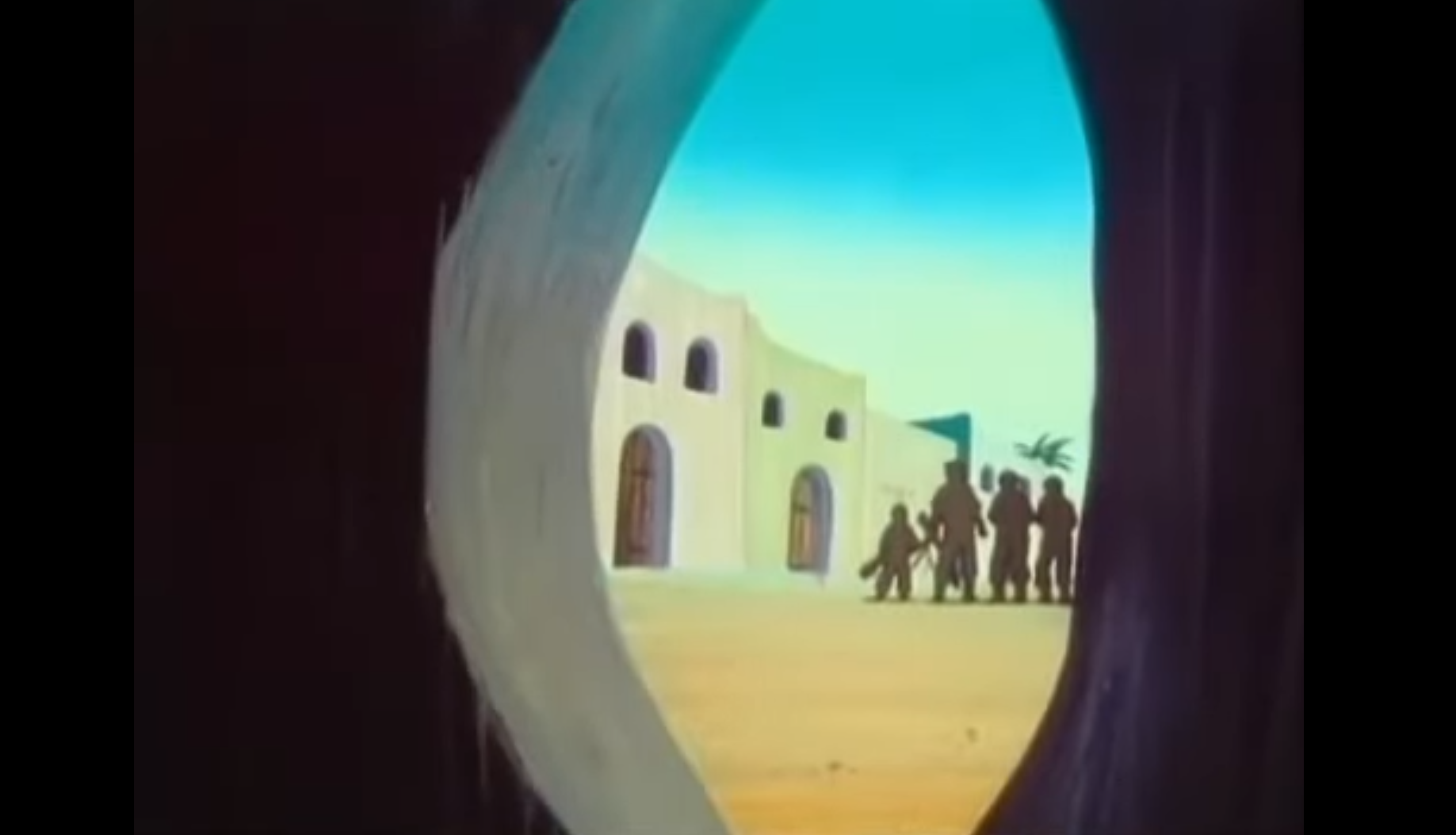
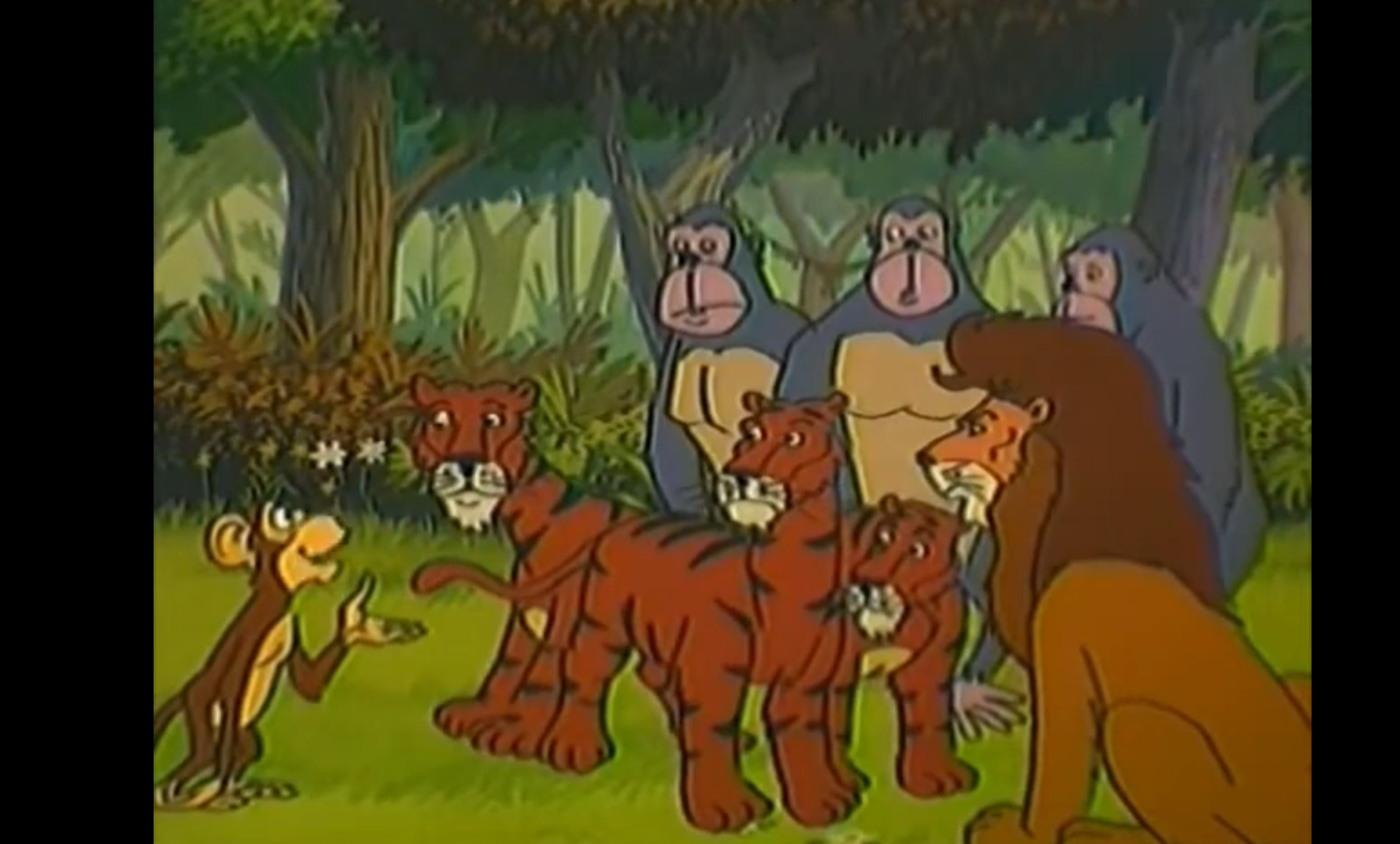
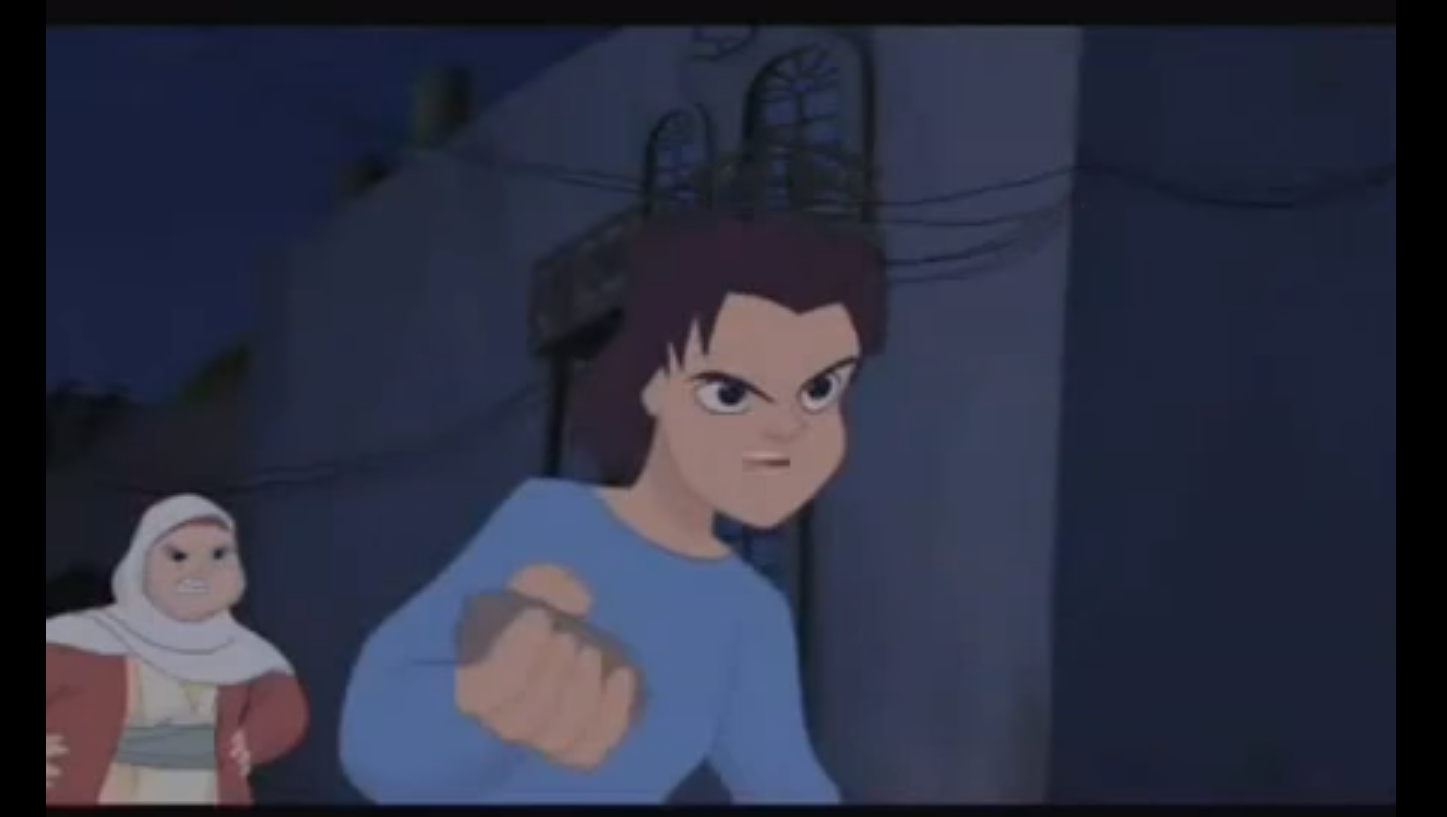
Screenshots of scenes from various productions by Osama Ahmad Khalifa. [mt7rk]
Khalifa also created feature productions of original narratives. In cooperation with Syrian al-Zahra Studio (also called Venus), he released al-Ashbal (The Cubes, 1995), an adventure series revolving around three pioneers who, guided by their teacher, visited many Muslim countries in Africa and Asia. Masrur fi Jazirat al-Luʾluʾ (Masrur on the Pearl Island, 1998) is another Sinbad-inspired film revolving around a young boy called Masrur who, together with his uncle, takes a journey to an island full of treasures.
The Palestinian issue has been an issue of concern for Osama Khalifa, as the case of Shahid al-ʿAlam (The Martyr of the World, 2003) shows, telling the story of a Palestinian child, Muhammad al-Durra, who an Israeli soldier shot in 2000. The animation uses very elementary computer graphics.
Then came the Disneyesque Hilm al-Zaytun (Olive Dreams, 2009), a one-hour epic on the Palestinian resistance against the Israelis. Hilm al-Zaytun brought OK Toons to a new level in visual quality and narrative. The story begins in 1948 in the small city of ʿAin Karem, home of Miryam and her parents. The girl plants a small olive tree, hoping to see it grow, only to be forced to flee by armed Zionist gangs terrorizing the people. As a most traumatic event, her father, a strong, noble, and handsome man, is killed in front of his family by a Jewish boy. Before passing away, the father hands over the keys to their house to Miryam, and the family flees to Jenin. The next part of the story takes us to 2002, when Miryam has grown into an elderly lady with a son and a grandson. The son, named after his murdered grandfather, has become a doctor who charitably works for the Palestinians. Their life again becomes troubled when the Israeli Defense Force wages war on the refugee camp. The protagonist of this part is the grandson, Fares, a bright, courageous boy with a strong mind who decides to face the oppressors. While many productions on the Palestinian cause end with people dreaming about their return, Hilm al-Zaytun ends with the entire family happily returning to Ain Karem, where the grandmother finds the key to the house she had hidden and then plants a new olive tree.
The concept of Saudi Islamic animation was born from the desire to create a modern cultural production in a conservative religious environment for conservative viewership.
The concept of Saudi Islamic animation was born from the desire to create a modern cultural production in a conservative religious environment for conservative viewership. The Saudi experiment resulted in a genre distinct not only from other Arab animations but also from other Islamic animation productions, such as by Muslim Shia producers in Iraq and Iran or the more liberal approach in Egyptian Islamic attempts.
Those we will look at soon, stay tuned!
Categories: Chronicles