Saddam and the River: Animation in Baathist Iraq
In the midst of Saddam Hussein's brutal rule over Iraq, the Iraqi animation industry experienced a boom as a weaponized tool of propaganda.
Saddam Hussein was known not only for being a ruthless dictator but also as a huge cinema fan. With "The Godfather" being his favorite, the president spent significant time watching blockbusters from the United States in his private cinema hall accompanied by his family. After seizing power in 1979, the Iraqi dictator realized the importance of media, film, and propaganda in consolidating power. He instrumentalized the state-owned film industry to produce propagandistic pieces, and through curious turns of events, became 'the godfather of Iraqi animation'.
Still, the first Iraqi animation precedes Saddam’s power grab. "American Football"(Al-Kurat al-Qadam al-Amreekiyya) was shown at the Palestinian Film Festival in Baghdad in 1972, brimming with pan-Arab Baathist propaganda. Directed by Victor Haddad and animated by Bassam Faraj, the 11-minute film features an all-Arab football team competing against America’s best in front of a cheering crowd waving the flags of Palestine, Syria, Iraq, and Egypt. Each time the American team scores a goal, numbers related to the years of an Arab defeat flash on the scoreboard; such as 48 (the forcible establishment of Israel) and 67 (the defeat of various Arab armies by Israel). Needless to say, the game happily ends with the triumph of the Arab team. Just like the scrappy Arab team of the animated feature, the film itself – being the single animated production at the festival – won the award for the best animated show.
[Saddam Hussein] instrumentalized the state-owned film industry to produce propagandistic pieces, and through curious turns of events, became 'the godfather of Iraqi animation'.
The war against Iran was not only fought with boots on the ground and missiles in the air, but also through animation. In 1980, Iraqi TV’s Children's Department released a set of three to four-minute TV spots mocking 'the enemy' during the timeslot dedicated to children’s programs. Influenced by "Tom and Jerry", the low-frame celluloid films ridicule Ruhollah Khomeini, Iran's then-supreme leader, depicting him as a pitiful character clucking as a chicken or speaking in an exaggerated Persian accent. An episode called "Delusions of Khomeini" (Awham Khomeini) showed the senior leader trying to escape an Iraqi missile on the back of an Iranian one. But he then falls into the sea and gets eaten by a shark, as he dies the spirit of Satan seeps out of his body. In another episode, "Khomeini and the Magic Torch" (Khomeini wal-Misbah al-Sehriyy), Khomeini happens upon Aladdin’s magic lamp in a cave. He rubs the lamp, releases the genie, and makes a wish to destroy Iraq. To his great misfortune, the genie returns defeated by the glorious Iraqi army and decide to beat up the Iranian supreme leader instead.
Empowered with oil money, Saddam Hussein, himself a Sunni Muslim from Tikrit, strove to create an 'Iraqi nation' of a secularist pan-Arab character, suppressing rivaling ethnic and religious identities. In doing so, reviving the memory of ancient Babylon emerged as one of the cornerstones for defining 'Iraqiness'. In that pursuit, artists were also encouraged to represent and use the greatness of Mesopotamia to create a common historical tradition that all Iraqis could share. This trend quickly found its way to animation.
In the early 1980s, Babylon, a semi-private company, was established by the Revolutionary Council and offered scholarships for young artists to study animation in European countries. In 1982 Babylon released "The Princess and the River" (al-'Amirah wal-Nahr), the sole feature-length animation venture of the Saddam era. The one-million-dollar movie was funded by Iraqi Television’s Arab Centre for Animation, which was founded the same year by Iraqi writer and director Faissal al-Yasseri, with the support of the Iraqi Ministry of Culture. Scripts were written by Australian scenario writer John Palmer, the father of "The Adventures of Blinky Bill". As no animation studios were available in Iraq, animation work was outsourced to East Germany.
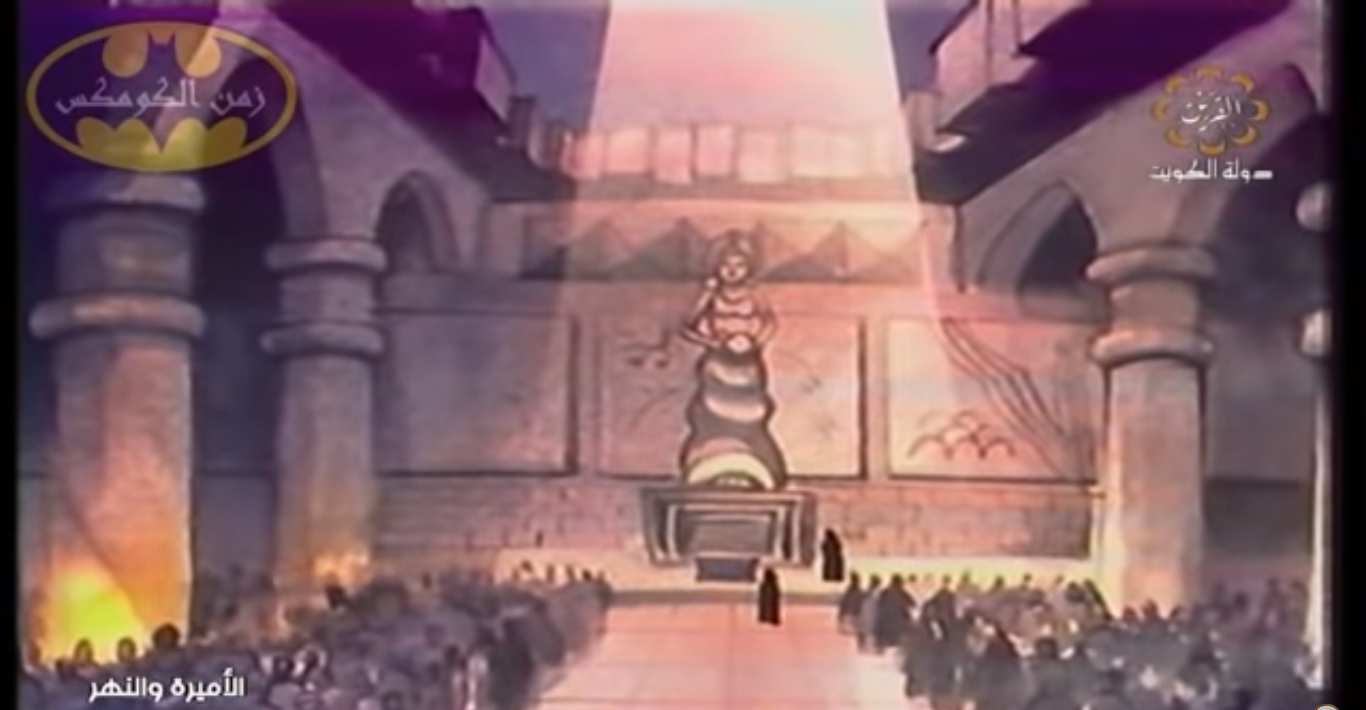
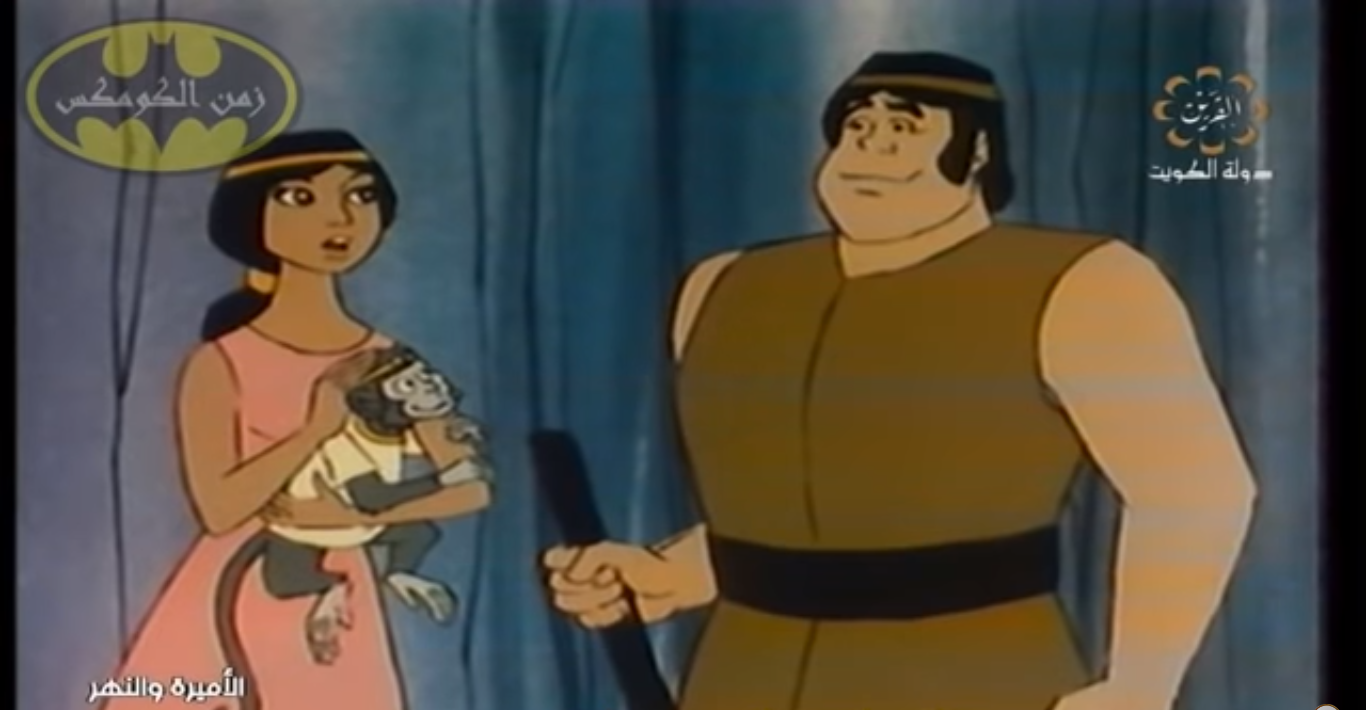
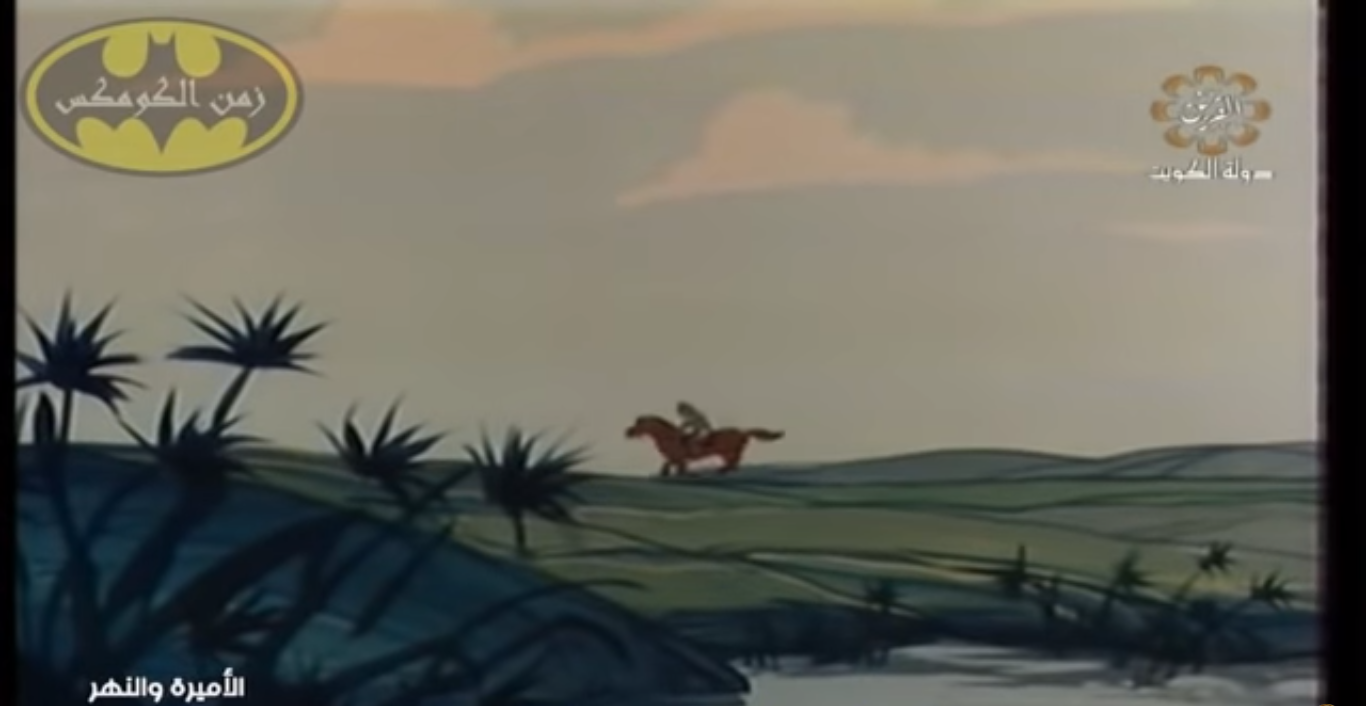
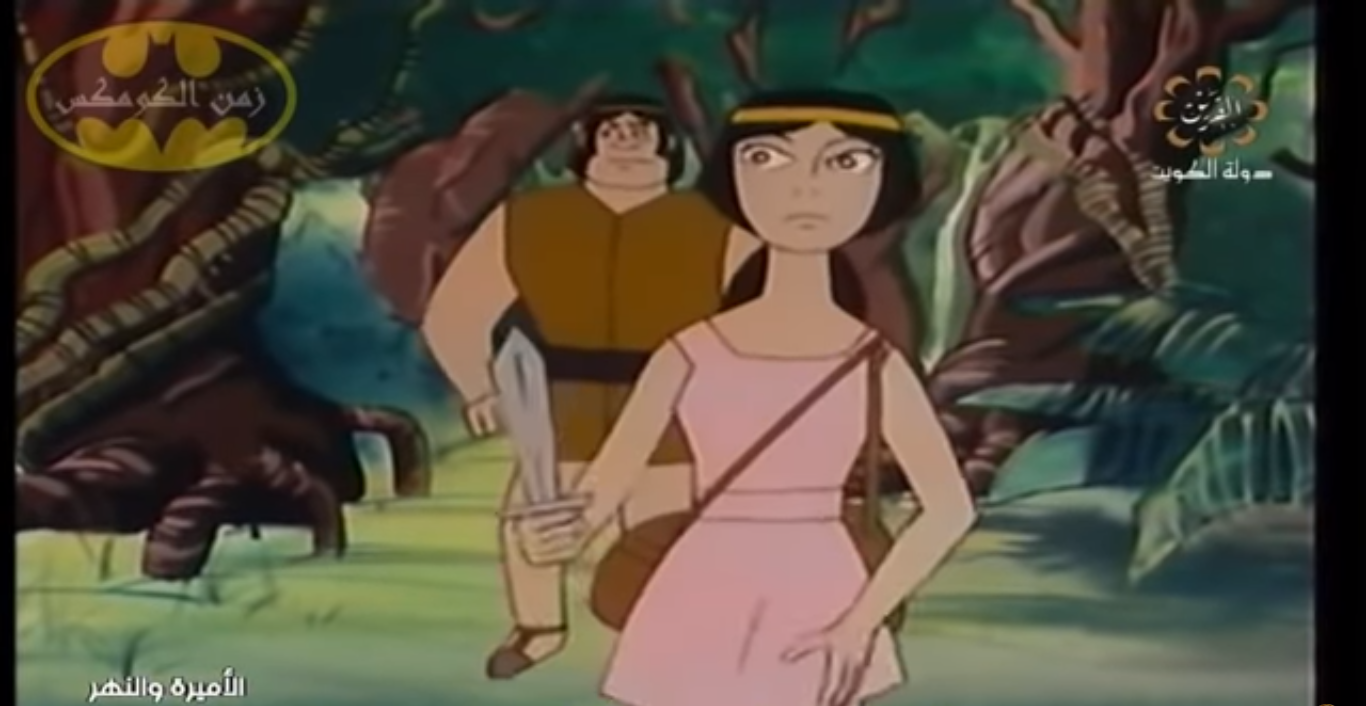
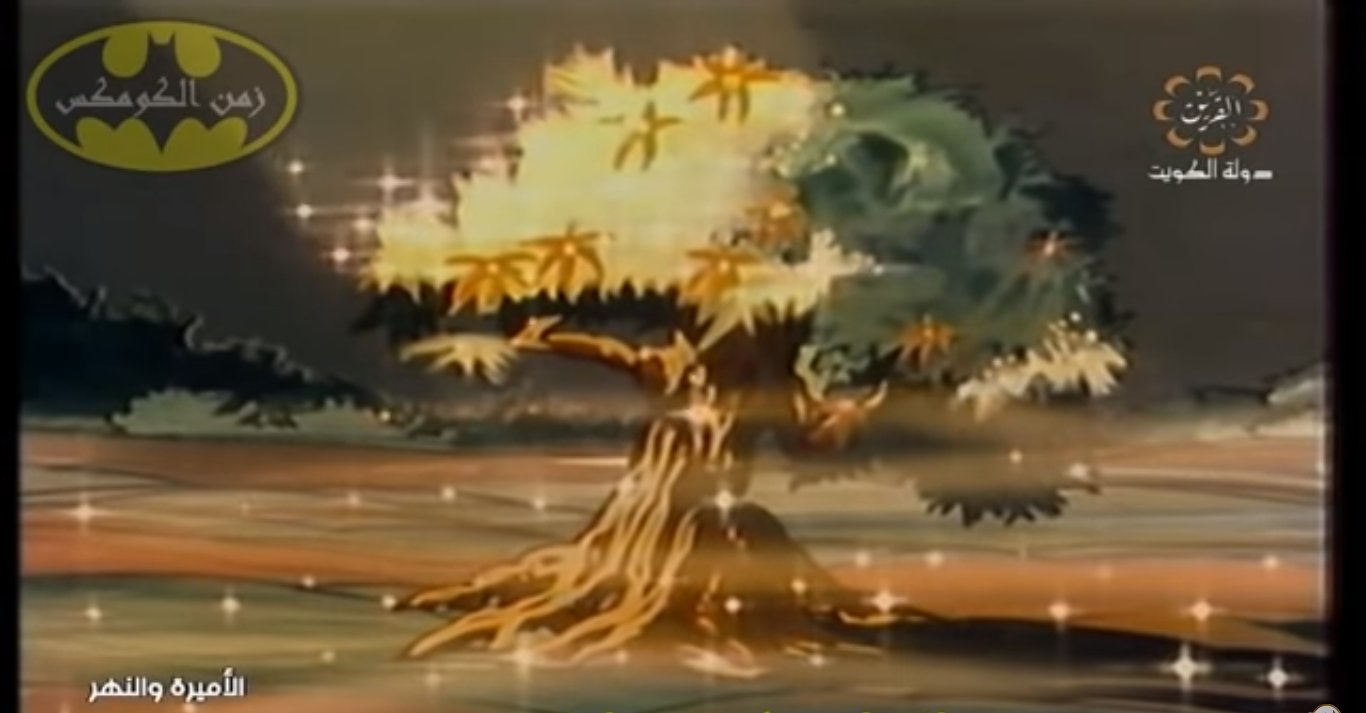
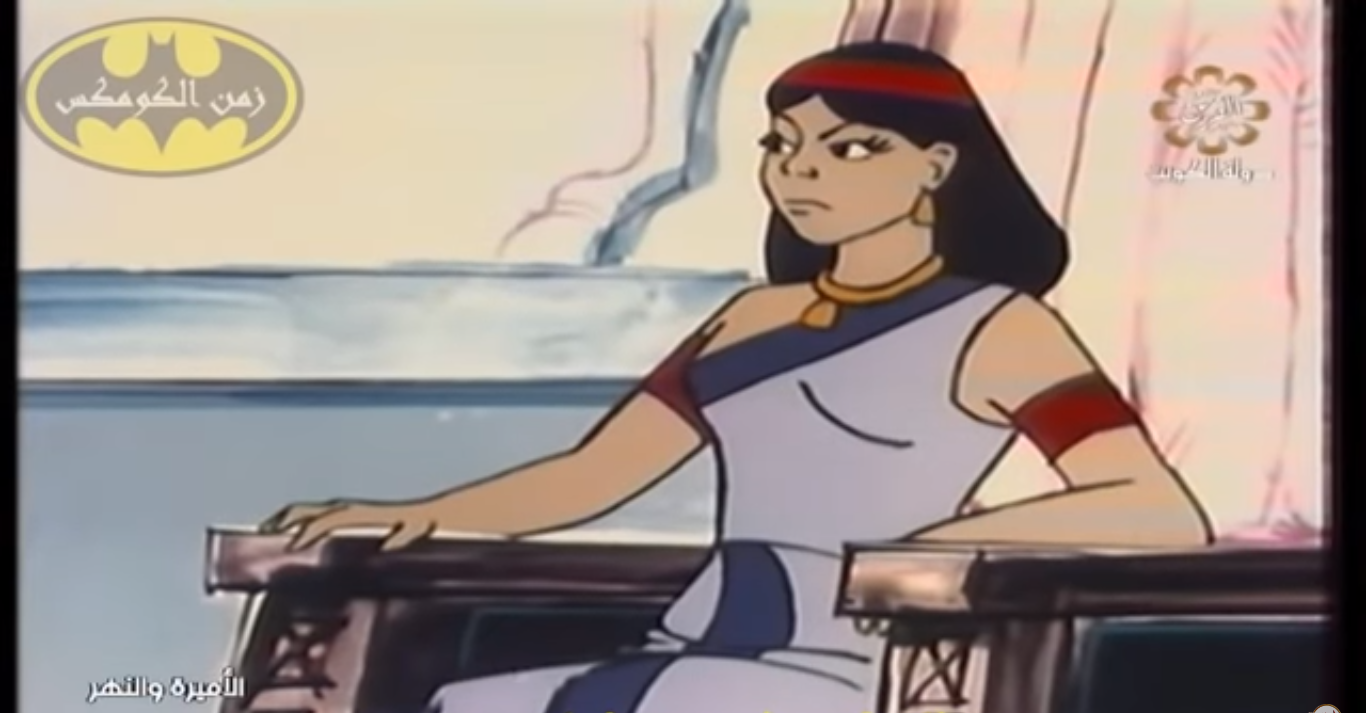
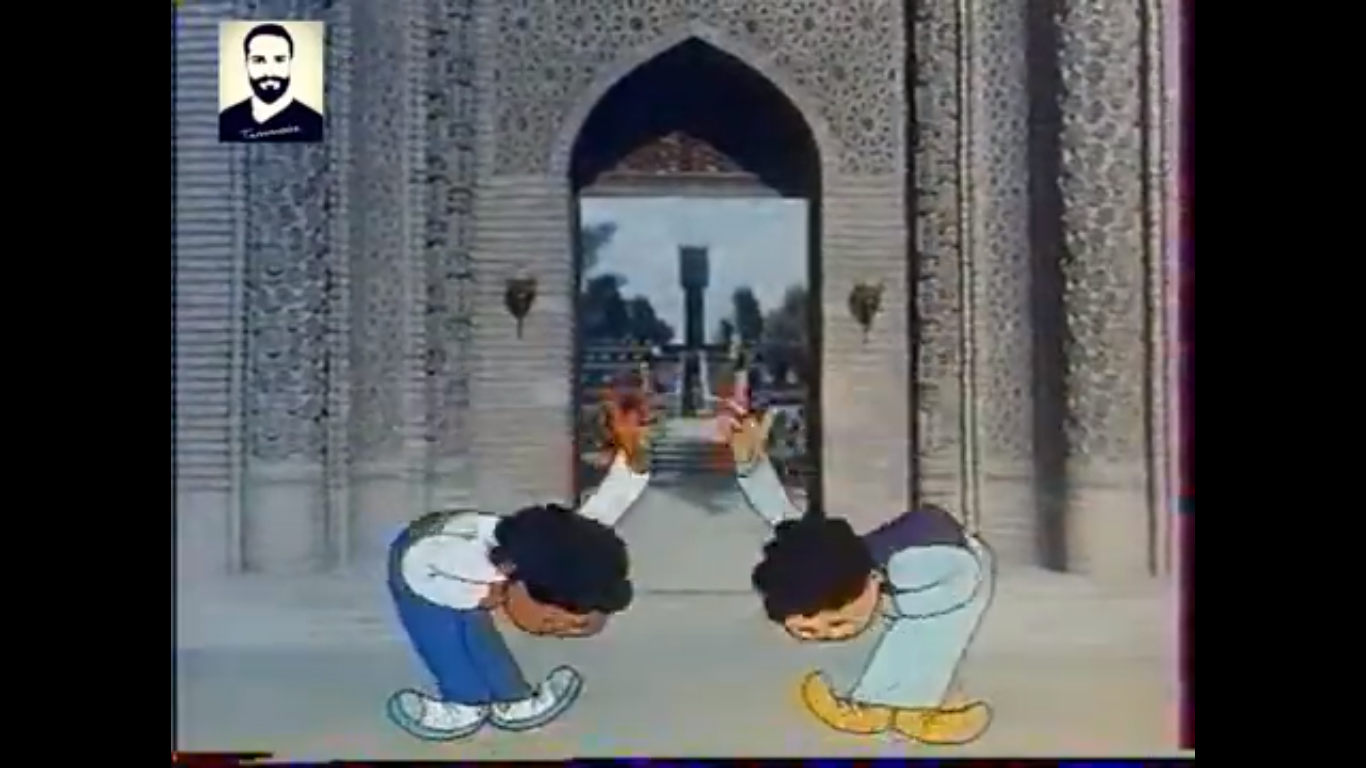
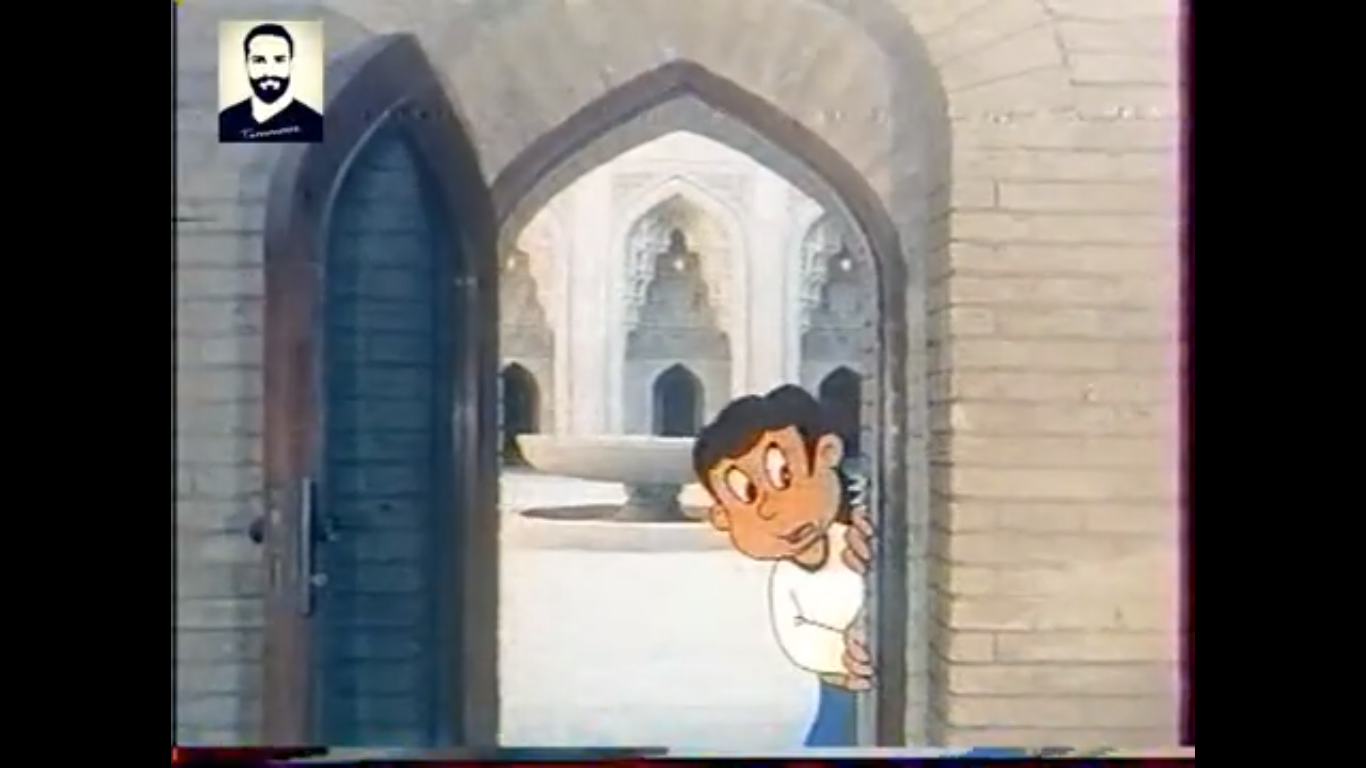
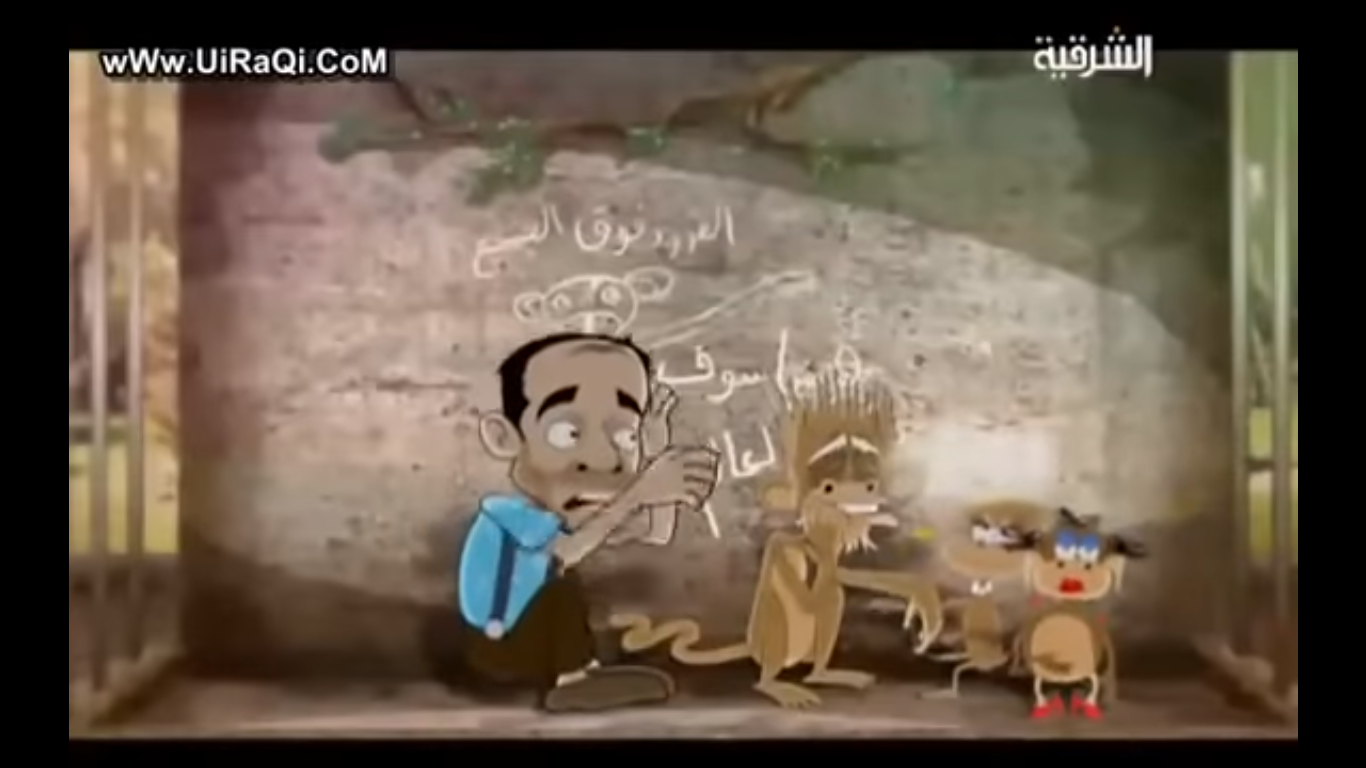
Screenshots of various Iraqi animation works during and post Baathist period.
The story is a loose adaptation of an old Mesopotamian tale that takes place in the ancient city of Lagash. Before passing away, the old king utters his final words to his three daughters regarding succession. According to an ancestral tradition, the future ruler must pass three trials to gain the throne: first, to safely swim across the river without waking the dragon that resides at the bottom; second, cross the desert of death; and finally, to enter the golden forest and snatch a golden apple from a tree guarded by a giant snake and a bird.
To cut a long story short, in the end, the pure-hearted Sunani passes the three trials and becomes queen of the 'Land of the Two Rivers'.
The twist in the animated movie adaptation is the framing story. Sumer is at war with the neighboring Aqqad, and there is a general hostility between the twelve kingdoms of the 'Land of the Two Rivers'. Before passing away, the king of Lagash declares that the unification of the hostile kingdoms should be the primary task of his successor. However, Aqqad’s young and handsome king, Naram, is goaded by his evil advisors to attack Lagash. The one behind the plot is Eiran, the wicked ruler of a neighboring evil empire. Throughout the movie, slogans like, “We are all Sumerians!” are often repeated, as well as condemnation of Sumerians fighting against each other rather than uniting against Eiran - a not-so-subtle reference to Saddam Hussein’s great enemy of the time, Iran. The added factor to the film's story to buttress the propaganda is the plot point that Sunani never wanted to be a ruler but bowed to the greater demand of God and fate, just like Saddam himself, as he liked to say at that period.
After the critical success of "The Princess and the River", not to mention garnering Saddam Hussein’s satisfaction, Faissal al-Yasseri set out to produce television series. The first in line was "The Return of the Magic Lantern" ('Oudat al-Misbah al-Sehriyy) in 1984, a 13-episode edutainment series of around 17 minutes each, combining live photographic and video backgrounds taken of historical sites of Baghdad with animated characters. Inspired by the infamous 1,001 Nights, the series tells the story of a modern-day Baghdadi boy who finds a magic lantern. A genie, who looks like a boy the same age as the protagonist, appears and tells stories of the past. In exchange, the boy takes the genie on a tour of present-day Baghdad, where, as a creature from the past, the genie constantly marvels at advanced technology.
Two years later, in 1986, al-Yasseri decided to return to the topic of ancient Mesopotamia, creating "The Epic of Gilgamesh" (Malhamat Gilgamesh), a 10-episode series on ancient mythology. A year later, he released "The New Babel" (Babel al-Jadeedah). By choosing history as a central topic of their films, producers played it safe and facilitated the articulation of political narratives of Iraqi Baathism without directly engaging in political discourse.
Despite the critical acclaim of locally produced shows, the war against Iran (which lasted from 1980 to 1988) dried up financial sources for further animation productions as Iraq became indebted to its neighbors and international creditors. The situation worsened after the disastrous invasion of Kuwait, especially after the United Nations imposed broad and devastating sanctions on Iraq in August 1990. Since cinema equipment, stock, and chemicals for film laboratories were listed as banned items in the sanctions, Iraq's cinema industry - animation too - vanished.
It was only a decade after the 2003 US-led invasion and occupation of Iraq and the fall of Saddam Hussein's regime that Iraqi animation began to revive itself. Among the first to appear was al ‘Ataak, an animated sitcom series by Muhannad Abou-Khumra. It aired from 2011 until 2015 on the Dubai-based al-Sharqiyya TV, a channel known for its critical approach towards the government in Baghdad. The show tells the story of a young man dealing with economic hardships, social inequalities, the rising high cost of living, and other issues that impacted Iraqi society in the post-invasion period.
After the success of al 'Ataak, Abou-Khumra released several similarly themed series, one of the most significant among them being "The President" (al-Rayes) in 2013, revolving around the daily life of an elderly man selling lablabi, a typical Iraqi food made of chickpeas, in a corrupted, ruined and insecure Baghdad, ruled by ruthless and arrogant authorities.
It was only a decade after the 2003 US-led invasion and the fall of Saddam Hussein's regime that the Iraqi animation scene began to revive.
Unlike shows of during Baathist Iraq, which dove into a glorious past to spin an optimistic present for Iraqi audiences, Abou-Khumra's works stick to the present, utilizing political and social criticism to coax bitter-sweet smiles on the face of a society torn by war, fragmentation, and unceasing crisis.
There is much more to come from the Iraqi animation scene as it steps further into an era not defined by an absolute dictator or the need for nation-building. Iraqi animators and creators have wiggle room they haven't had before - as limited as that space may be, particularly the challenges in acquiring funding. But there is at least this space now and because of that, animators and creators themselves are and will carve out the contours of the future of Iraqi animation. As audiences, we should stay tuned because a torrent of creativity is about to be unleashed, and new 'godfathers' will appear.
Categories: Chronicles