Pumping up the volume on Stereo
Stereo is an alternative media platform and publisher dabbling with animation in a way that oozes with a collaborative spirit and unashamedly embraces regional identities.
“I am a product of my environment, and I’m proud of that,” says Rony Karkar. “And seeing what I can accomplish with what I have. We have no funding, and we don’t want to get investors. We want to maintain our identity and keep it close to the heart. We wanted to create a media outlet that does not dissect and analyze our culture. We wanted to document ourselves on our own for the people in the Arab world.”
Karkar is one of the co-founders of Stereo, an alternative media platform officially launched this year, with his partner Razan. They both worked for various media agencies, from VICE to HBO, for a very long time. The experience could have been better, he noted.
"We wanted to document ourselves on our own for the people in the Arab world."
The very conception of Stereo was thus born. It took about two years of preparation before launch, and one of the first things was the logo, which was designed by Khalid AlSaidni, a graphic designer in Gaza. Connecting with Khalid and creating the logo is what really “pushed us forward,” Karkar says.

Stereo Logo designed by Khalid AlSaidni
“When we work for outside companies, they always ask for our connections. But they use this crucial information in their own way with no care – so we wanted to use our network, lift it up, and have it lift us up. This network around us represents the amazing talent in the Arab world that is often exploited in bad ways,” Karkar declares.
As a publisher, Stereo has been leaning more and more into animated content. From a pixel series to animated music videos, it plans to do documentaries in animated form. “Animation itself allows you to imagine more, to create more worlds, as opposed to filming something live. It is instantly more relatable to any topic you are talking about. It’s a surreal feeling when you digest more information,” Karkar says.
The core team is made up of four individuals, two logistics and two in the productive and creative departments. They focus their work with creators from Tunisia to Egypt, Bahrain to Palestine. “We stick to people who understand the culture and connect the dots,” Karkar continues.
"This network around us represents the amazing talent in Arab world that is often exploited in bad ways.”
The projects they do are funded out-of-pocket. Karkar and his partner work in the media industry to get money, and then pour whatever they can in Stereo. “It’s all self-funded. The aim is sustainability, not profitability – it’s a crucial mindset of longevity and sustainability. Our ‘ministry of finance’ helps spread out our budget to help us accomplish. People in our network understand this. We collaborate and pay people, but we are not a huge company and people know that. We will see where the future will take us,” stresses Karkar.
Rad Saree3 – Rapid Response
Of notable recent project by Stereo is the animated music video with the Palestinian rapper Shabjdeed, Al Nather, and Riyadiyat called Rad Saree3 (Rapid Response). The 2D-animated music video pops with surreal political imagery animated by Lebanese animator Romy Matar.
Video for Red Saree3
Radd Saree3 is like a “ tattoo” as Karkar describes. It was meant to lean on the audience’s interpretation. The political imagery does not aim to say anything directly but to give a sense of the politicized reality in which most people of the region exist.
“Stereo reached out to me, we were supposed to do an interview and Rony was involved in this project with me in Amman. And from there, Rony and I hit it off ideologically. So we talked about a music video, and it went from there,” said Shabjdeed.
“I like animation; I like drawing and anime. That’s what we all grew up on. You can do so much more with animation than with live-action. If you want to show a tree on fire, that’s harder to do in real life, while animation can let you do it so easily,” he says.
Shabjdeed worked as Creative Director for the music video, providing input in terms of how the animation would fit the music. “Most important for me was for it to be abstract; in our album, Sultan, we had a strict metallic, military branding; so I wanted this music video to break that brutal realism and do something abstract,” he noted.
"In our album, Sultan, we had a strict metallic, military branding, so I wanted this music video to break that brutal realism and do something abstract."
“This was the project of my dreams,” Romy Matar said. “Like any rap song, you don’t understand it completely at first, you try to break it down and unpack the metaphors. I am a very visual person, so with the timeline we had, I had to work very hard to just imagine and see colors. Every word, every phrase, every metaphor was separated, and we’d insert visuals to see what worked.”
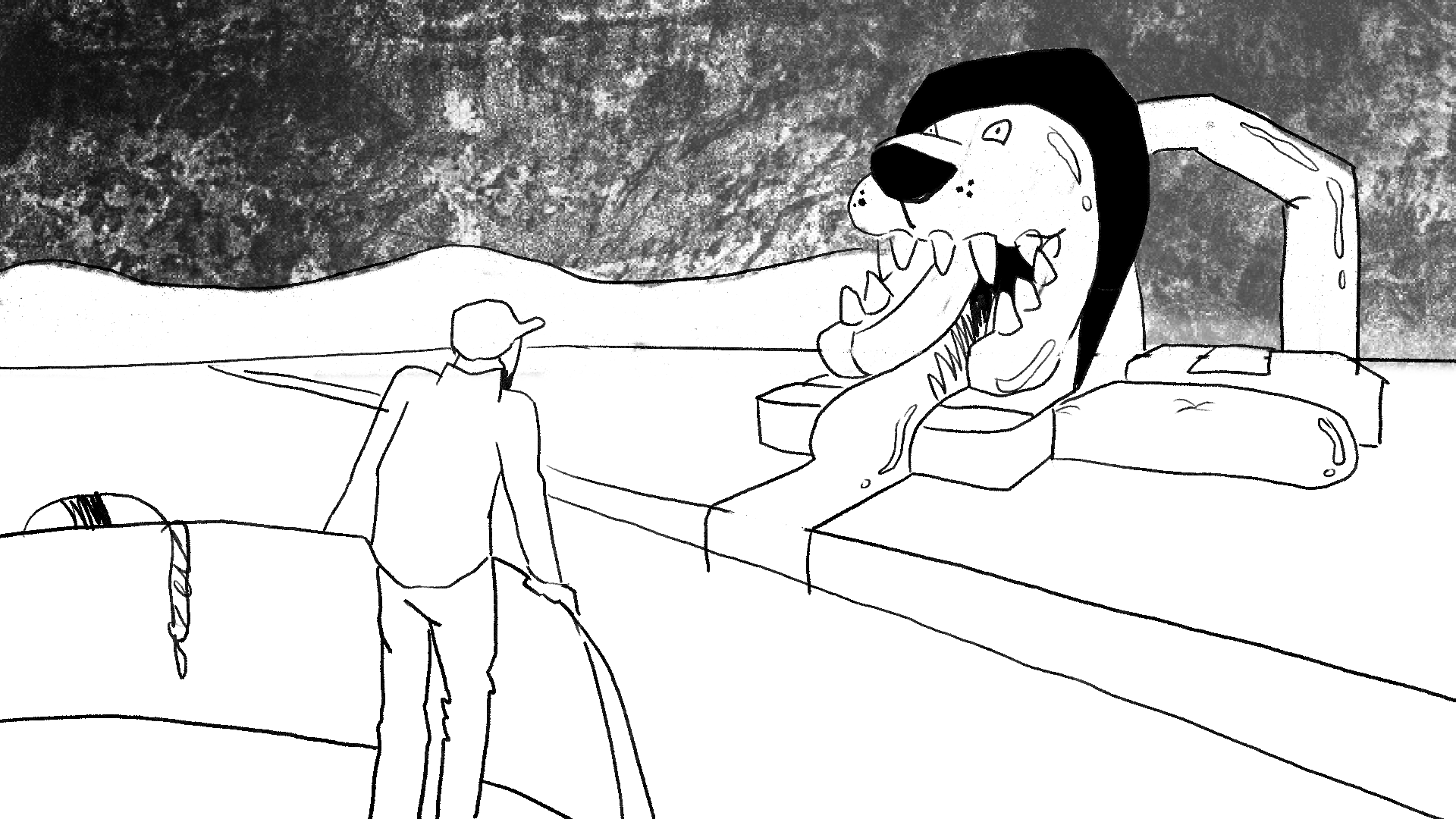
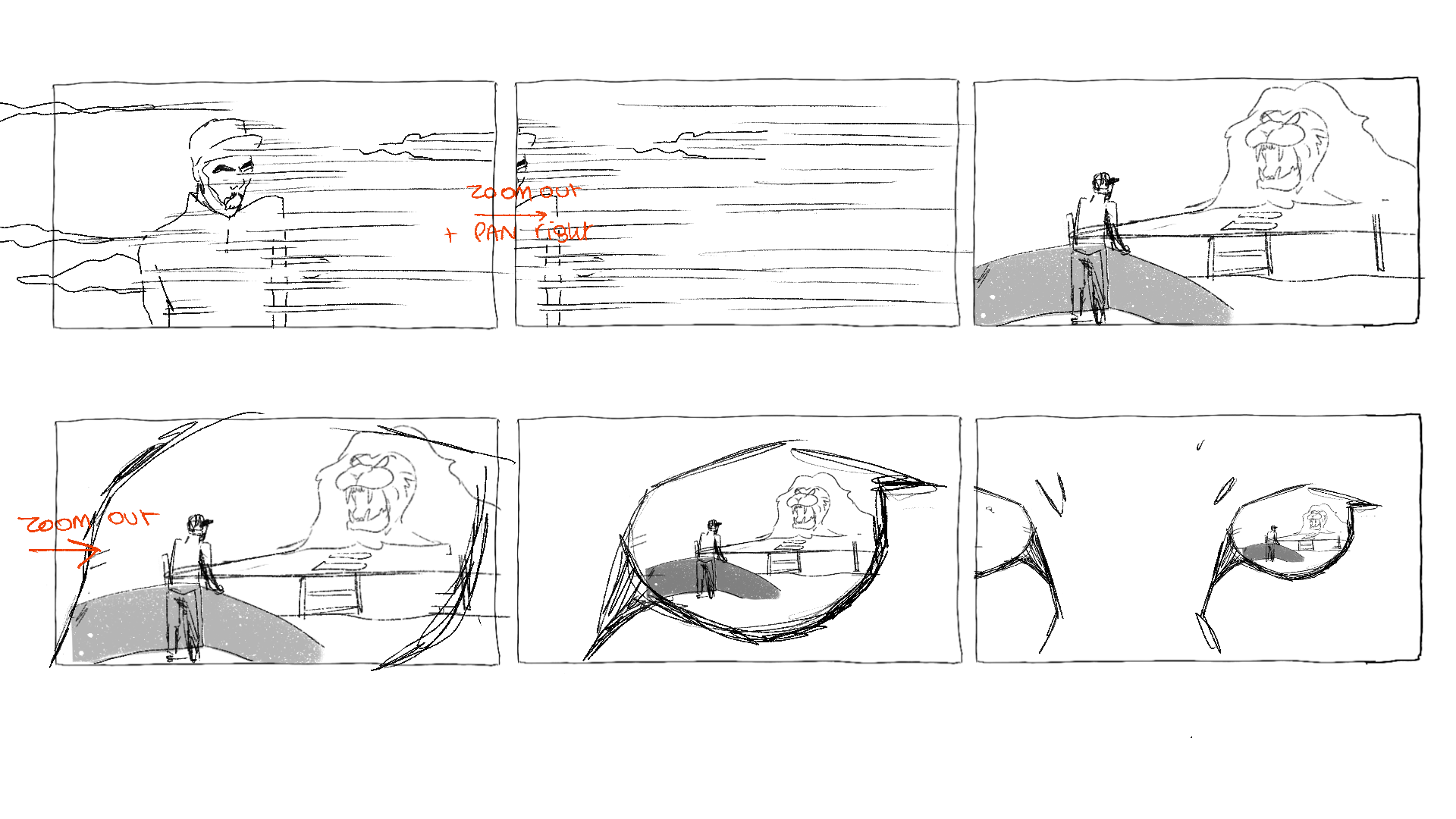
Sketches courtesy of Romy Matar.
From start to finish, the project took around 5 months. It slowly started to evolve from the overall story board. “It was very organic, while also having the animation structure/backbone. We were playing so much. Everyone was involved in the political metaphor. We pitched to Shabjdeed. It was mostly me and Rony. It was super playful. There was more freedom and everyone was from the Levant and the audience was Arab, you didn’t have to be ‘politically correct’, it felt we had the right to go off and go all in,” Matar said. “It was also playful because we were all coming from the same background, same political thinking, and opinions on what was going on. It was playful because in rap and in hip hop in general, you can express yourself very clearly; to be happy or angry. I think the chemistry between the three of us was great. We shared voice notes every day. Even though we had a structure, we had flexibility to change (within limits).
She drew much of the animation by hand, and relied on 2D software. “I would animate the shots, and put them in After Effects in the background and other characters to keyframes and compositions. Then you start playing with effects. It’s frankly a lot of compositing,” she noted.
Behind the scenes footage from Rad Saree3, courtesy of Romy Matar
One of the biggest lessons is to “learn to say no when you have to," says Matar. "The more I work in animation, I need to limit myself with ideas and technical logistics; there’s so much you can do, but you must stop. Rely on compositing when you’re short on time; there are many things you can do when compositing. I am traditional as an animator. You have to use software, techniques, and new things. Because everything is so fast with technology, like AI tools. I used one to help with a slo-mo shot. It was hell to animate. I had to draw a million shots to move it barely, so I had to use AI software to make it longer and shorter. Another lesson for animators out there to share is: Stay updated, there are tools that will help you with more things, it doesn’t look bad like those AI – it's still your drawing,” she noted.
Reference clip courtesy of Romy Matar
And for any animator out there: use references, she stresses.
“The process was really good,” Shabjdeed stressed. “In our profession, there are many people who just talk and do very little. It’s very rare to have someone who can talk, but also act quickly. It was friendly and a free-flowing process.”
The outcome, I must say, is an absolute banger.
Kalam Jawhari – the humorous pixel vignettes
The second notable project that’s been coming out of Stereo this year is a nifty pixel-animated series of short humorous and real short stories called Kalam Jawhari, shared by Shabjdeed, Synaptik (another prominent Arab rapper), and others more to come. There have been three ‘episodes’ so far, the third recently released to audiences. The animator behind this series is the infamous pixel animator, Nabil Saliba.
The idea behind this project is an ongoing series to continue as long as possible and see where it goes; it sounds very bare-bones, and it was, but it left room for something interesting to grow -- which is what the pixel art, and all that it inspires, comes into view. “Nabil’s art and style inspired the project,” Karkar said. “I’ve known him for a long time, and his expertise really helped push the comic relief of the series.”
Kalam Jawhari Episode 1 with Shabjdeed
Kalam Jawhari Episode 2 with Shabjdeed and Dabbour
Kalam Jawhari Episode 3 with The Synaptik
“Rony contacted me out of nowhere on Instagram about a previous project with Chyno on Pixel art that I did, and he liked this style and talked about using it for a short series,” Nabil Saliba noted. There was no real concept just yet, just an idea that was floating around.
As time passed, all of a sudden, in April, another conversation took place between Rony and Nabil, and then they realized they were ready to start on the first episode. “When we had the audio interview of the story, and we started sketching, things went very, very fast. We had no period of preparation since we were connecting via long-distance and then things just flowed,” Saliba laughed.
The first episode took over a month of work for Saliba, since he’s doing this alone. He had to animate things that he had only known in theory, such as the walk cycle of a donkey, or establish the foundational design of the series. But after all that came together, the work took less time, and seems to fit within the timeline of a month from start to finish.
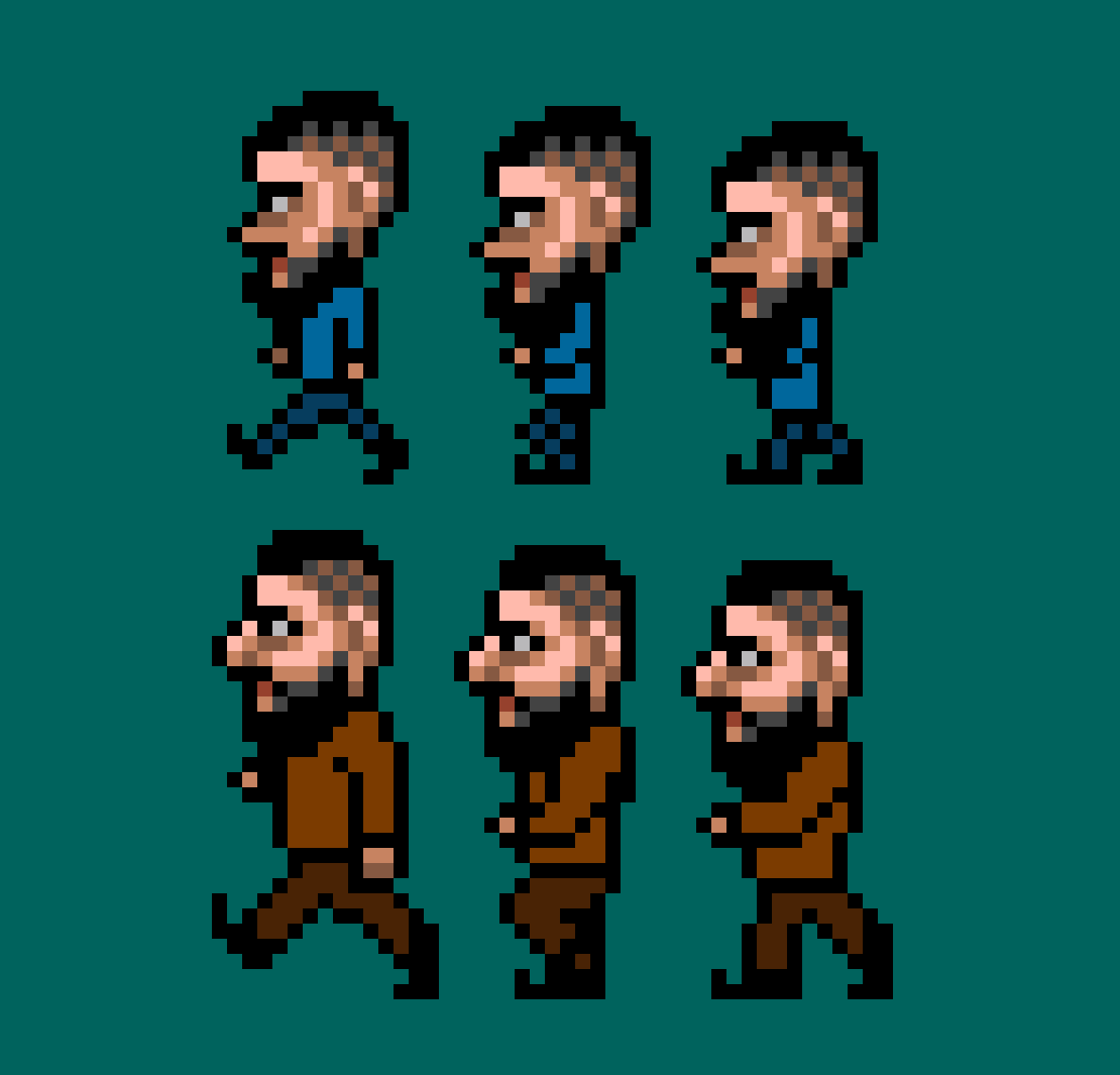
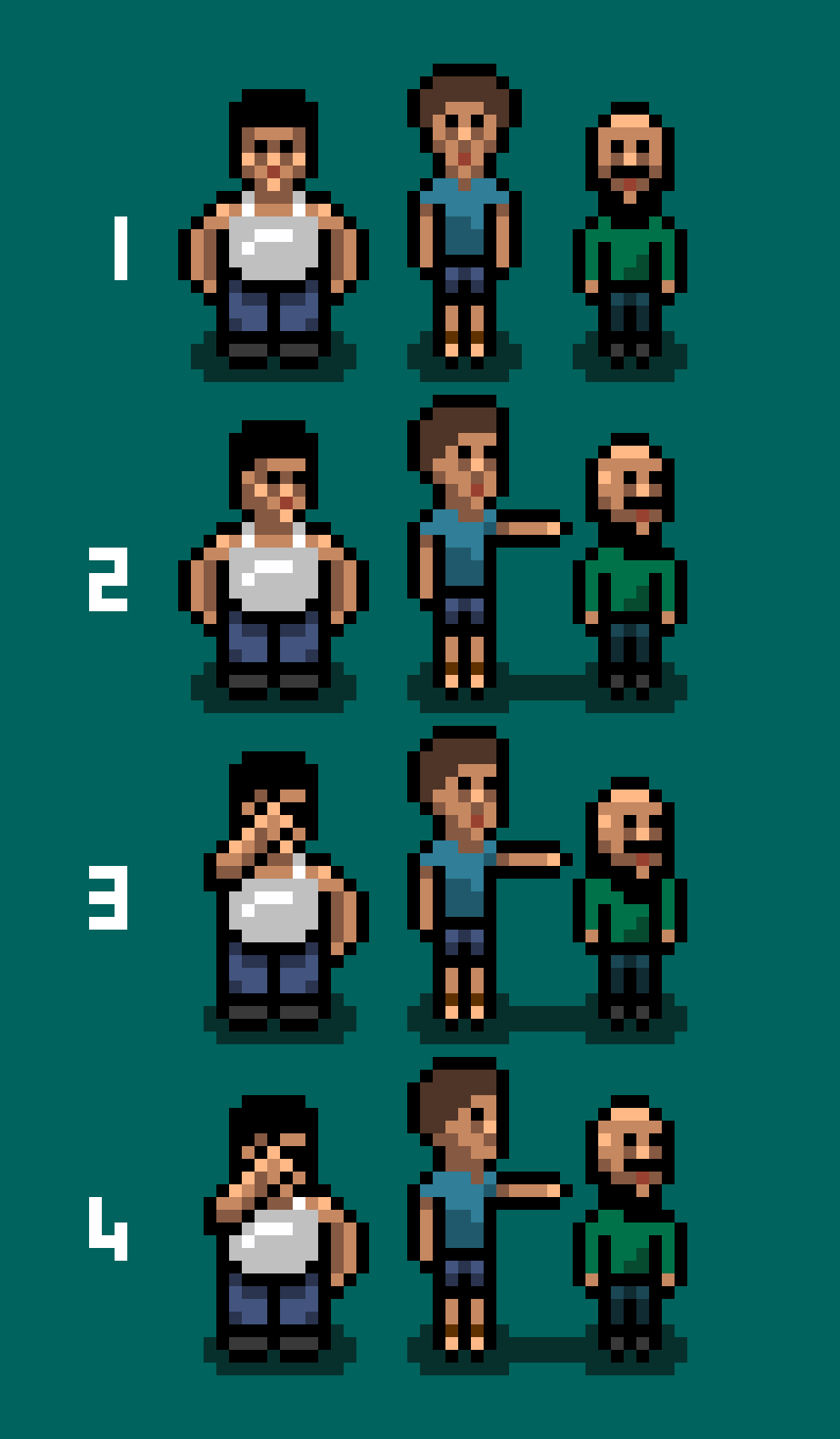
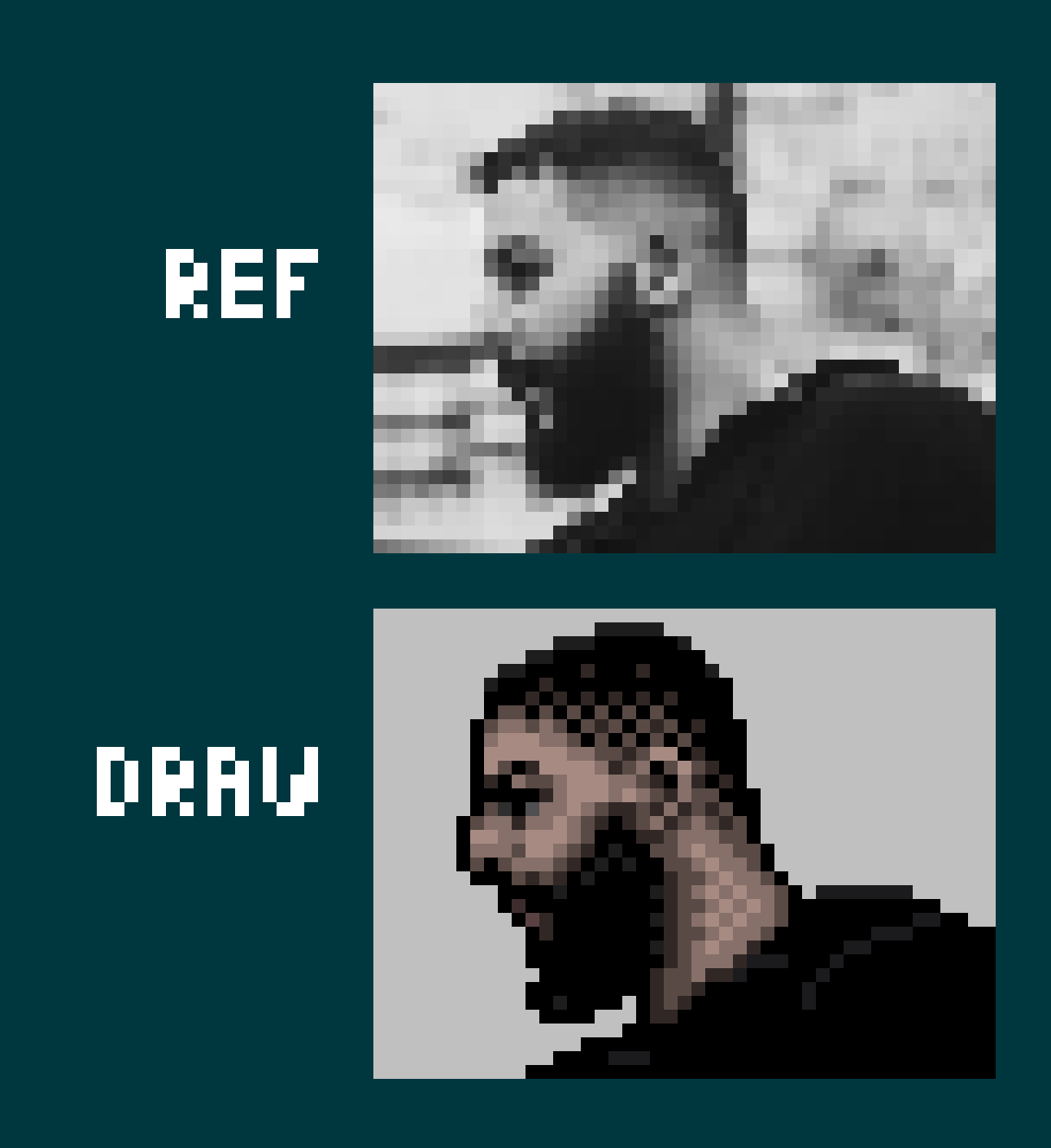
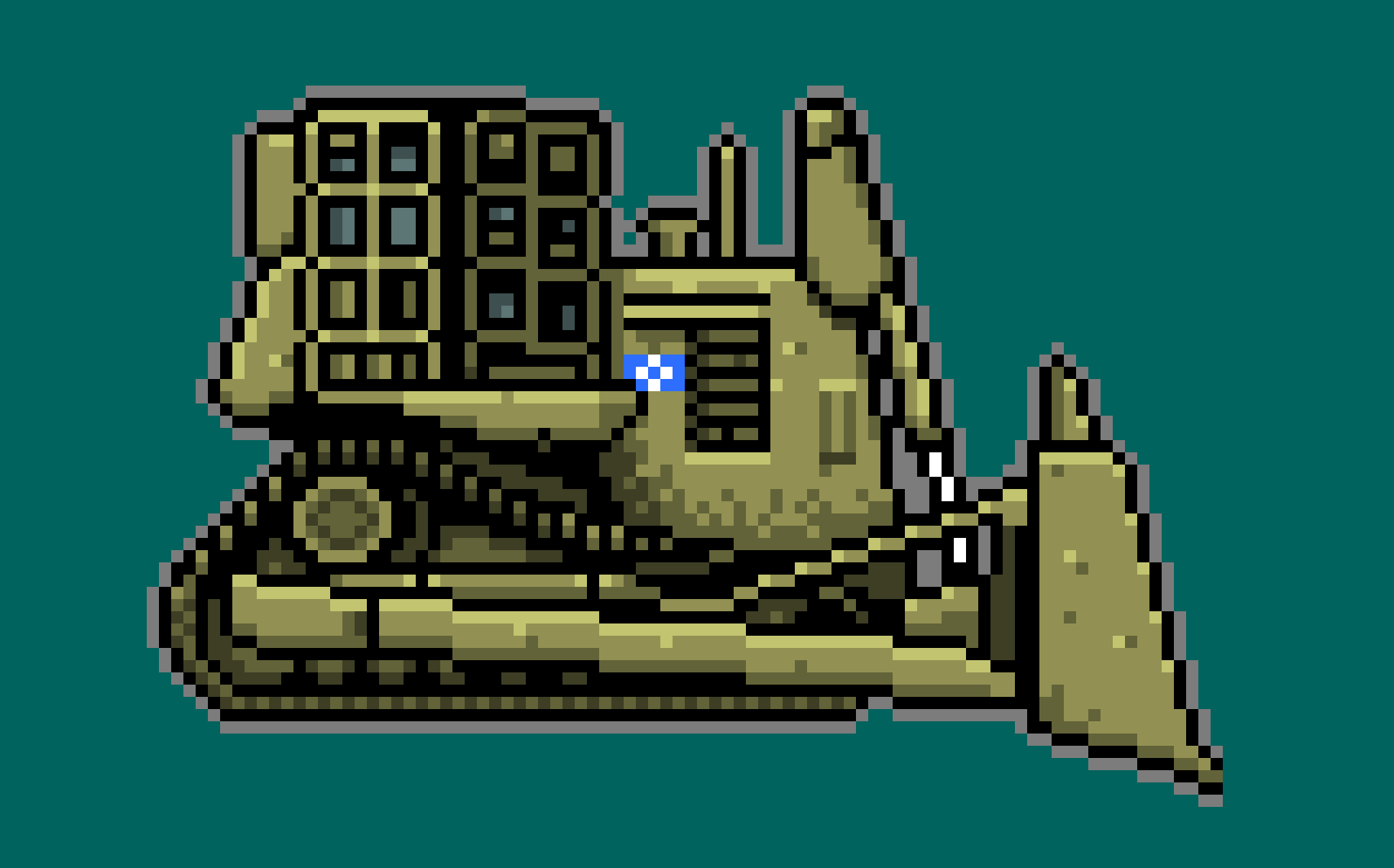
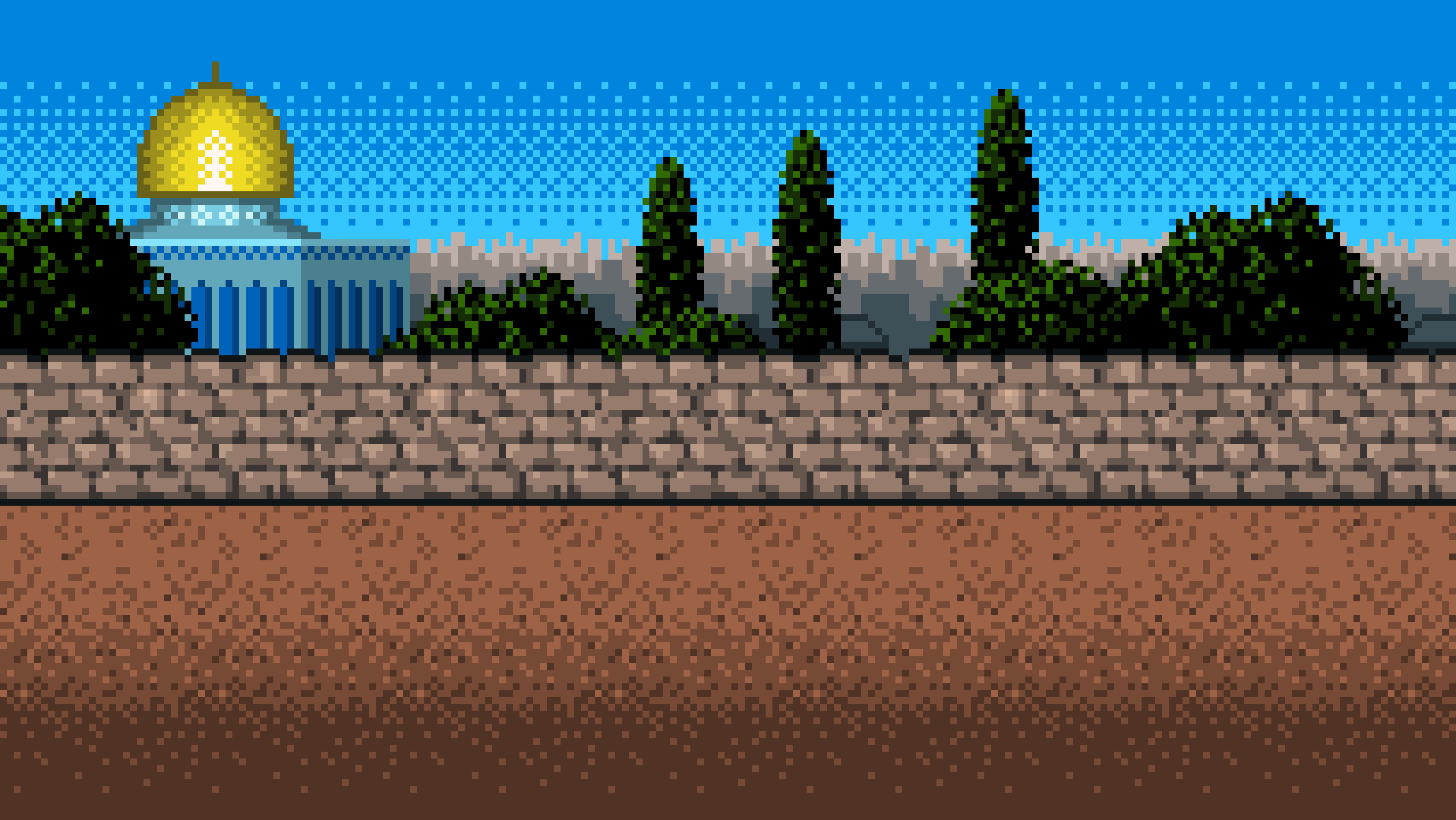
Kalam Jawhari, layers from Epidode 1, courtesy of Nabil Saliba
“It’s very enriching creatively. Yes, there are things that could be planned better, but we’re learning as we go, but I like the free flowing system; I don’t like pre-determined things,” said Saliba.
He also spoke of how pixel art has a lot of restrictions and takes a lot of time. For instance, Saliba explained that if an animator wants to zoom in and out, it's quite simpler in other animation styles, but with pixels, distance has to be redrawn, and one can’t simply zoom in and out of an image. “Everything is detailed to take into account in the preparation. Drawing a very complicated background – if I have lots of elements in another drawing to copy/paste – it has its own quirks,” Saliba stressed.
Like Matar, Saliba described Kalam Jawhari as a “dream project”.
“I’m happy with the way it's going for now, and will grow organically and be more complicated in episodes. At certain points, it wouldn't be bad to find someone to work with me. Rony likes to work with Arab artists. I’m determining a lot of the content in terms of what time I have on hand,” Saliba said, adding that the biggest lesson he learned from this experience was how with fewer people involved in the creative process, the more efficient it was despite the disadvantages of the workload on those involved.
With the third episode released, which Saliba described as “the longest and most complicated so far in terms of the amount of elements, locations, and actions”, he’s still excited to do more. “As long as there is a budget, I’m willing to keep going, and I am enjoying this. I am learning a lot of stuff technically in each episode, and I am trying to do things I didn’t know before in terms of animation and movement, and reapply it again,” Saliba remarked.
Shabjdeed actually shared a story for one of the episodes in the series. “I liked it a lot! It was great overall,” he said with a chuckle. “We are truly the generation of DIY. I didn’t know there were people like Rony, but clearly there are lots of them, and if they can work, that’s excellent.”
Trials and tribulations of the future
“We exist in a world that is constantly trying to erase our culture and existence, and as bloody as it is, I believe it will never happen and just shows how weak ‘the other side’ is.”
Karkar teased more plans ahead, such as infographics (utilizing 3D graphics this time), more music videos, and other animated projects with Shabjdeed and others. But first, he stressed, there’s the impact of life to deal with.
“We’ve taken many hits personally with the genocide and war to our networks in Lebanon and Palestine. We are trying to deal with this organically. We have to respect our own process, and we are aware that we can’t stop, since ‘the other side’ that’s trying to kill us will win. We have people in Sour, Beka’a, Gaza, Ramallah, and they are expressing incredible difficulties of displacement and trauma,” Karkar said.
“We are coming back to life in a way. We aren’t a huge company with KPIs and all that, we are a group of people engaging with the realities. We are not in the West with our legs propped up on desks and working based on the weather,” he added. “We exist in a world that is constantly trying to erase our culture and existence, and as bloody as it is, I believe it will never happen and just shows how weak ‘the other side’ is.”
Fitting to these words, this author had been waiting for some responses from the graphic designer behind the logo and other works, Khalid AlSaidni, who is currently in Gaza surviving an Israeli genocide. He has yet to send his response, but we are eagerly awaiting it and will include it in this article as an addendum once it comes in.
Overall, Stereo is an exemplary example of the immense talent waiting to burst out from our region onto the world, loud and proud.
Categories: Spotlight