Processing Trauma Through Animation
Mt7rk looks into 4 films depicting trauma in a turbulent region.
In recent years, animation in the Arab world has emerged as a powerful medium to capture and preserve narratives of pain, resilience, and resistance, often overlooked or misrepresented by mainstream news outlets and Western media. Recurring themes in these films revolve around exposing injustice, reclaiming erased histories, and giving a voice to those silenced by systems of power. These films serve as both a cultural and political archive, ensuring these stories are neither forgotten, erased nor distorted.
This article examines four short films—Suleima (2014), Naqla (2019), Ayny (2016), and Burj El Murr (2013)—that explore oppression, disability in war, and personal and collective trauma. Through their diverse aesthetic approaches, from documentary-style realism to magical surrealism, these films not only highlight the struggles of those affected but also celebrate the resilience and humanity that persist in the face of adversity.
Suleima: “48 Years and 3 Months” – One Woman's Story of Resilience and Her Fight for Freedom
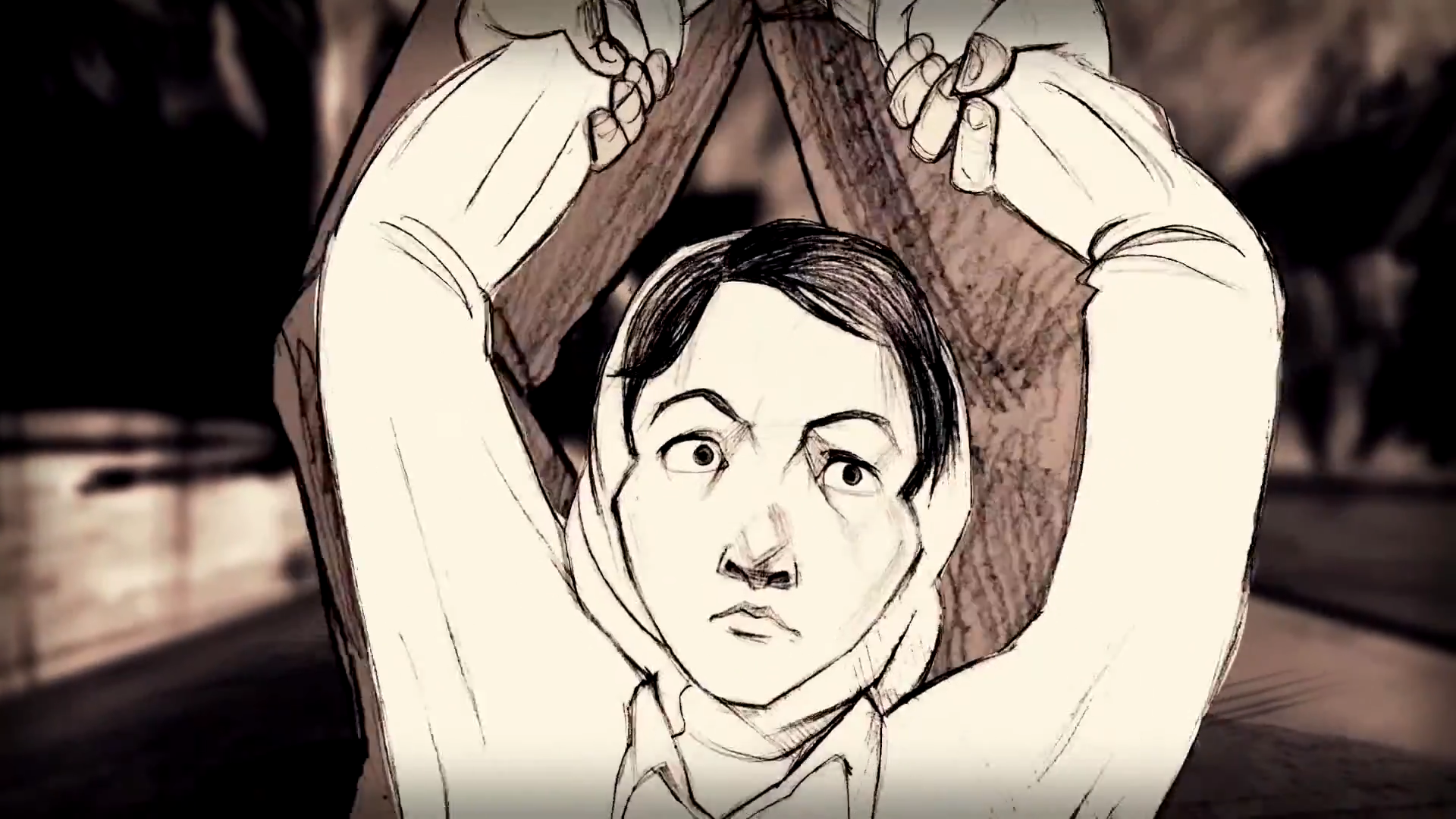
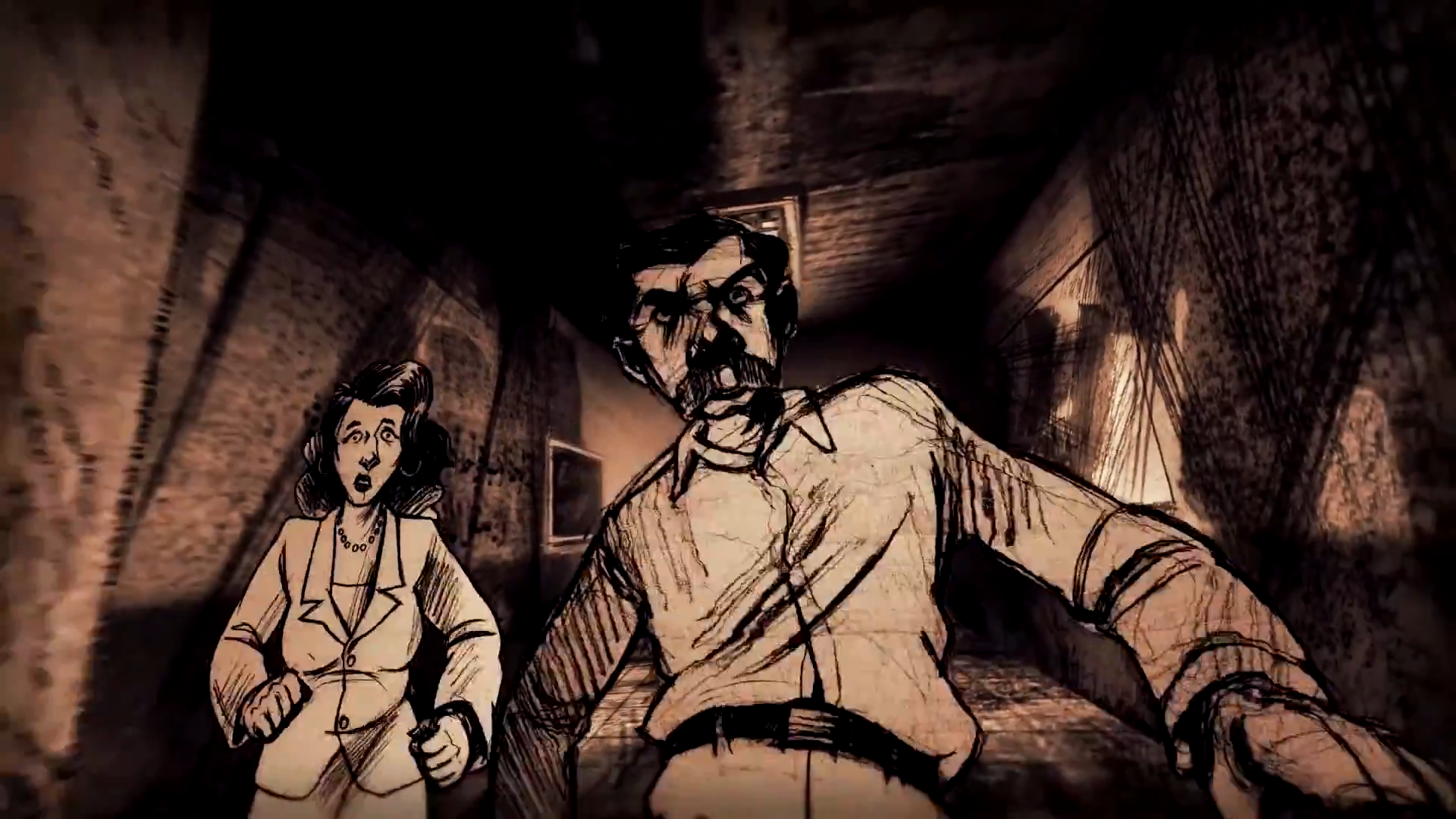
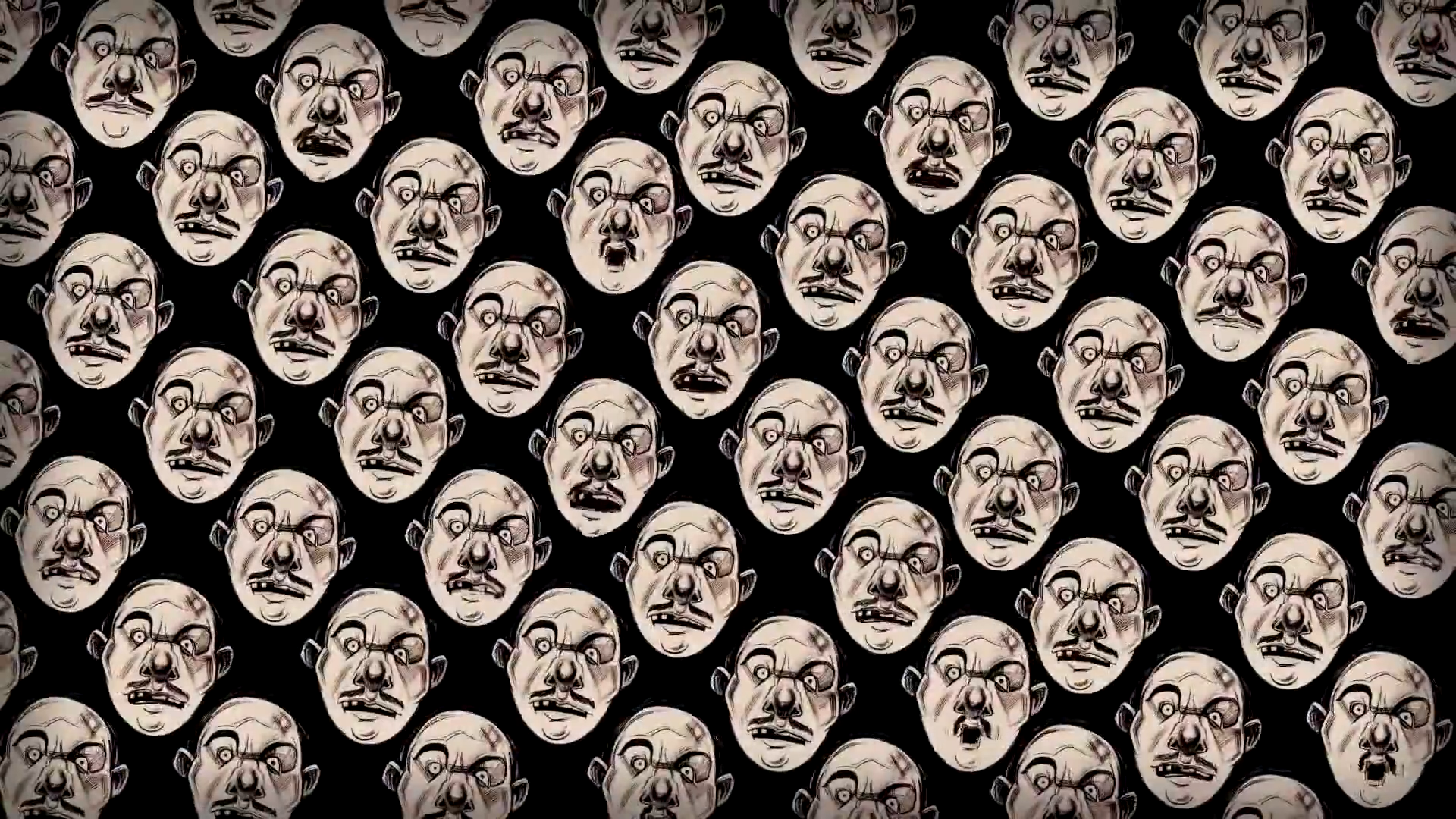
Stills from Estayqazat's Suleima 2014
Suleima was produced by Estayqazat in 2014, an entity focused on documenting the stories of Syrian women during the Syrian Civil War, predating the fall of the Assad regime. The film captures the testimonies of Suleima, a middle-aged woman who spent her life battling multiple forms of oppression. Adopting a non-linear narrative, it recounts several pivotal moments that shaped her journey. In doing so, the film becomes not only a story of resisting oppression but also one of overcoming it.
The contrast between the layout and character design hints at Suleima’s conflicting feelings about herself and those around her.
The decision to animate the film allowed the filmmakers to reimagine the world through Suleima’s perspective. Suleima’s strong convictions and clear sense of justice result in a stark, black-and-white worldview where things are either right or wrong, and people are either with her or against her. In her mind, she fights injustice not just for herself but for her people, as seen in the film’s opening sequence, where she is detained for defending a young woman from authorities during a rally.
The characters stand out against charcoal-like backgrounds that resemble the work of an angry, passionate artist, reflecting Suleima’s frustration with the lack of progress in her world. The contrast between the layout and character design hints at Suleima’s conflicting feelings about herself and those around her. They represent both the people she protects and the very systems she opposes.
Clip from Suleima (2014)
Suleima’s rebellious spirit began to take shape during her childhood when she and her father witnessed a man being beaten by the police. Initially more curious than afraid, Suleima saw it as an opportunity to challenge authority. This moment leads to one of the film’s most entertaining sequences, where the animation becomes comical and exaggerated. Young Suleima literally blows a guard away by shouting her hatred for the regime, her voice even melting the guard’s gun. However, this humor is short-lived, as the following sequence shows her being beaten by a teacher for her defiance, revealing the cycle of pain and violence that defines much of her life.
The film concludes with the yellow lights of Suleima’s apartment window, standing out vividly against the dreary surroundings. This visual contrast symbolizes Suleima’s spirited nature, acting as a beacon of hope and defiance for her community.
Naqla and the Fear of Being a Burden: An Intimate Look into the Lives of Those Injured in War
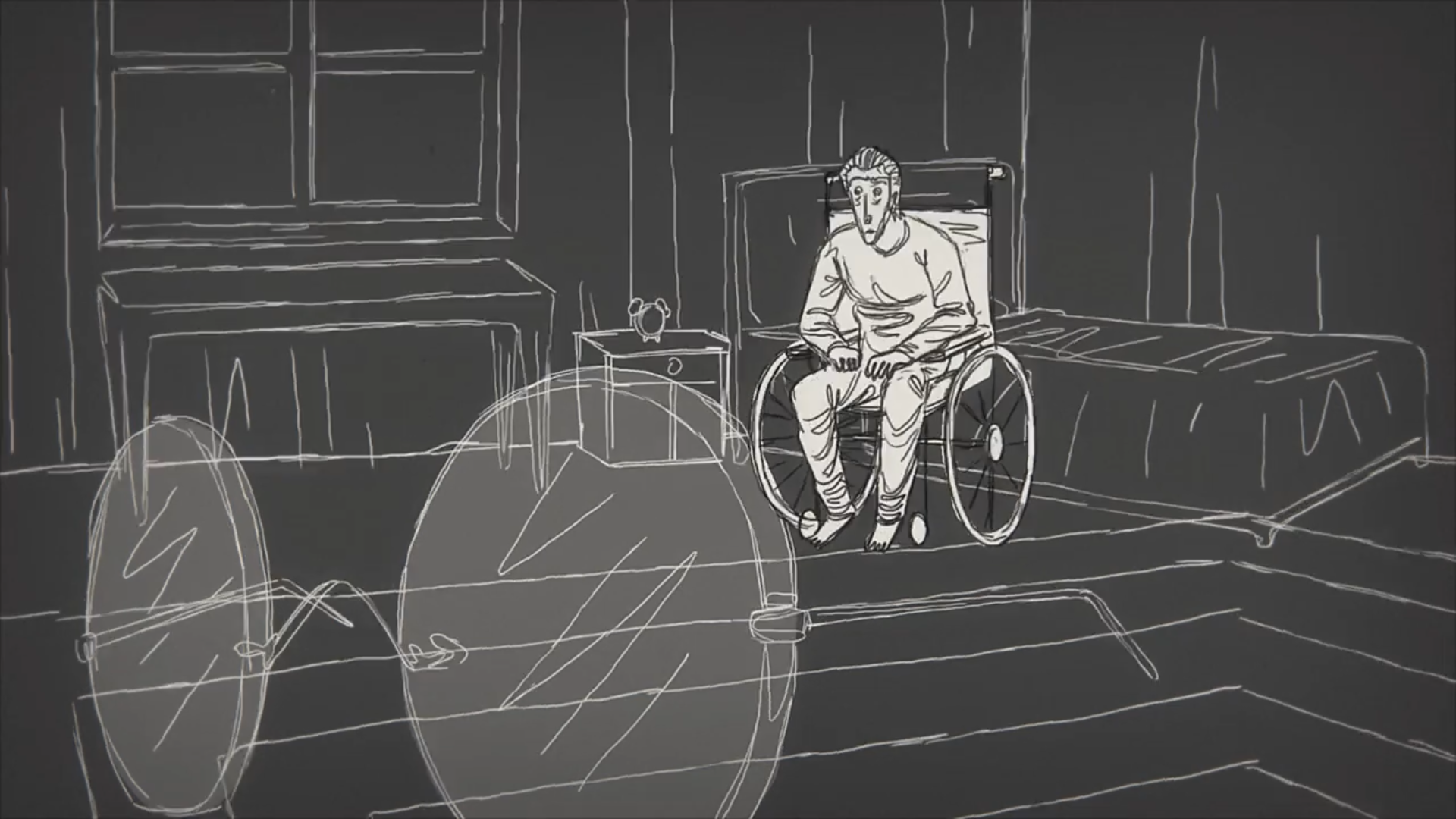
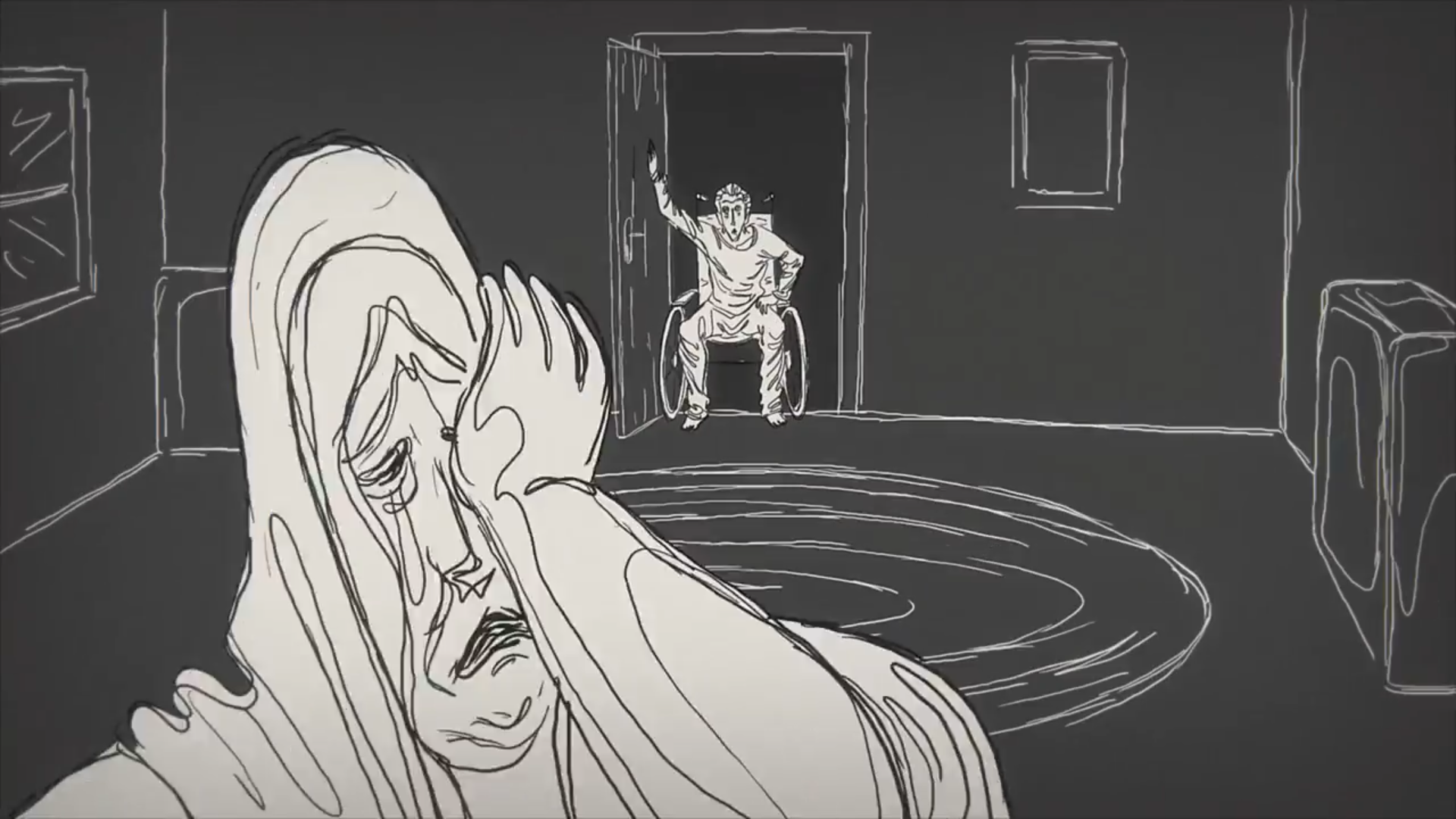
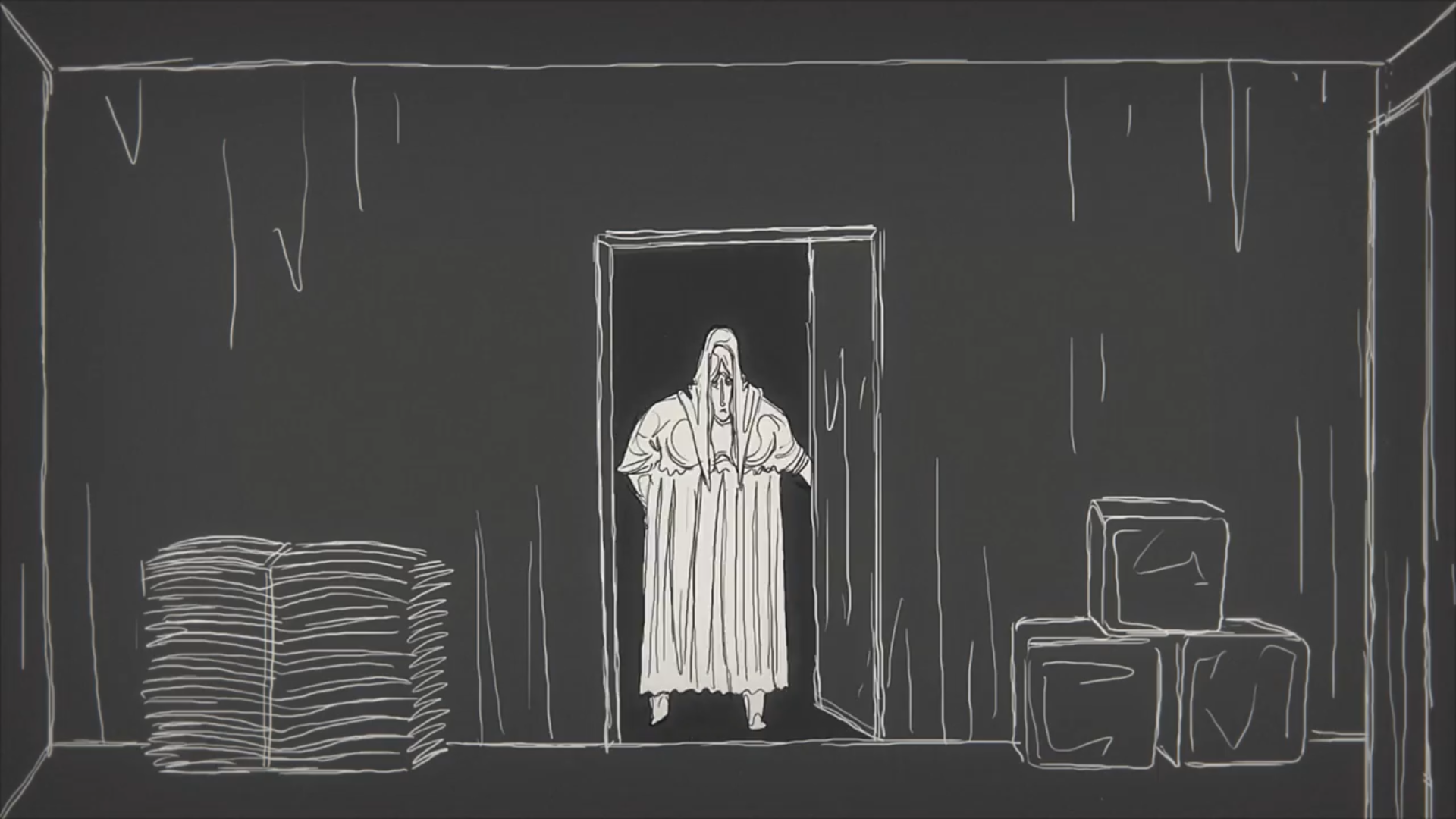
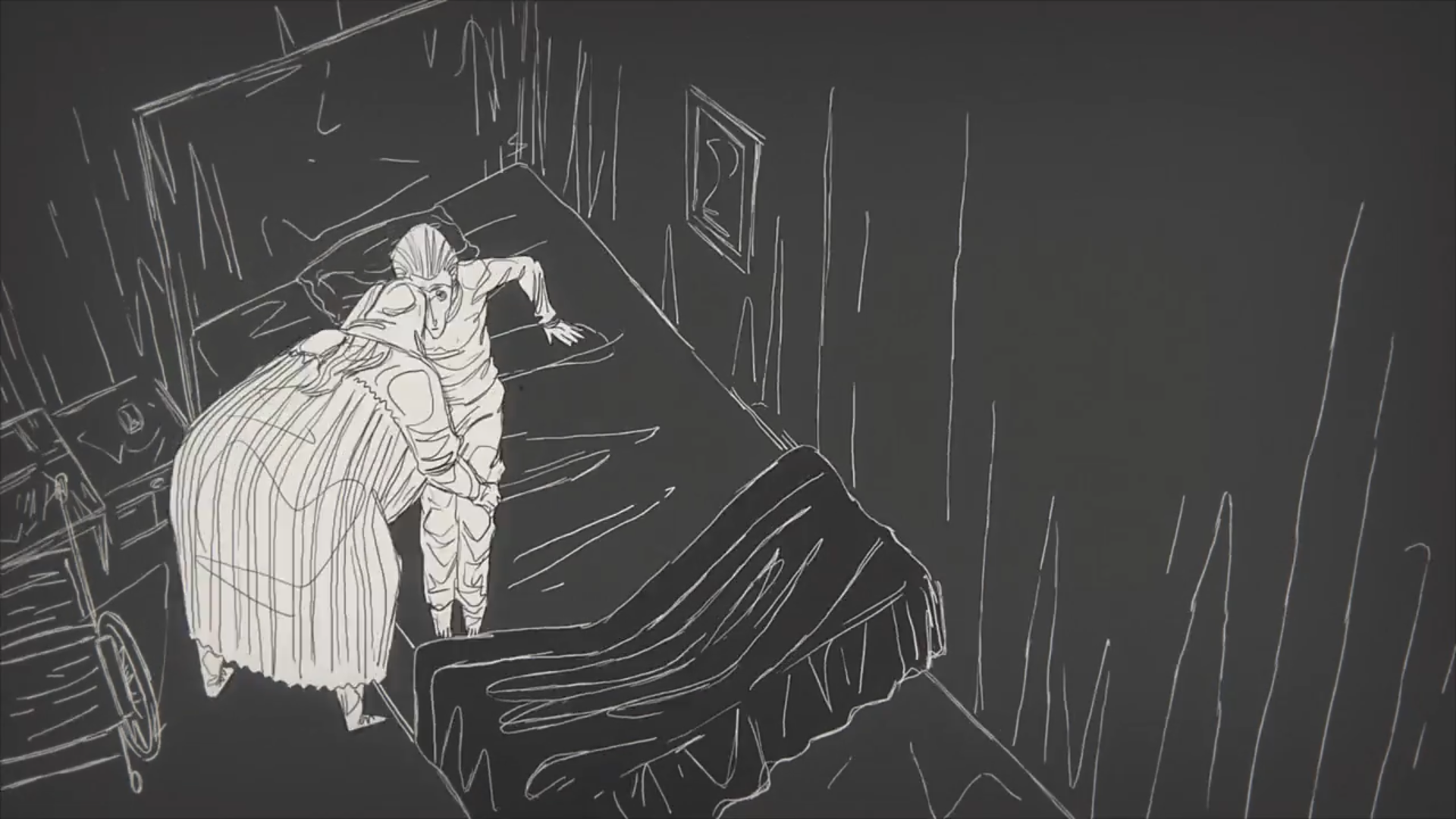
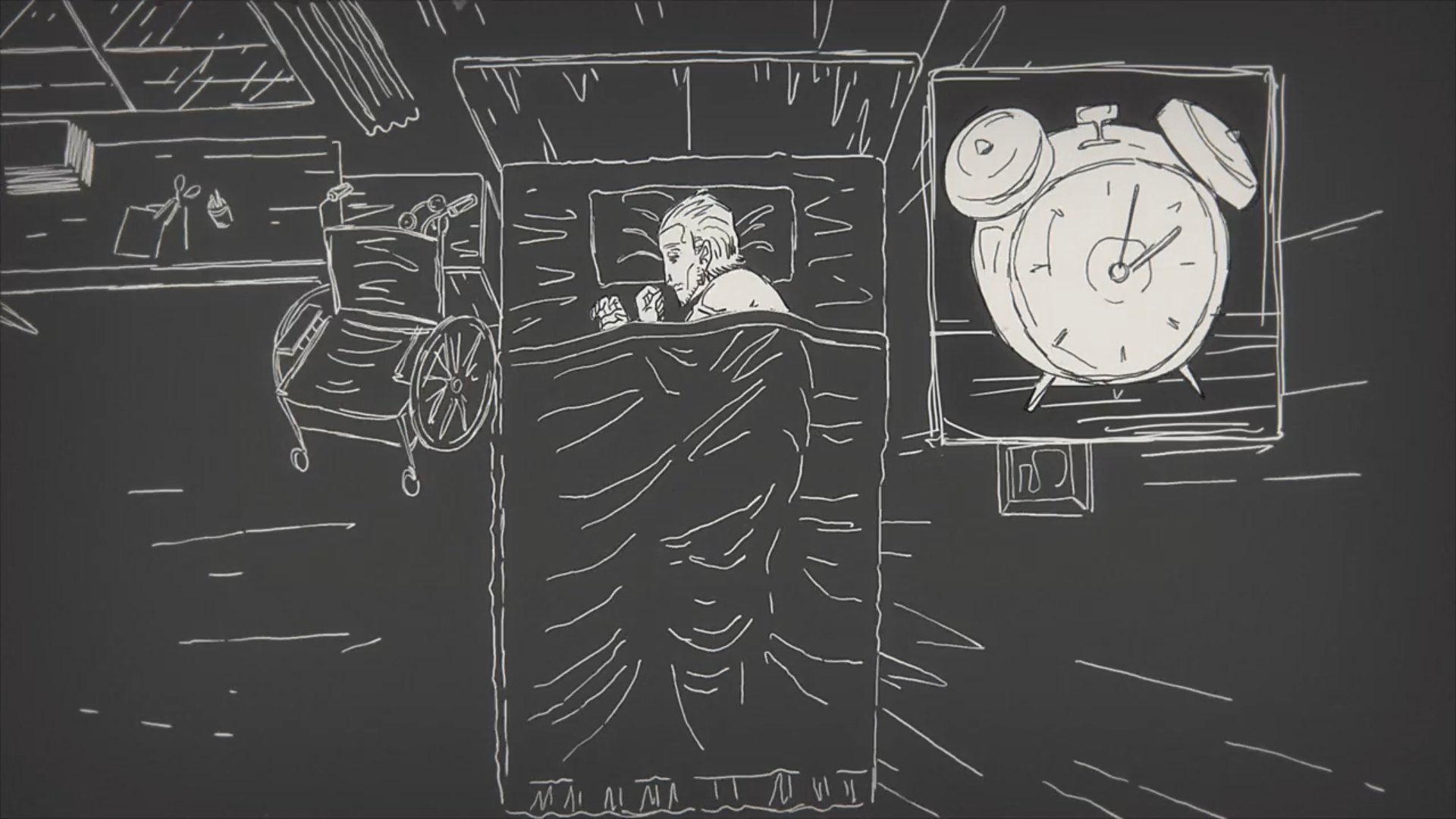
Stills from Yousef Albaghshi's Naqla (2019).
Kuwaiti animator Yousef Albagshi’s 2019 short film Naqla is a 2D animation about a disabled man and his elderly mother trapped in a warzone. Based on the testimony of a refugee survivor, Albagshi sought to explore themes of loss and survival through animation. At just over seven minutes long, the film took six months to complete, with Albagshi singlehandedly writing, directing, and animating it.
Yousef Albaghshi's Naqla (2019)
Although the characters are nameless, their emotions are powerfully conveyed through masterful animation of expressions and body language. The minimal dialogue is offset by raw and compelling voice acting, while the emotional bond between the protagonist and his mother heightens the tragedy of their situation.
The film suggests that the protagonist’s paralysis is a recent injury, as he struggles to adapt to his limited mobility. Initially, he maintains a calm demeanor and experiences mild hallucinations, possibly as a coping mechanism or dissociation from reality. His mother, meanwhile, takes on the role of breadwinner, caring for her son before and after her work shifts.
Clip from Naqla (2019) [No Audio]
As the story progresses, the protagonist’s composure unravels as he becomes consumed by the fear of being a burden during wartime. Naqla’s erratic, sketch-like art style mirrors his deteriorating mental state, with increasingly vivid and violent hallucinations. His feelings of helplessness and guilt spiral into suicidal thoughts, as he begins to believe his death would be the only way to relieve his mother of the weight he feels he imposes on her.
The war’s relentless chaos leaves the characters trapped in a hopeless situation, culminating in an emotional climax where the son’s will to live is reignited by his mother’s selfless sacrifice. It becomes clear that she has never viewed him as a burden; instead, their roles shift as he realizes it is now his turn to care for her.
Naqla sheds light on the often-overlooked realities of individuals disabled by war, offering an intimate glimpse into the profound physical and emotional toll of such injuries. It examines how disabilities affect not only one’s relationship with oneself but also with others. Naqla underscores the unfathomable challenges of acquiring a disability in wartime. In this sense, the film transcends the story of one survivor—it represents the struggles of many.
Ayny: “When a House Dies, a Small Flower Blooms out of it.” How a Traumatic Incident Became a Fable for the Ages
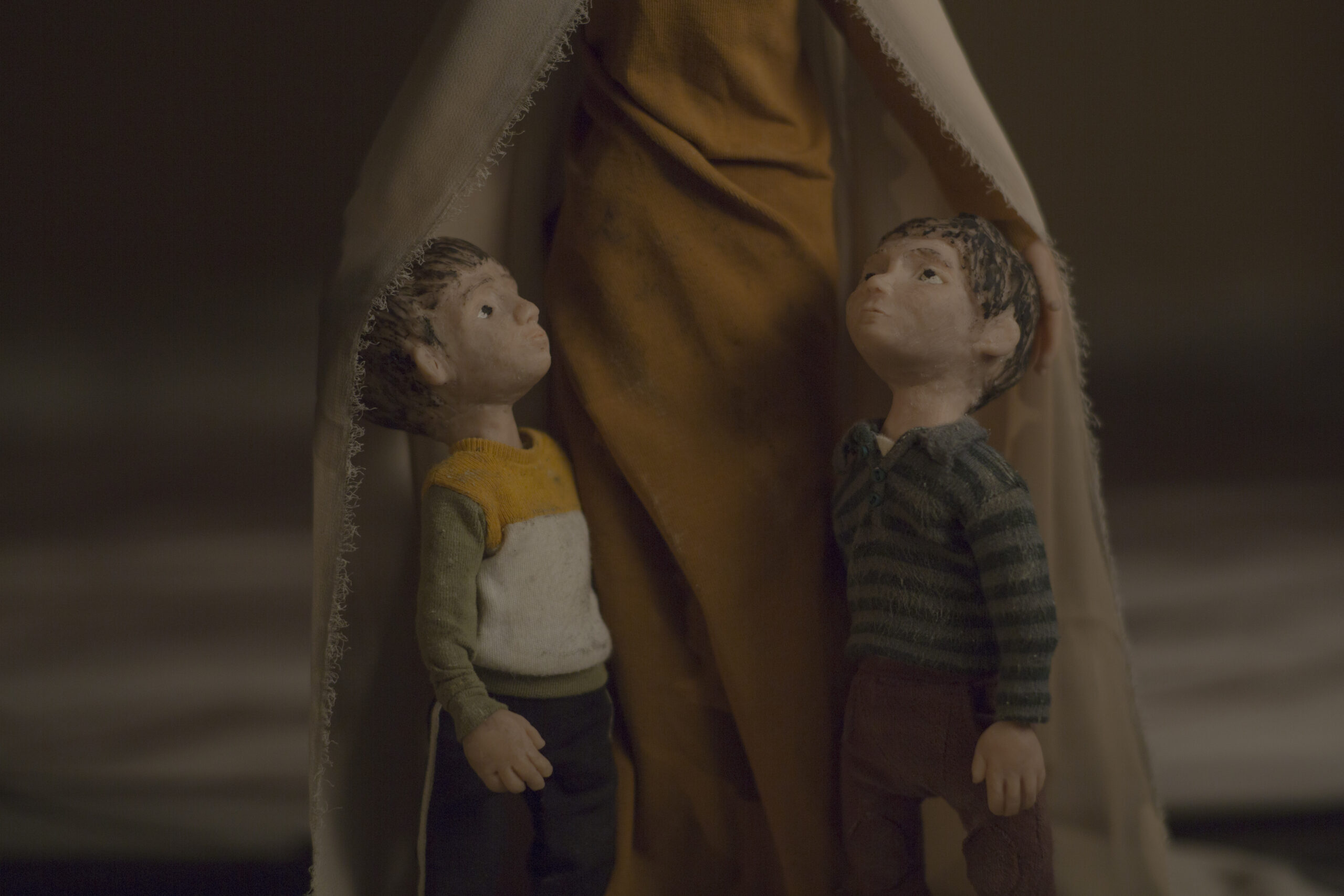
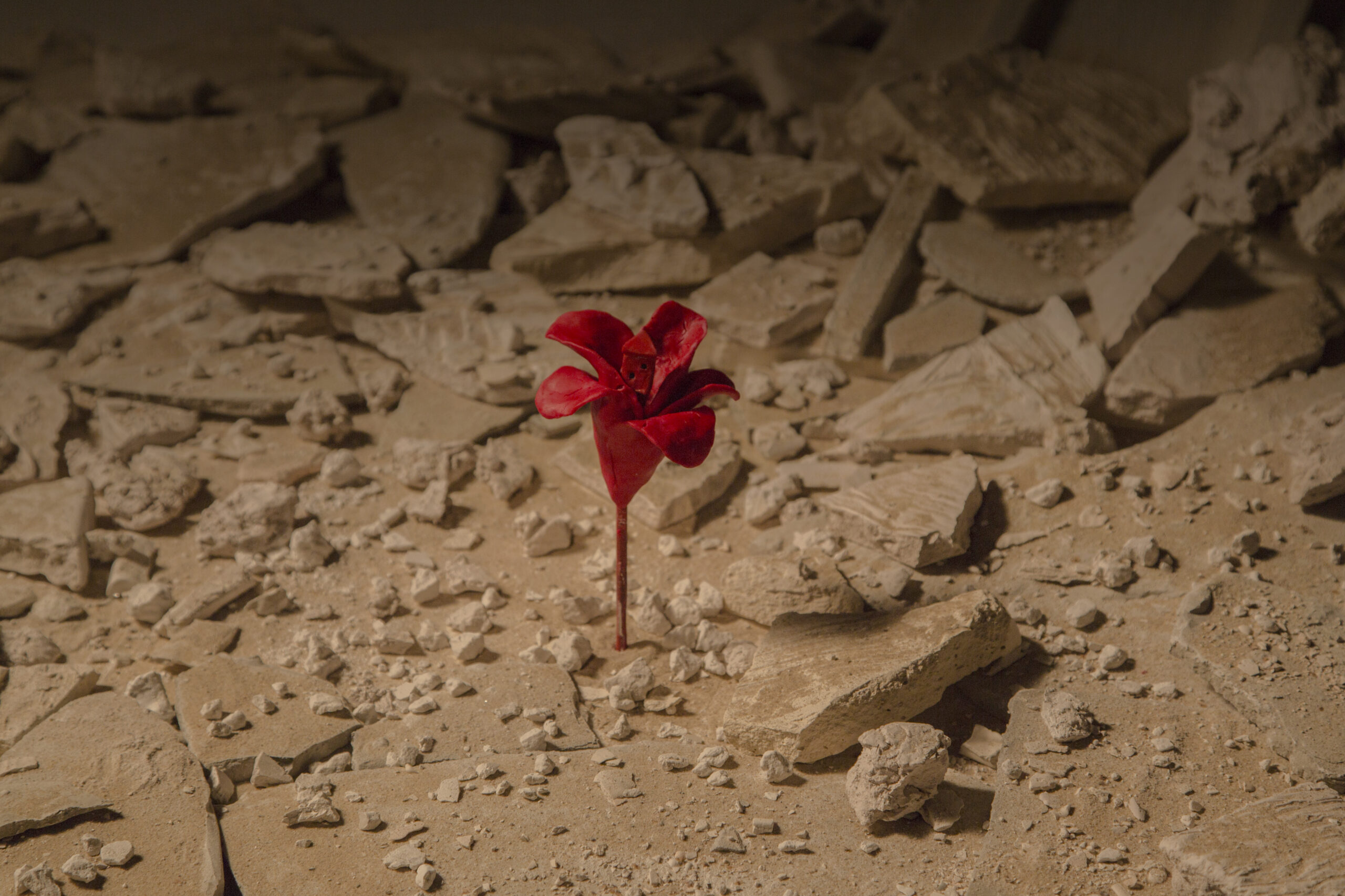
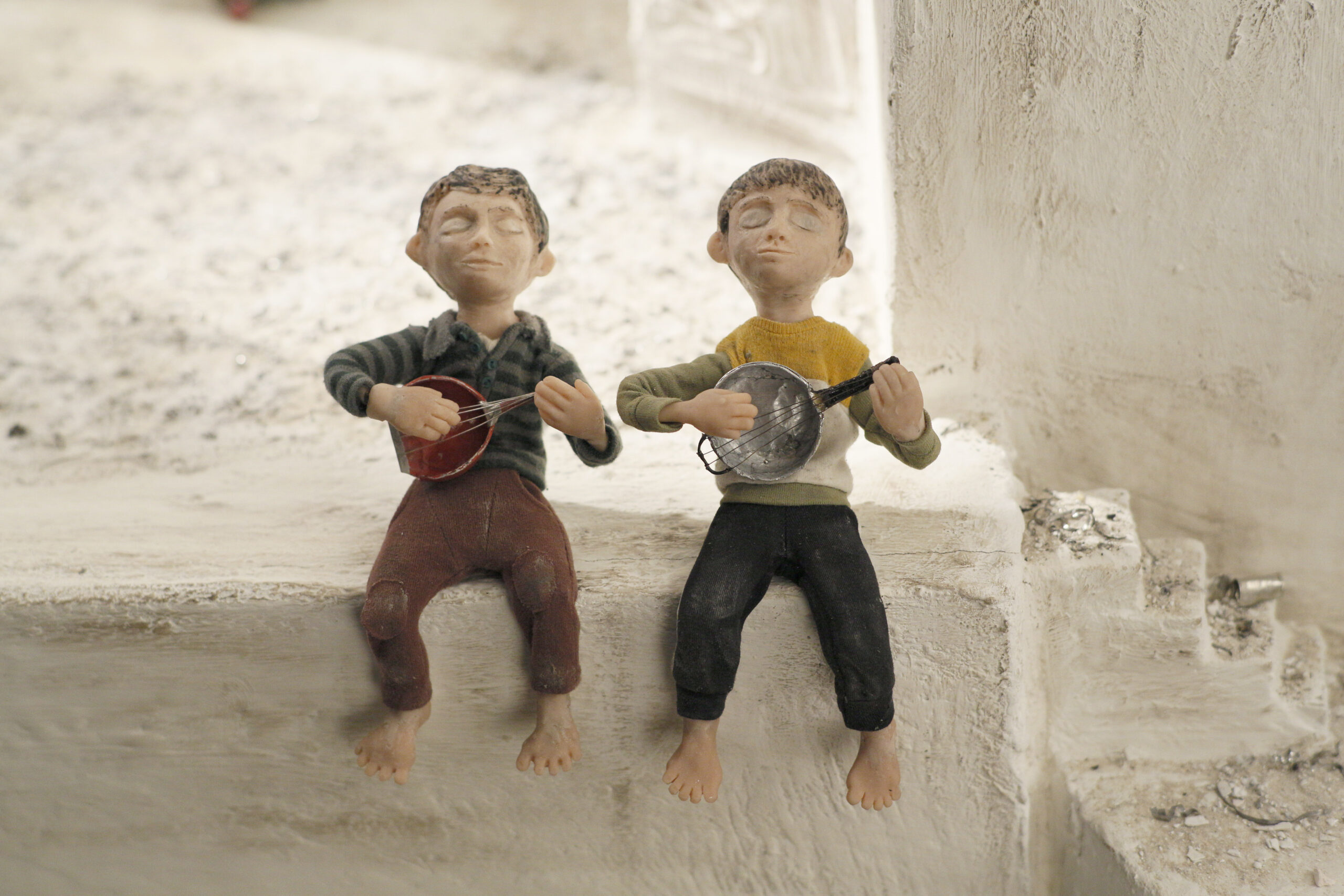
Stills from Ahmad Saleh's Ayni (2016)
Palestinian filmmaker Ahmad Saleh’s 2016 surrealist stop-motion film Ayny takes the form of a fable about two young boys dreaming of owning a magic lute. Ignoring their mother’s warnings, they venture into the wastelands, only to discover its dangers. The film ends on a bittersweet note: though the boys survive, they pay a heavy price for their actions.
AYNY Official Trailer
The story subtly retells a traumatic incident Saleh experienced while visiting family in the West Bank. Having spent much of his childhood abroad and now residing in Germany, Saleh recalls a day in a refugee camp when two boys playing nearby accidentally stepped on a landmine, triggering a sudden explosion. Amid the chaos, Saleh and his cousin rushed the boys to the hospital. Fortunately, the boys survived, though the incident left Saleh deeply traumatized, unable to discuss it for years.
In trauma studies, trauma is often called “unrepresentable” due to its elusive nature. Animation, however, makes trauma tangible in ways live-action often cannot.
Over time, Saleh began writing about his experiences as a way of processing his trauma, eventually leading to the creation of Ayny. While rooted in a violent and shocking memory, the film adopts a magical realist approach, transforming those memories into a dream-like narrative imbued with grief and acceptance. Animation, with its unique ability to mediate stories of trauma through dissociation, enables this transformation.
Clip from AYNY (2016) - Animator's hands.
In trauma studies, trauma is often called “unrepresentable” due to its elusive nature. Animation, however, makes trauma tangible in ways live-action often cannot. Graphic depictions of violence or abuse in live-action can overwhelm audiences with shock or disgust, detracting from the story’s emotional depth. In contrast, animation creates a mediated, immersive experience that tempers initial shock, allowing audiences to focus on the characters and the narrative. By presenting animated images as representations rather than literal depictions, the medium fosters a deeper emotional connection and empathy.
Burj El Murr and Memories of War: How a Monument Embodies a City’s Collective Consciousness
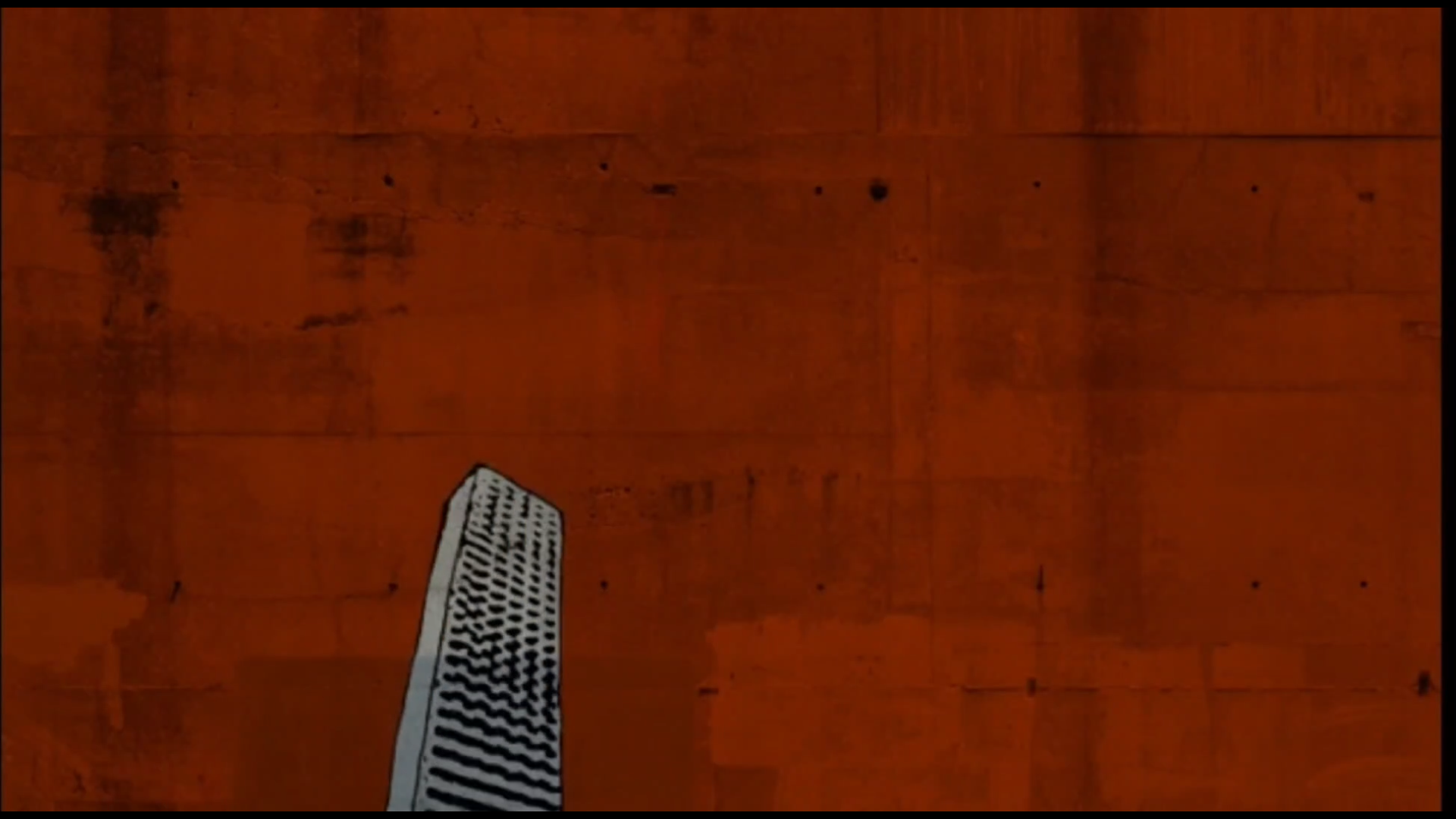
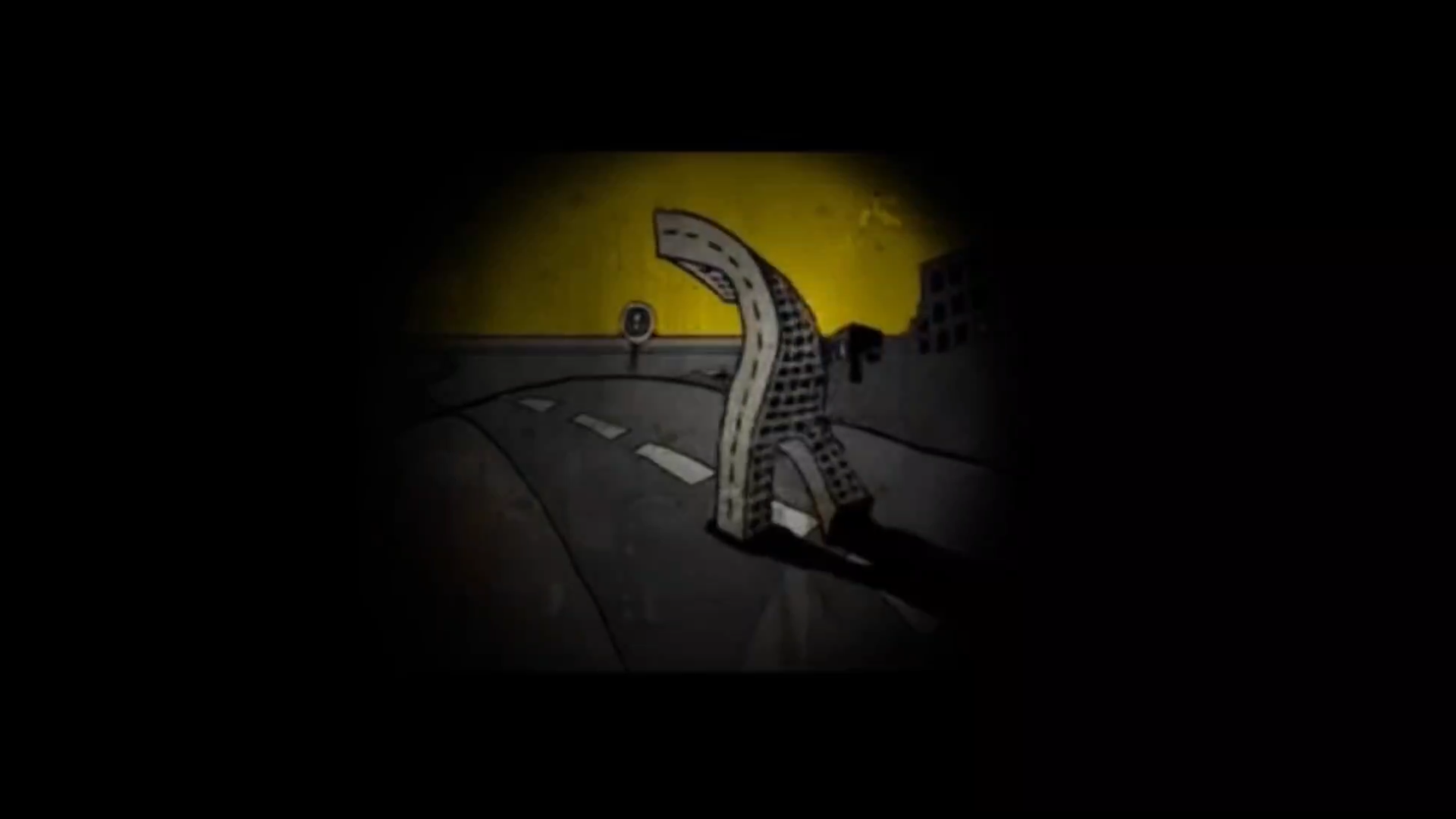
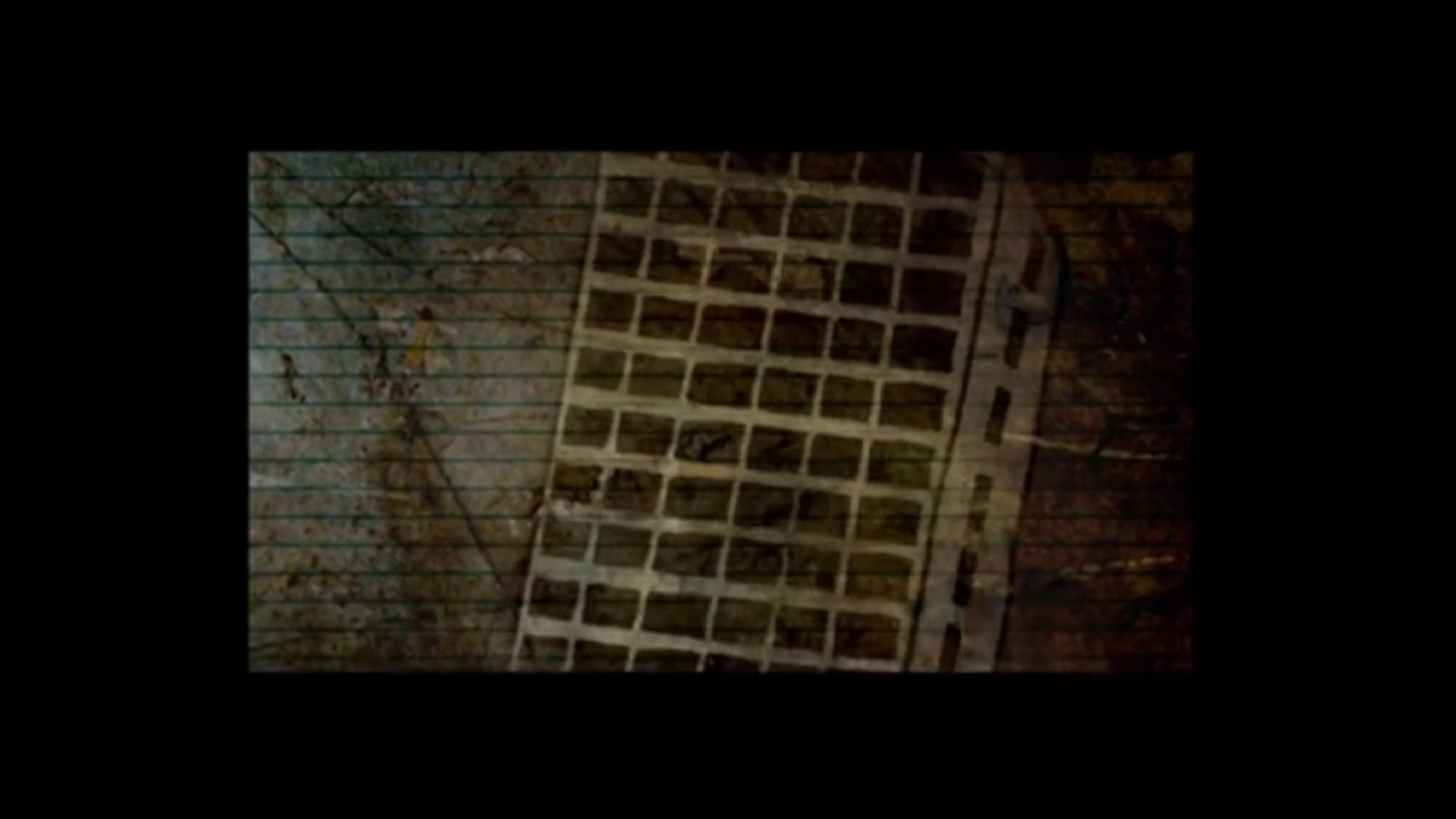
Stills from Lina Ghaibeh's Burj El Murr (2013)
Lina Ghaibeh’s 2013 experimental animated film Burj El Murr reflects on the collective trauma of the Lebanese Civil War through the lens of the Murr Tower—a looming skyscraper in central Beirut used as a sniper’s nest and militia base during the 15-year conflict. Instead of adhering to a clear narrative, Ghaibeh presents evocative visions of what might have been.
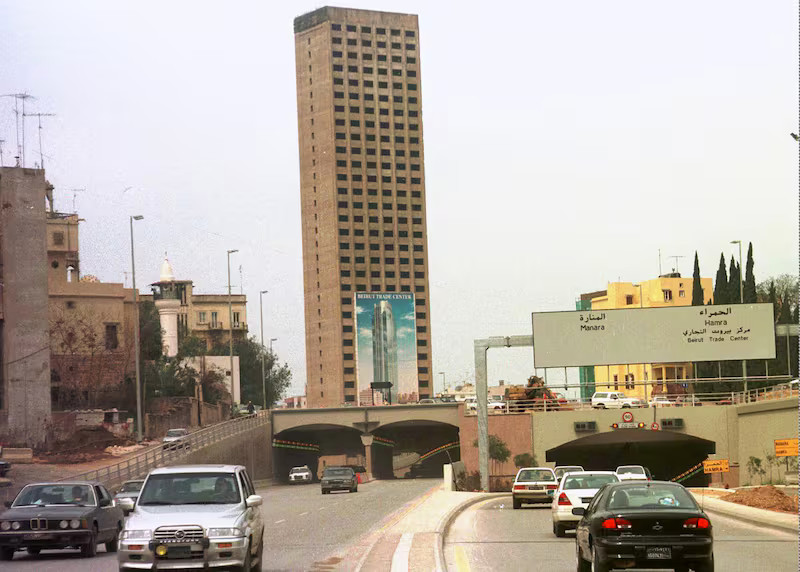
Murr Tower overlooking Beirut
The film begins with an elevator descending through the building’s lower floors, where mysterious characters and objects appear. Though abandoned, the tower comes alive through a blend of live action, stop motion, and 2D animation, creating surreal sequences that embody loss, grief, life, and fleeting joy. The structure becomes more than a relic of war; it is haunted by the memories and dreams of those who suffered within its shadow.
Despite being depicted as a home for the peculiar characters inhabiting it, the tower’s first act as a living entity is to abandon its history, burdened by the weight of its guilt.
Another poignant scene features live-action footage of soldiers projected onto the building’s crumbling walls. Initially accompanied by gunshots and chaos, the sequence shifts as the sounds of gunfire are rhythmically edited into a song, illustrating how life during the war settled into a grim routine.
Perhaps the most powerful moment comes near the end, when the tower becomes sentient and walks away to Mashrou’ Leila’s Arabic cover of Ne Me Quitte Pas. Its movements are slow and sorrowful, its head hanging low in shame as it attempts to escape its past. Despite being depicted as a home for the peculiar characters inhabiting it, the tower’s first act as a living entity is to abandon its history, burdened by the weight of its guilt. Yet, in the final shot, the tower remains standing, watching over the city—a permanent reminder of the war and its impact on Beirut’s collective psyche. Even if the tower were to vanish, the trauma of what occurred would remain.
Clip from Burj El Murr (2013) - The tower walks away.
Through these works, animated shorts emerging from the Arab world continue to carve out a space for authentic storytelling, challenging mainstream narratives and amplifying often-overlooked voices.
Categories: Analysis