Palestinian Resistance in Animation
From internationally acclaimed artistic films to low-quality sitcom-like shorts, the Palestinian animation scene is inescapable from the larger struggle against Israel’s occupation and domination.
The political struggle against Israel’s occupation and rivalries amongst Palestinian factions shape much of the contours of Palestinian animation. Animation produced by and for Palestinian TV channels is primarily serious in tone, usually dominated by realism, attempting to convey the subjective realities and rivaling political loyalties in the social and political realities of a people living under a brutal physical and digital occupation.
Without a doubt, the best-known Palestinian animations are internationally acclaimed productions, like “Fatenah” (2009), “The Scarecrow” (2013), and “The Wanted 18” (2014), which present the Palestinian struggle to a transnational audience at festivals around the world.
The political struggle against Israel’s occupation and rivalries amongst Palestinian factions shape much of the contours of Palestinian animation.
Then, there are lesser-known works created in the Palestinian territories and aimed towards the local audience.
Following the 1993 Oslo Accords between Israel and the Palestine Liberation Organization (PLO), the Palestinian Authority (PA) was formed and began to issue new legislation, thereby extending its oversight over domestic media outlets. Local media, including early television productions, emerged as platforms for nationalist expression. The PA established the Palestinian Broadcasting Corporation (PBC), capitalizing on the burgeoning satellite technology. Subsequently, the allocation of broadcasting licenses became a complex issue entangled in the political tensions not only between Palestinians and Israelis but also among various Palestinian factions.
Following the Oslo Accords, a wave of international NGOs plunged into the Palestinian territories and launched various initiatives to bolster financial, educational, and cultural development, aiming ‘to strengthen Palestinian civil society’.
The landscape of Palestinian animation production during this time was marked by independent efforts from individual creators and nascent enterprises. These instances, often short-lived, focused on specific projects, shaping a distinct yet fragmented animation scene. A notable example from this era is Humum Mutaharrikah (“Moving Issues”), a sitcom-like series spanning five episodes, aired in 2007 on Filastin, a channel under the PLO's administration. This series arose from a collaboration between Birzeit University and the British Council and was produced by Zan Studio, a small company founded by university students in Ramallah. The narrative of the series is deeply rooted in Palestinian culture, centering on a young man in the occupied West Bank who embodies a typical Palestinian adolescent navigating through daily and societal challenges. Despite its initial success, Zan Studio struggled to sustain itself financially and had to cease operations.
The PA also dabbled with animation as a medium for messaging. Bhibbak ya Baladna (“I Love You, Oh Our Country”), a production consisting of thirty short episodes, each lasting two minutes, was created by the Jordan-based Sketch in Motion Studio for the PA in 2008. Funded by USAID, this animation series was part of a broader campaign in collaboration with Media Plus that featured radio segments and newspaper comic strips to encourage a more favorable sentiment among Palestinians towards their nation and, by extension, towards the PA itself. The series, styled similarly to a sitcom, employs the Palestinian dialect and showcases characters from diverse social strata while strongly emphasizing national unity.
Productions made in Gaza, which is under the control of the Islamist movement Hamas, also tend to prioritize political message instead of artistic quality.
Al-Aqsa TV was established in the context of the rising political power and social influence of Hamas in the Gaza Strip and began broadcasting in January 2006, right after Hamas’s victory in the Legislative Council and very soon became a forum for mobilizing Hamas supporters both against Israel and Fatah.
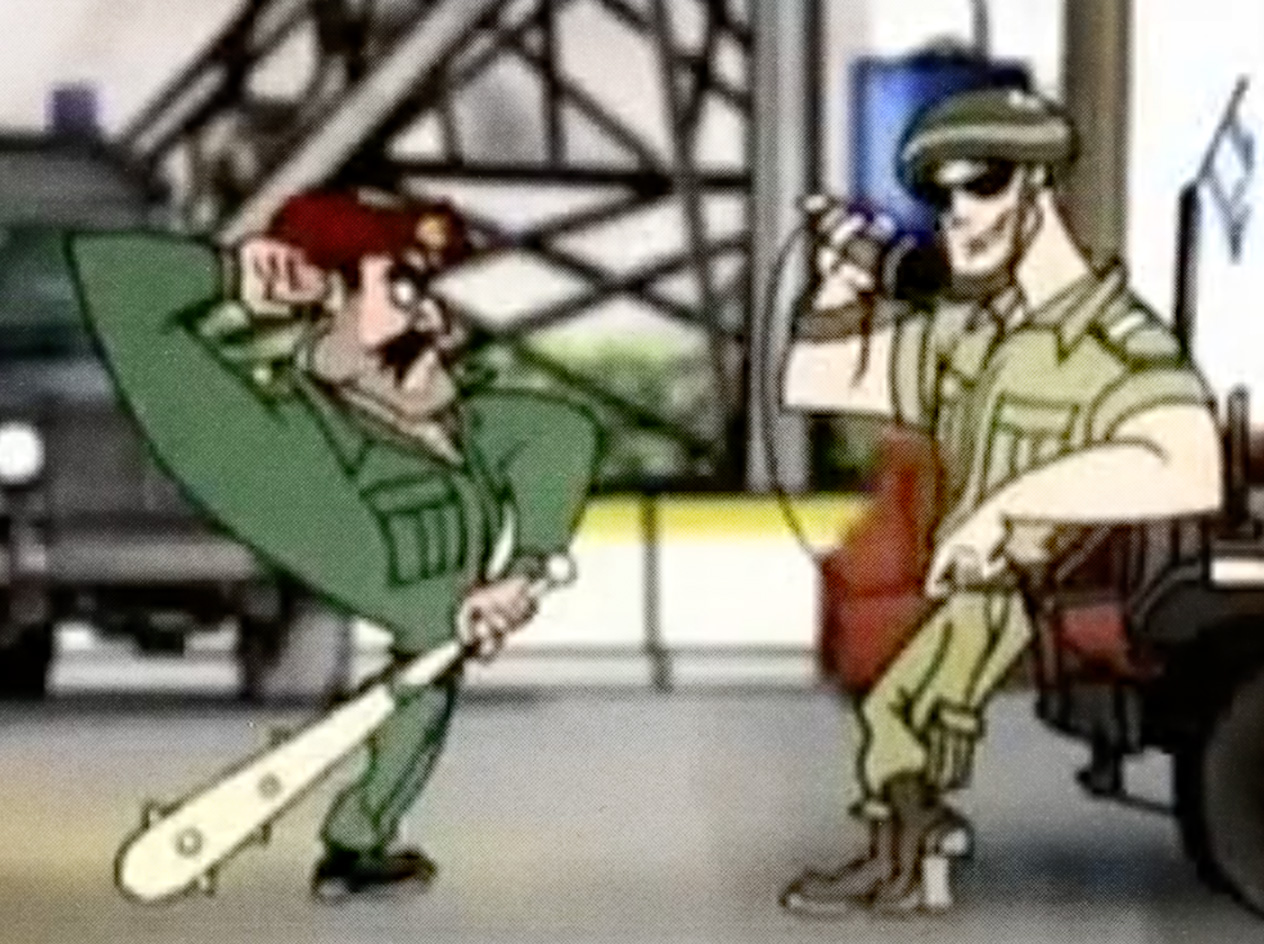
Al-Aqsa TV's 2010 miniseries ʿEsabaat Dayton (Dayton’s Gangs) stands out for its critical content. The show's name alludes to Lt. Gen. Keith Dayton, the former U.S. security coordinator for Israel and the PA, known for stating that Palestinian forces would primarily confront “criminal groups” and Hamas, not the occupying Israeli forces. Produced by the modest outfit Required Vision, the series' script and dialogue were crafted by Bahaʾ al-Deen Yaseen, a local Hamas activist who also oversaw the animation process. The show echoes Hamas' official stance by labeling those cooperating with “international security efforts” as “traitors to the Palestinian cause”. The main character of the series is a Palestinian militant called Bahloul, whose name is an allusion to a dim-witted comic character from folkloric stories. Bahloul has a scraggly moustache, a potbelly, and an ugly patch on the back of his pants. His adversaries, Israeli soldiers, are portrayed as tall, handsome, clean-shaven men with broad chests. Being a collaborator, the Israelis despise Bahloul as they train and often beat him. The dialogue reflects Bahloul’s inferiority to the Israelis and his betrayal of his fellow Palestinians. In one of the episodes, the Israeli officer asks him: “If you get orders to arrest your father or your uncle, would you do so?” to which Bahloul responds, “Yes.” Next, the Israeli asks him, “What if you get orders to shoot your brother?” to which Bahloul responds, “I will.” In one scene, Bahloul shines and kisses the shoes of an Israeli soldier, and in another he tortures a young boy who threw stones at the Israelis.
Another production by Al-Aqsa TV is Feʾran al-Fasad fi Ghazza (The Mice of Corruption in Gaza), released in 2007. The short film opens with a topographical depiction of Gaza and the occupied West Bank, featuring a lion positioned between them, symbolizing the Palestinian people and possibly supporters of Hamas in particular. The subsequent sequence portrays mice on the West Bank, armed with weapons from a box marked with the Star of David, suggesting an allegory to Fatah members armed by Israel. Their leader is distributing money to followers and initiating an aggressive move towards Gaza, switching the Palestinian flag for a pirate-like flag made up of a skull and bones. The grim soundtrack underscores scenes of the mice preparing for destruction with weapons from a box marked clearly with the US flag. Images of devastation follow, including burned images of people, desecration of religious texts, and the destruction of significant buildings like the Islamic University. The plot culminates with the mice violating cultural and religious symbols, underscoring the perceived betrayal of the Palestinian national cause by Fatah, contrasted against the lion, the embodiment of Hamas's supporters' resistance and integrity.
It was only in 2013 that the first Hamas 3D animated series was created and released to the public. As its title, Shaykh al-Mujahedeen – Ahmad Yassin (Sheikh of the Mujahheds – Ahmad Yassin) indicates, the animation recounts the life of Ahmad Yassin, the founder and leader of the Hamas movement until his assassination in 2004. Hazem Al-Shaʿrawi (b. 1978), also director of the al-Aqsa channel, wrote scripts for the thirty-episode series. The series’s aim is pretty clear in the text: a heroic, propagandistic representation of the life of Hamas’ founder coupled with an articulation of the nationalist-Islamic identity advocated by Hamas.
The series has two storylines. The first also serves as a frame for the main story and revolves around the life of a family of five: a father, a mother, a grandmother and two children, a girl called Nusayba and her brother Moʿaz. The house they live at is located in modern Gaza and is depicted idealistically as peaceful, uncrowded, and tidy. The characters and their relation to each other are also stereotyped, representing an “Islamic family model” whose members, besides being strong supporters of Hamas, frequently express their love and admiration for each other, and the children show the utmost respect towards their parents.
The second storyline unfolds around the life of Ahmad Yassin, as narrated by the father to his son, Moʿaz, who seeks help writing an essay about a notable figure for school. The tale chronicles Yassin's journey from his early years to death, painting an idealized Muslim man and a leader cherished and esteemed by his community.
As a child, Yassin is presented as extraordinary, adept not only in pastimes such as bird hunting but also in learning English, a skill that earns him admiration from the British. He is portrayed as an eloquent orator, capable of mediating reconciliation between a child and his mother and delivering sermons in a local mosque when he was only nine.
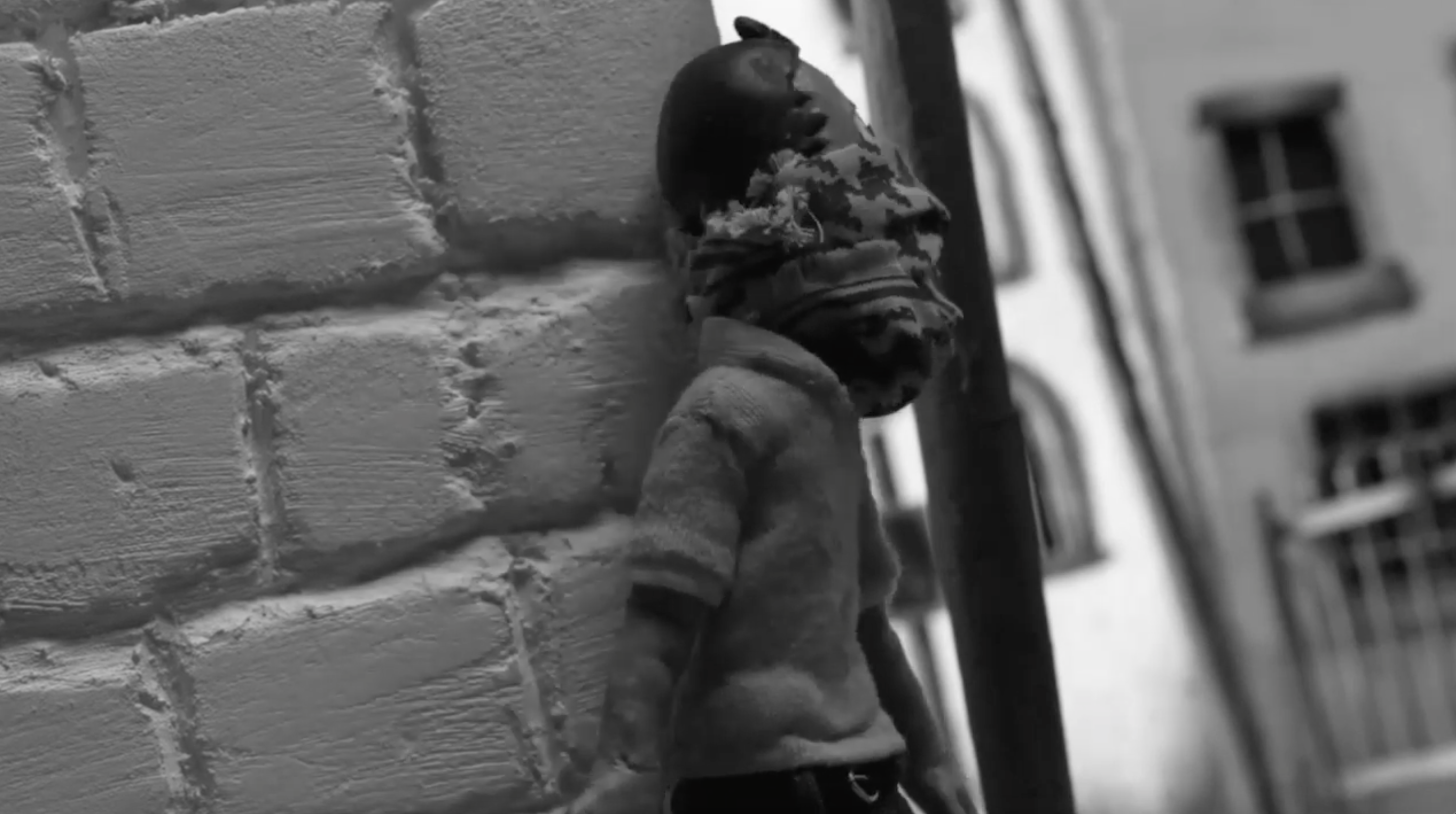
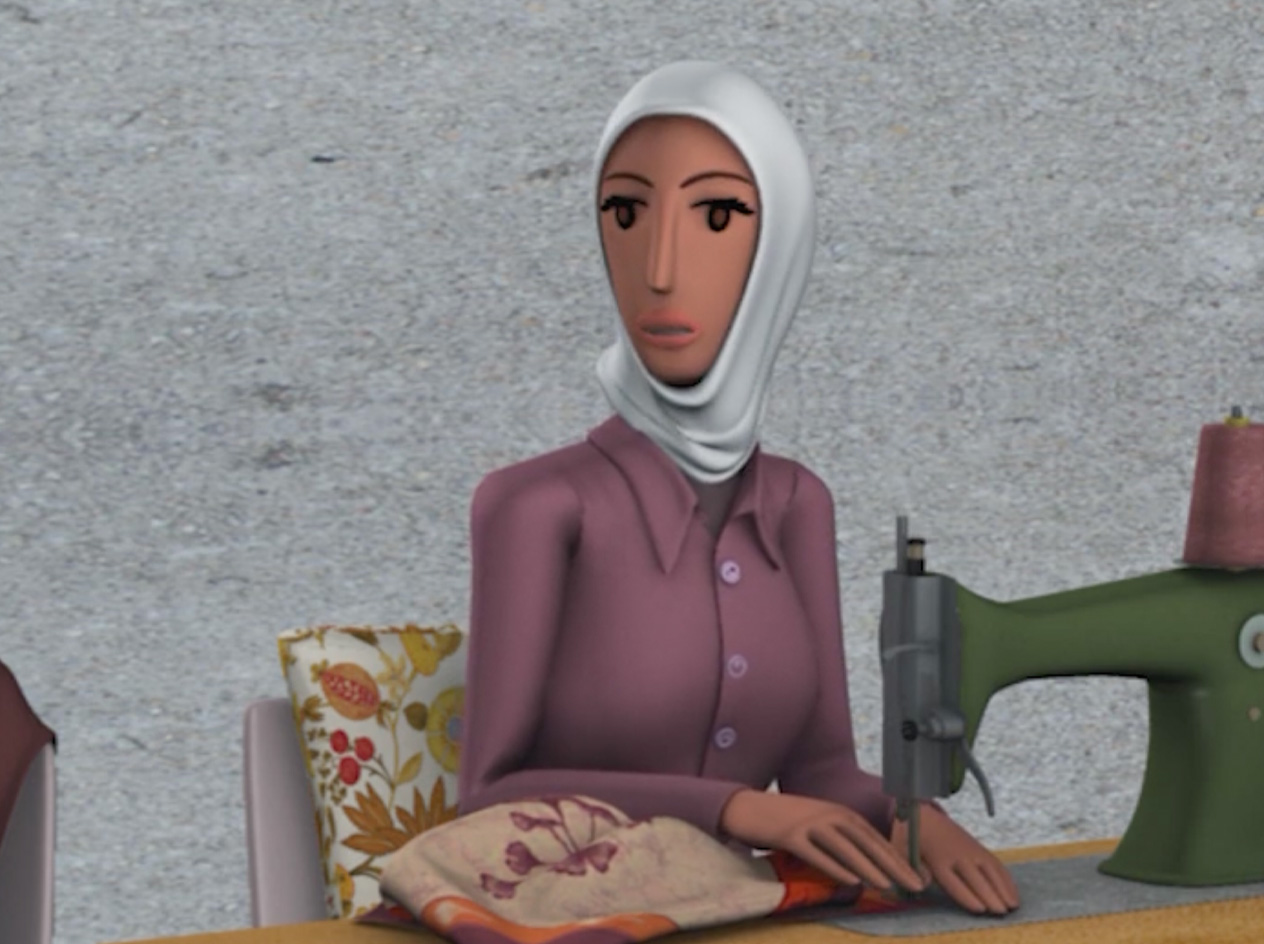
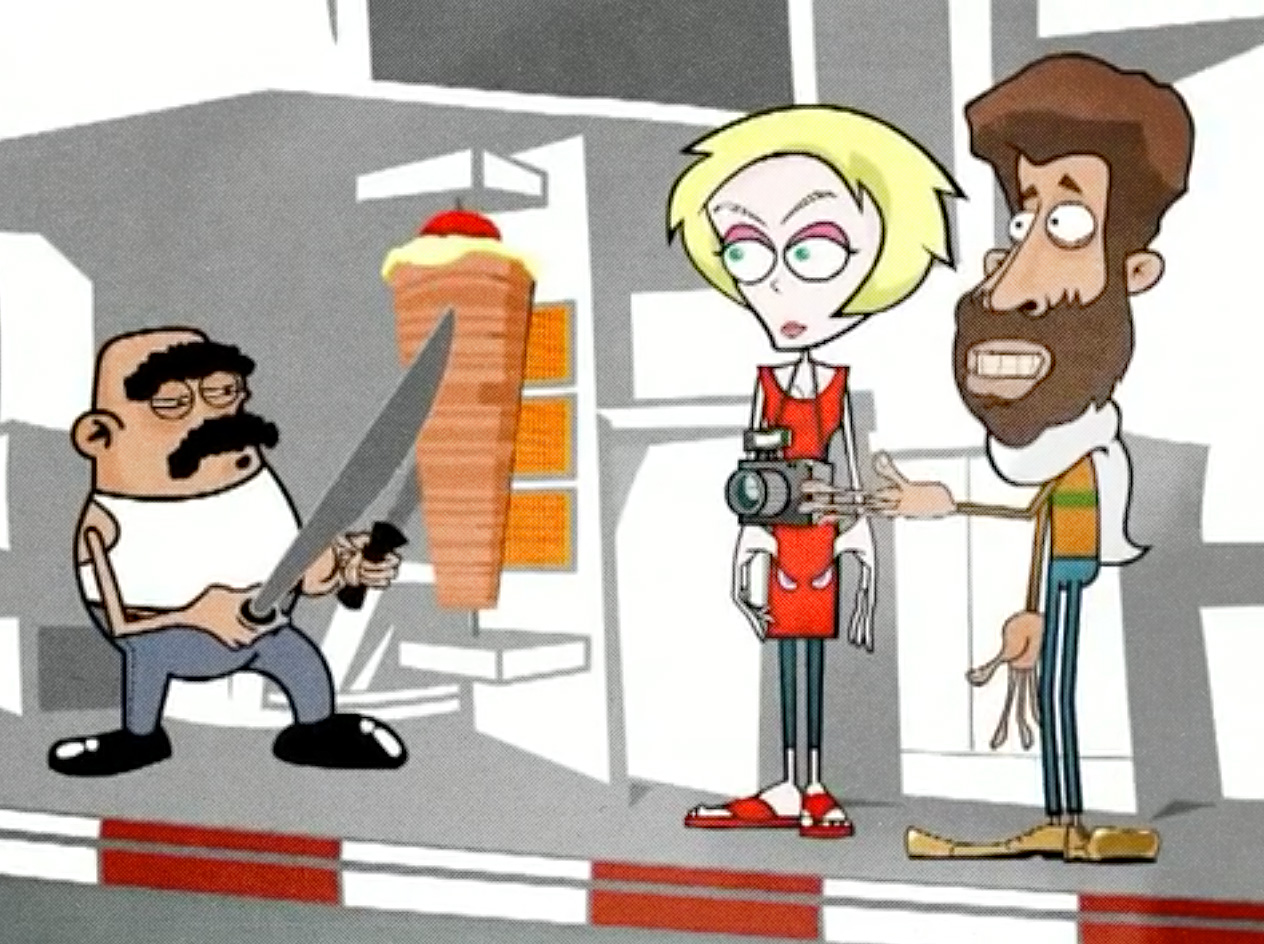
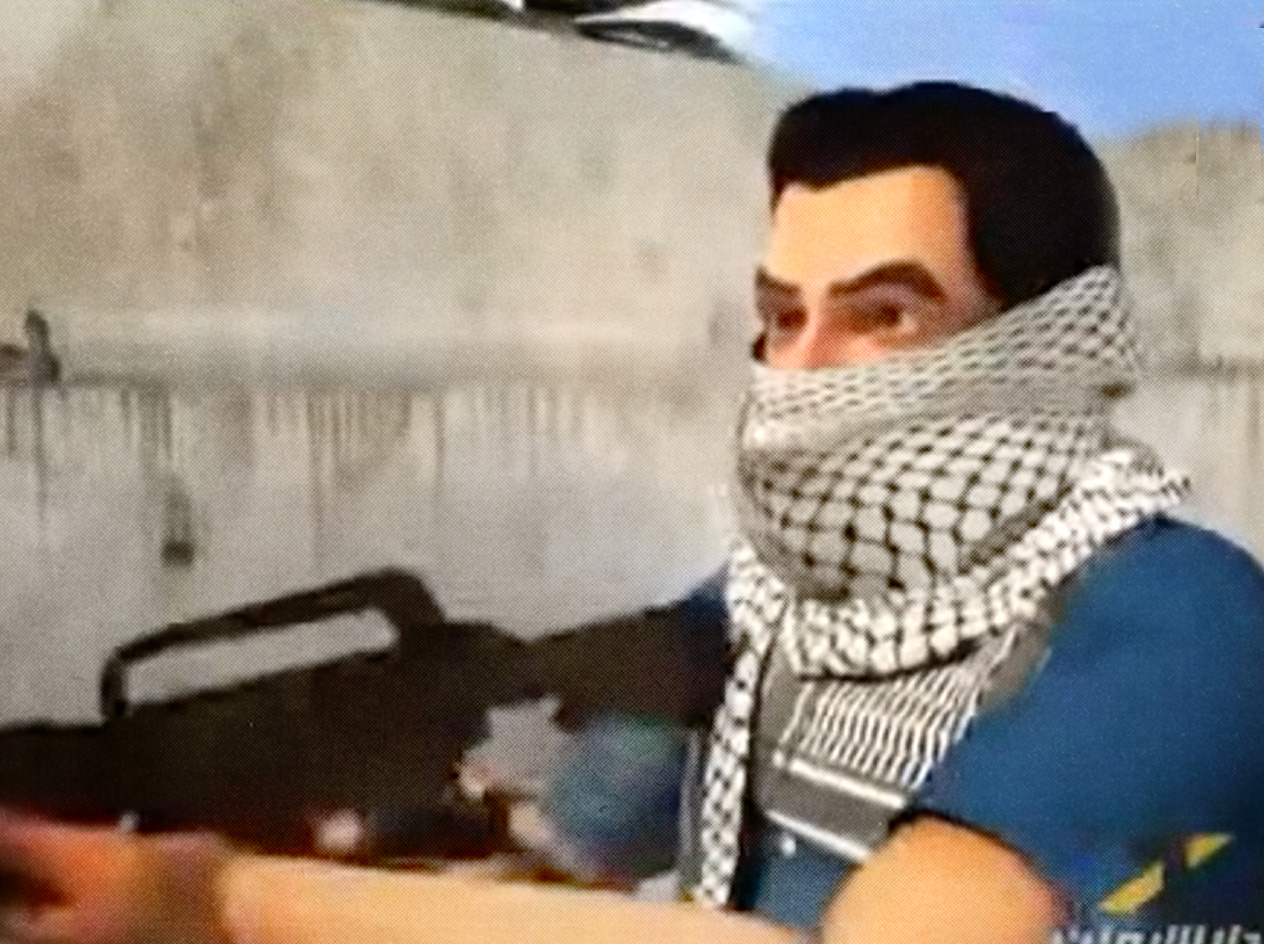
A selection of Palestinian-made animated films and series.
Later episodes of the series focus on Ahmed Yassin’s religious and political activism. The moral and political conclusions are often drawn in the family narrative, where the characters argue about and evaluate past events. One of the episodes revolves around Ahmed Yassin being imprisoned for a couple of days after his return from Egypt. The father explains the activity of the Muslim Brothers in Egypt: “Their activities in the mosques were teaching about religion and the distribution of helpful tapes, teaching people the Qurʾan and helping the poor.” Moʿaz asks, “Why do they dislike these activities, even though they are good deeds?” His father answers, “The government was afraid that these men would succeed in influencing the people, and the people love them. And then they will elect them, so they will become presidents and ministers in their stead.”
The show presents the Nakba — the forcible displacement of over 700,000 Palestinians during the violent founding of Israel in 1947-48 — through the eyes of then-five-year-old Ahmed Yassin. Nusayba concludes this tale: “This is what the Israelis are like. They always lie and kill people but keep saying that they are vulnerable.” To further the point, the grandmother blames the Israelis for the strife between Palestinians. “Without doubt, the occupiers use all the opportunities to incite internal strife between the brothers, so they do not turn against them in resistance,” she says. In a later episode, a Palestinian man leaves his family after his son asks for chocolate and his daughter for a doll. The next scene shows an Israeli truck driver hitting Arab bystanders, the father among them. The Israeli truck driver says: “Tomorrow, the children will grow and will want to regain the rights of their fathers. They shall all die. I shall drink their blood … the Arabs shall die.”
Throughout the series, they speak about the resistance in the first person, signifying how inescapably personal Israel’s occupation and the general politics around Palestine are for every Palestinian.
The family in the first storyline strongly identifies themselves with Ahmad Yassin’s ideas. Moʿaz and Nusayba cheer when their father tells them about Yassin’s successes and weep when he is defeated. Throughout the series, they speak about the resistance in the first person, signifying how inescapably personal Israel’s occupation and the general politics around Palestine are for every Palestinian.
In the end, because of the dire economic situation facing Palestinian media industries, Palestinian animation struggles face a steep uphill battle in the foreseeable future. But, no matter the hardships, tragedies, and difficulties faced by Palestinian animators, new works always do emerge, persistently telling the stories of a people torn apart by colonisation, occupation and intra-political fragmentation.
Categories: Chronicles