Musings on Paralysis and Productivity in Genocide’s Shadow
Our former Managing Editor sending everyone some words of encouragement in these dire times.
I must admit that this brief essay took me a long, long time to write. I spent more time staring at an empty page than actually typing words. Pressing each letter felt as if I were working underwater. And when I thought I had something, I would re-read it and then delete everything in frustration.
I am currently writing in Beirut, in the midst of an expanding Israeli genocidal war that has brutalized Palestine for over a year and seeped into Lebanon about two months ago.
Over the year, and particularly these last few months, I’ve been having multiple conversations with people in the creative industry about how to function in these circumstances.
Like many in different ways, I have been confronted with existential questions in the face of this calamity: as a writer, do my words matter? What’s the point of writing in the face of annihilation? Is there value working on things not linked directly to the catastrophe? If I work on something light, am I dismissing or demeaning the horrors at play today?
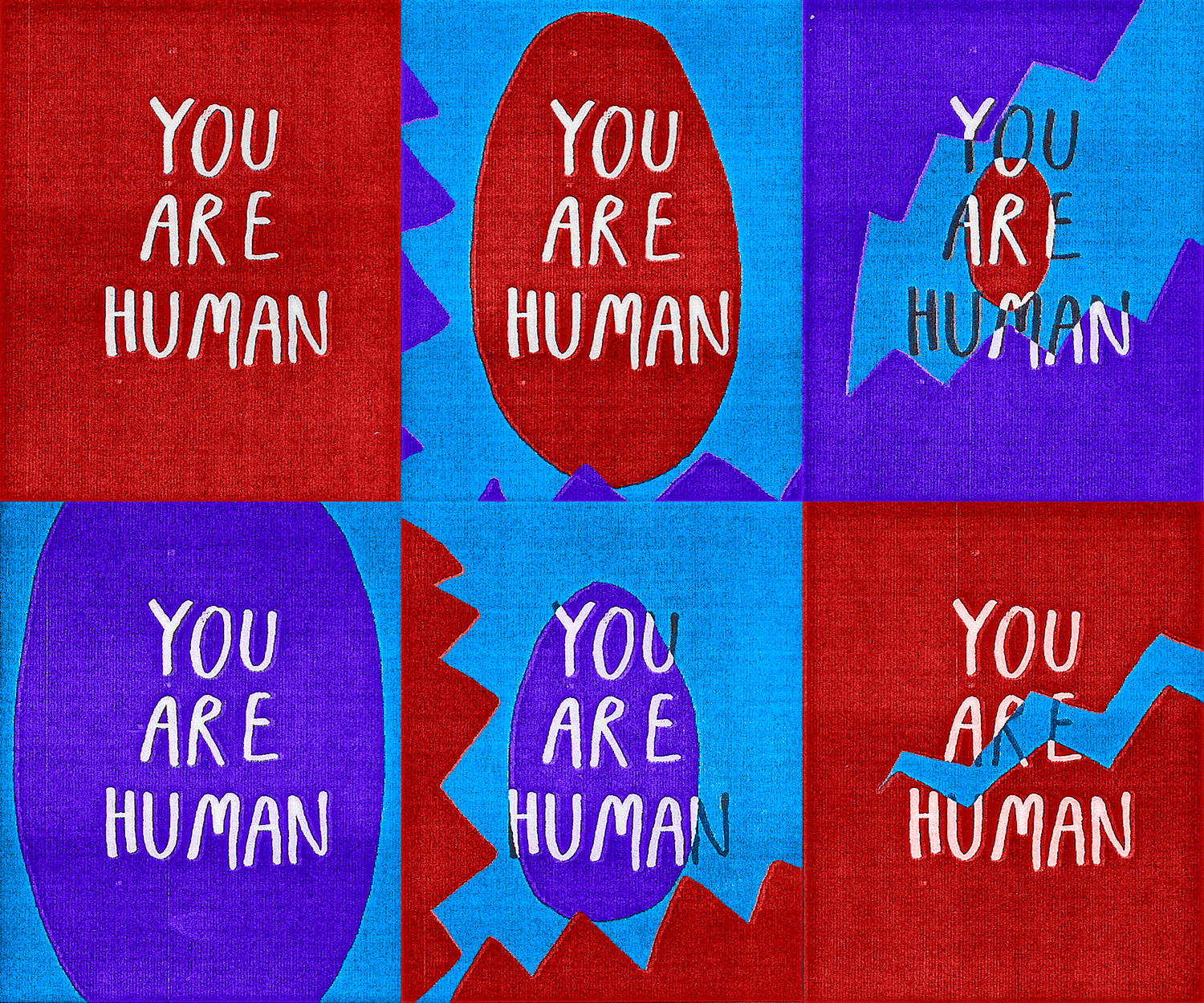
Visuals by Diyala Muir
So many conflicting thoughts, so few clear-cut answers.
But while I may not have a clear direction on the appropriate ways forward as a singular individual, I do think it’s worth bringing the matter out into the open so we can collectively discuss our options moving forward. I think we are all feeling lost in some way or another and perhaps by tackling this collectively, we can finally be able to move towards a better state of affairs together.
So let me share some scattered thoughts on the nature of work in the shadow of genocide.
It’s okay
I think the first thing that needs to be articulated clearly is to acknowledge that this is a very depressing situation. Genocide is a horrible thing, and there is no doubt that we’ve been impacted by its horror. That means you will not be able to write, draw, produce, create and that is okay.
Feeling upset, depressed, unmotivated, lost, paralyzed, and unproductive means you are absolutely human, and you are acting humanely in the face of significant devastation.
What we are facing, in various degrees and depending on proximities, is genocide – “the crime of crimes,” i.e., the ultimate crime in our international order. Feeling upset, depressed, unmotivated, lost, paralyzed, and unproductive means you are absolutely human, and you are acting humanely in the face of significant devastation. It is okay.
Those managers, clients, deadlines, and others who do not get it and expect you to be inhuman and maintain an ‘efficient’ level of ‘productivity’ as if you were a robot and as dictated by the cold, calculated nature of Capitalism is a problem unto itself and is not on you. Capitalism strips off your basic human characteristics in the pursuit of an illusionary goal of endless growth and profit. You are more than that.
It is okay that you feel weak, exhausted, and numb.
Take the time to heal and become alive again in the face of this gross dehumanization and slaughter. You absolutely deserve it, and don’t let them tell you otherwise.
Limits to wallowing
Wallow away, please, but try to recognize the limits of that wallowing.
Ask yourself: what is the value of simmering in bitterness, sadness, and defeat indefinitely?
Consider the above question not from the obligations of ‘productivity’ and ‘professionalism’ imposed on you by the structures of our capitalistic working world, but why not reframe it from a spiteful position to act against what makes you feel this way?
And believe me, there are a lot of options in front of we have as creatives when we can see it.
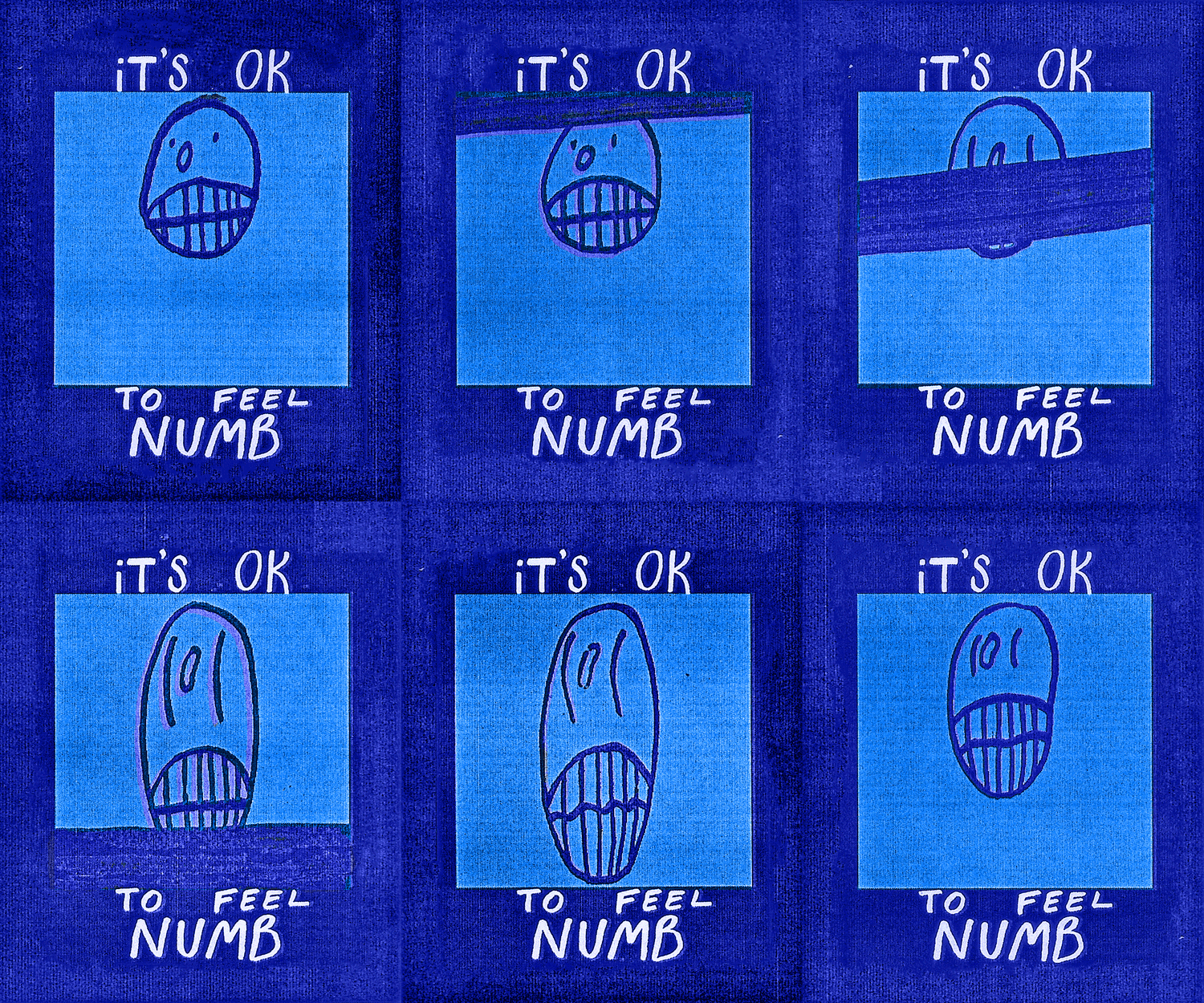
Visuals by Diyala Muir
Point-blank confrontation
We can directly oppose this genocide through producing/creating work that confronts it. There are those on the ground who can use bullets - I can’t. But I can write. So I say: Write, draw, animate something about how you feel and what is happening by digging for truths about that experience, vocalizing the stories of those unheard, and humanize that which has become faceless and dehumanized. That has value. It is an expressive, direct act, and it allows us to vocalize publicly our pain, and you produce something. It is a form of control in a situation beyond our control.
Create something alone, or join up with like-minded artists and create something together.
Outside ‘the work’ that we do, we can always talk, debate, join or promote boycott campaigns, uplift, network or connect with creators who are directly impacted by Israel’s Western-backed genocide. Our art, our stories, our words, our cartoons are vital as weapons against a massive arsenal of Orientalized, dehumanized narratives unleashed against us.
We are very talented creators, and we can shake this world if many of us come together. They - i.e., the so-called ‘West - are no longer the measure of quality or the marker of standard. You, me, we are.
We are very talented creators, and we can shake this world if many of us come together. They - i.e., the so-called ‘West - are no longer the measure of quality or the marker of standard. You, me, we are.
Take your creative shots now because there is no time like the genocidal present to pull that proverbial trigger.
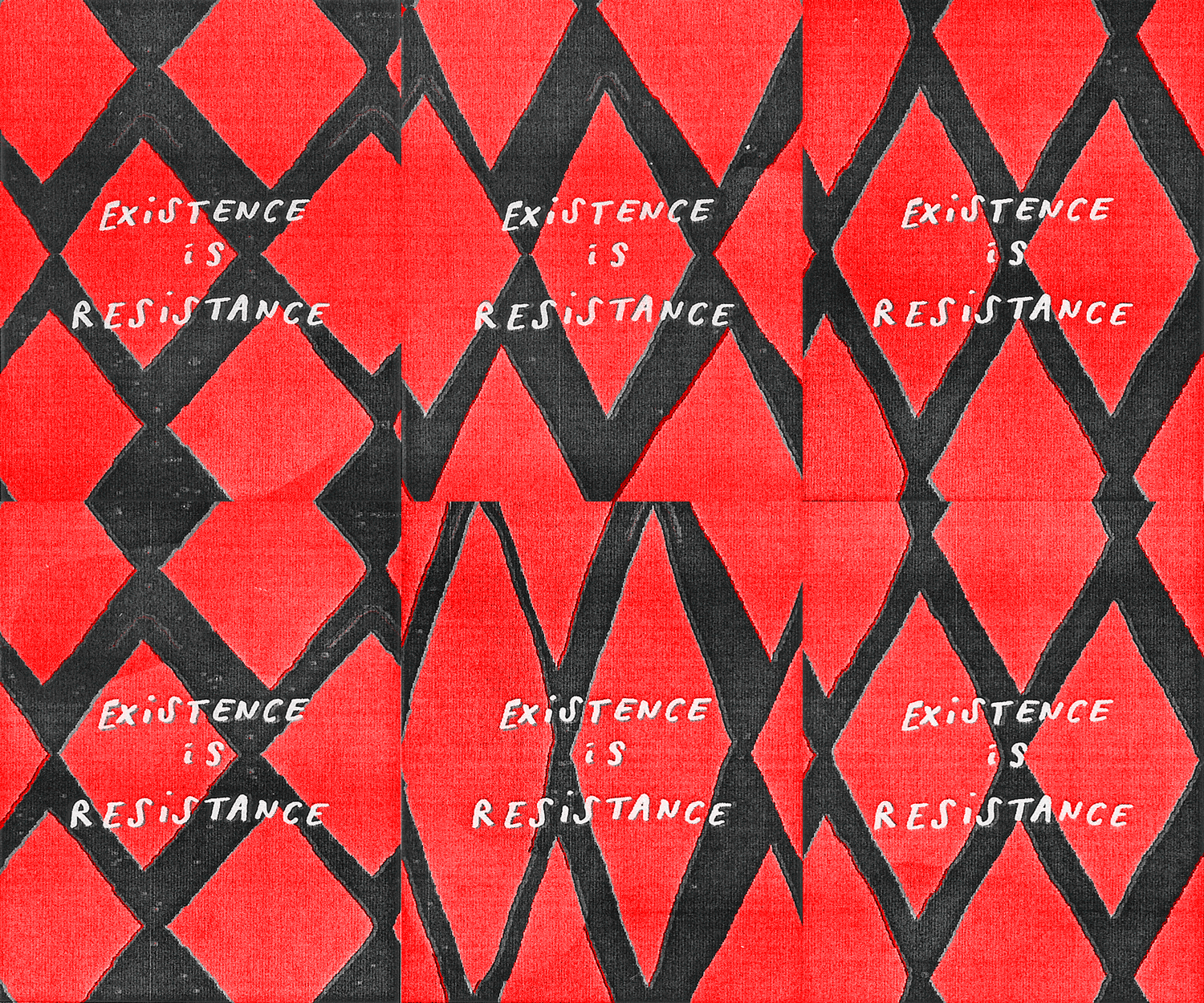
Visuals by Diyala Muir
Existence is resistance
But if one can’t go that far, and that’s very much okay, consider this: our mere existence is a form of resistance.
Existence is resistance
Write that boring review, crunch those sleep-inducing numbers, respond to that annoying email.
I know this may sound stupid but trying to function in the most mundane, tedious way in the face of persistent humiliation and extermination is a powerful act because it shows we still exist despite the overwhelming odds that they - the genociders - have done to us and our kind.
We are still here, and that onto itself drives them mad. It truly does.
What next?
Remember that the sounds of guns and dropping bombs will inevitably cease, but the fight will go on.
We are all collectively facing a darker, more dangerous century ahead, and I think we need each other more so than ever before. We need each other’s scripts, illustrations, cartoons, designs more than ever before. We need each other's identity, thoughts, expressions out and engaging and intermixing more than ever before.
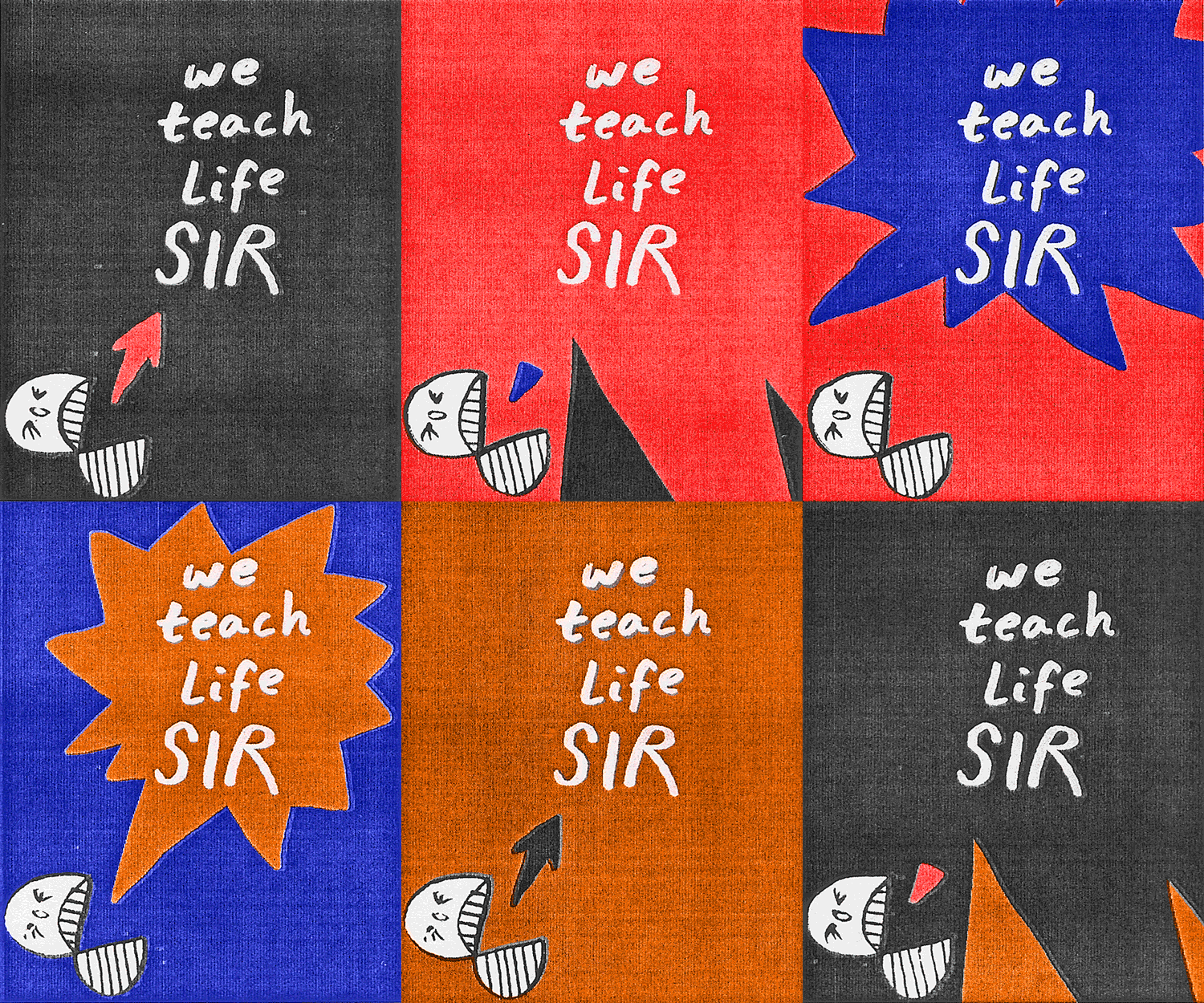
Visuals by Diyala Muir
A genocide is not only the death of the physical; it also aims to eliminate our ability to conceive and envision a better world to be and live. Like what the poet Rafeef Ziadeh wrote over a decade ago: We Teach Life, Sir [See Below].
Categories: Opinion