Mish Mish Effendi or Ma Fish Effendi: Unearthing Arab Animations’ Roots
The eighty-year history of Arab animation starts with the Frenkel brothers.
The eighty-year history of Arab animation starts with the Frenkel brothers.
Sons of a Jewish immigrant from Russia, David Hershel and Shlomo, ran a business decorating furniture in Cairo in the 1930s. Enchanted by Disney’s Mickey Mouse, then popular in Egyptian cinemas, they decided to create something similar and opened their own animation business called “Frenkel Pictures”. Lacking education in animation, they reinvented the frame-by-frame technique, debuting a four-minute animation on the adventures of Marco Monkey in 1935. It was by no means a localized production but a copy of the Disney genre, using characters and backgrounds similar to those of American animations. Although Marco Monkey was hailed by some critics, in line with the nationalist tendencies of its time, an article in al-Ahram advised the Frenkels to focus more on local Egyptian culture and at least attempt to create a local character.
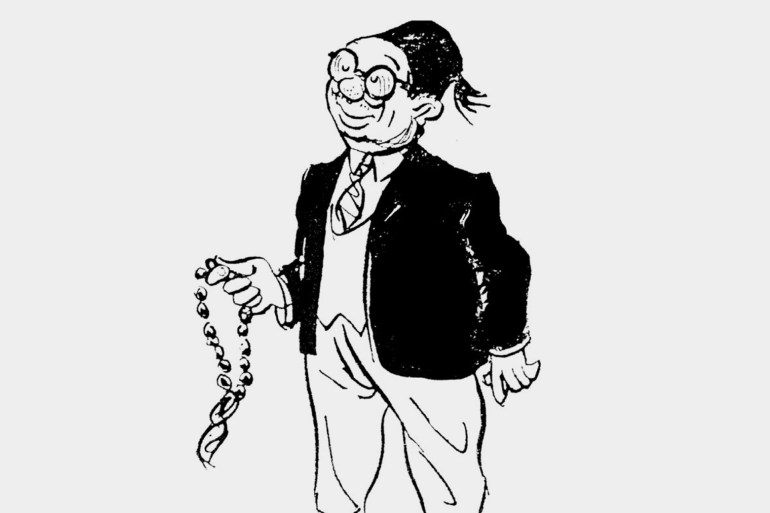
This was how Mish Mish Effendi was born.
According to an anecdote – whose accuracy can hardly be verified – when asked by the brothers for financial support, one producer answered, “Mafish faida,” literally meaning, “There’s no benefit.” After the brothers tried again to persuade him, the producer flatly refused, answering, “Bukra fil-mishmish,” i.e. “When pigs fly.” This incident is said to have been the main inspiration for the character’s name and the title of the first four-minute episode entitled “Mafish Faʾida”.
Enchanted by Disney’s Mickey Mouse, then popular in Egyptian cinemas, they decided to create something similar and opened their own animation business called “Frenkel Pictures”.
The limited experience of the Frenkels meant that the visuals of their cartoons suffered from various inadequacies, which can be observed in all episodes. One case in point is the style in which the character of Mish Mish Effendi was drawn: In some scenes, he is portrayed in a caricaturist manner, recalling the movements of Mickey Mouse, while a more realistic style dominates other scenes. Disney’s influence is present in the overall look of the characters, as the eyes, round body shapes, gloved hands, the framerates, and even Mish Mish Effendi’s movements recall Mickey Mouse. The Frenkels also adopted Disney’s orthodox hyperrealist styling. The influence of Felix the Cat is also visible, as the unrealistic movements of the characters were intended to be a source of amusement, and the rules of physics were often ignored. The visual layout of Mish Mish Effendi, however, also seems to reference al-Misri Effendi, a cartoon character appearing in several Egyptian magazines during the 1930s and 1940s, who represented the average Egyptian as a concept of national identity.
World War II was seen by King Farouk (1936–1952) as an opportunity to loosen British rule. Realizing the immense popularity of animated cartoons, two years after the debut of the first episode of Mish Mish Effendi, the Ministry of War ordered a propagandistic episode from the Frenkels to support the loan initiated by the Egyptian government for the army. The result was a fifteen-minute film, “al-Difaʿ al-Wataniyy” (National Defense), released in 1938.
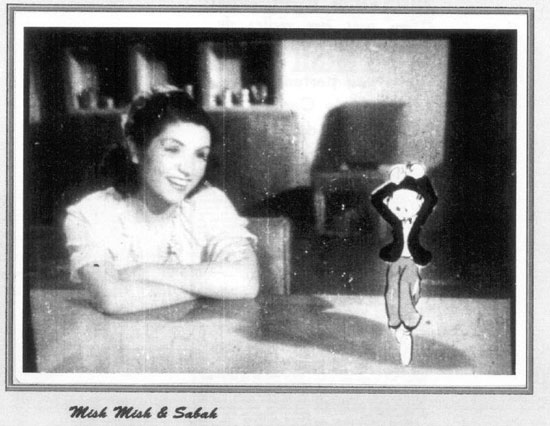
After releasing the first episode of Mish Mish Effendi, the Frenkels produced one animation film every year. In 1937, the Ministry of Agriculture commissioned them to produce an educational animation encouraging peasants to stamp out cotton parasites. Between 1938 and 1948, the Frenkels also produced several animated commercials for the Royal Automobile Club and other Egyptian commercial products. As the prestige of the Frenkels grew, they also lined up celebrated Egyptian cinema stars to give their voices to the animated cartoons. Later episodes of Mish Mish Effendi featured the animated characters of famous stars of his time. All in all, Mish Mish Effendi became an integral part of Egyptian popular culture.
However, the political turmoil of the 1940s put an end to the thriving business. With the rise of Zionist colonization in Palestine and the forceful expulsion of the Palestinians, violence against Jews in Egypt sporadically erupted in the mid-1940s. Because an amendment to the Egyptian Companies Law dated July 29, 1947, required that 40 percent of a company's directors and 75 percent of its employees be Egyptian nationals, the Frenkels’ films were now stigmatized as foreign productions and their financial sources dried up. In 1951, the three Frenkel Brothers left for France and settled down near Paris, never to return to Egypt.
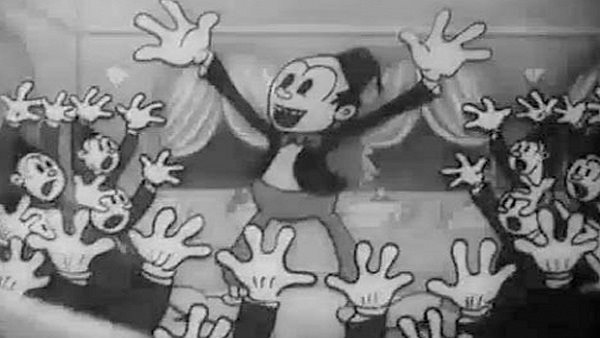
Though their influence on the native Egyptian animators of the 1930s and 1940s was never truly acknowledged due to the competition for the premiership with native Egyptian authors, their position as the pioneers of Egyptian and Arab animation is undeniable.
Since then, Arab animation has struggled to find its path. While figurative illustrations in traditional Chinese, Japanese, Indian, and Russian visual arts have greatly influenced the styles of modern animation productions, figurative illustrations in traditional Arab visual arts are rare. Arab animation producers thus found it rather challenging to develop styles rooted in their own artistic traditions. Like the Frenkels, later Arab animators and producers have largely drawn their inspiration from foreign - mainly American and Japanese - animated cartoons.
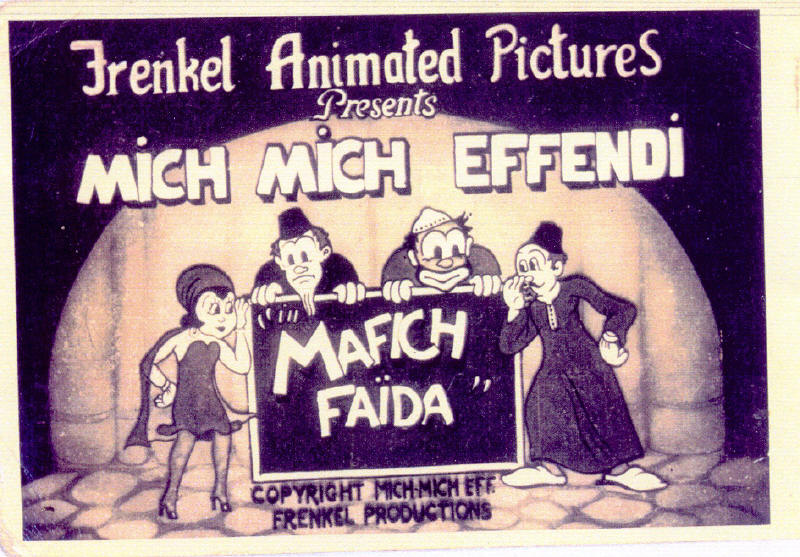
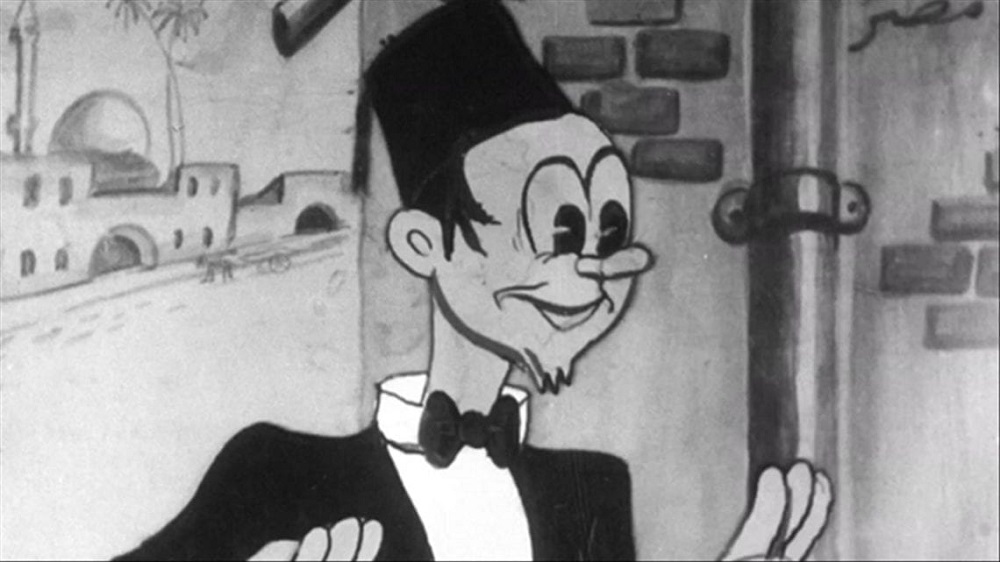

A collection of photos and stills found online. [mt7rk]
At the same time, animation has the potential to become a platform for cultural resistance against foreign cultural impact: while praising American animations for their technological and narrative excellence, many Arab animation authors define their work as a cultural ‘Other’ in contrast to imported animations that are still highly popular among local audiences. In doing so, Arab productions generally aim to formulate national, Arab, and Islamic identities by telling stories and featuring characters that represent local realities (like Mish Mish Effendi did), and occasionally, also address relevant social and political issues in line with the preferences of funders and distributing platforms. This was a case of The Princess and the River (1982), the sole feature-length production of Saddam Hussain’s Iraq, produced to support the war with Iran, but also Mona Abul-Nasr’s Bakkar (1998) aimed to boost Egyptian nationalistic sentiments in times of turmoil, and many other shows.
Like the Frenkels, because of the general lack of professional animation education, many Arab animators have been self-taught and financial resources have been scarce. Like Mish-Mish Effendi, the overwhelming majority of Arab animations produced both by celluloid, CGI, and 3D technologies lagged well behind imports regarding quality. Outsourcing labor-intensive animation phases of the production to countries with advanced animation industries only helped in some rare cases when producers - mainly from well-off Gulf countries - gathered sufficient financial resources to pay for higher quality. Even when targeting domestic and regional niche markets, Arab animations’ ability to compete with Western and Asian productions remained limited.
Arab animation producers thus found it rather challenging to develop styles rooted in their own artistic traditions.
Like the Frenkels, later Arab animators and producers have largely drawn their inspiration from foreign - mainly American and Japanese - animated cartoons.
At present, Arab animations are little known beyond the Arab and Muslim worlds. Like Arab film in general, Arab animation was nurtured by the desire of local elites to create an alternative to the one-way flow of foreign productions. By adopting a popular Western format and using Western technology since the 1930s, Arab producers – operating within local political and media hierarchies and dependent on local and regional financial sources – have been successful in mediating and negotiating rivaling notions of national, pan-Arab, and Islamic identities. Recent productions like Saudi Bilal (2016), Emirati The Journey (2021) and many others show, that on their own turf, Arab animated cartoons even fulfilled their producer’s ambition to counter the cultural imperialism of foreign productions and consolidated their position in the national and transnational Arab markets as local champions.
After eighty years, Arab animation seems to be close to finally defining its contours. The next eighty years is where the fun part really begins.
Categories: Chronicles