Building Our Own Industry: Insights from the 2025 Sharjah Animation & Comics Conference
Mt7rk co-founder Joan Baz looks back at the 3rd edition of SACC, where five conversations surfaced questions the region is still working through.
After just three editions, the Sharjah Animation & Comics Conference (previously Sharjah Animation Conference) has quickly become a cornerstone for the animation industry in the Middle East and North Africa. Organised by the Sharjah Book Authority in collaboration with Italy’s Bergamo Animation Days, this 4-day conference offers a rare convergence of global expertise and regional insight. It's not often you get Disney visionaries, Ghibli masters, European producers, Arab broadcasters, and homegrown studios and animators all under one roof, but that’s exactly what this conference is about. In a region where such dedicated animation gatherings are few, SACC is carving out a vital space for dialogue, mentorship, and industry-building.
The 2025 edition wasn’t just about who was on stage, it was about what was at stake for the medium, particularly in the Arab World.
From challenges in IP creation and co-production, to navigating the broadcast and streaming labyrinth, the panels zeroed in on a question that many of us in the region have been quietly asking: how do we build animation industries that are sustainable, rooted, and ours?
I went to the conference expecting to just present two panels but I left with a head full of ideas, a phone full of new contacts, and five deeply inspiring encounters with people whose practices and perspectives continue to echo.
Let me introduce them to you.
1. Sarah Mallia, Kenya – Making Space for What’s Disappearing
Meeting Sarah Mallia felt like tuning into a frequency that’s often missing from industry conversations. Based in Nairobi, Sarah co-founded Freehand Studios and Pungulu Pa Productions, both of which live at the intersection of animation, education, and social impact. But what makes her work so quietly revolutionary is her dedication to archiving and celebrating what’s disappearing and doing so on her own terms.
Their 2D animated series Uli & Tata’s African Nursery Rhymes dives into vanishing oral traditions, reviving them for a new generation. “Once we had our own children, we realised there was no content that really depicted our culture without appropriation,” she said. “We were sick of our stories being told by others—so we created it ourselves.”
During the 'Producers in Focus' panel, Sarah spoke about the pressure to focus exclusively on original IP. While working on Uli & Tata, she said their team turned away a lot of client work—and is now reckoning with that decision.
“Service work in our industry is incredibly important, it keeps the lights on. And it allows us to do the things we love.”
Her clarity struck a chord: building original content rooted in cultural authenticity is vital, but so is the pragmatic balancing act that allows studios to survive.
2. Abdulaziz Othman, Saudi Arabia – Building an Industry from Scratch
As the founder of ZEEZ Animation, Abdulaziz Othman is a rare breed: a studio head who leads with cultural clarity and market strategy in equal measures. In a region that has traditionally relied on imported children's programming, Abdulaziz insists on creating it from scratch, crafted by regional teams, in regional dialects, with regional reference points.
His productions, like Nayerat and Yamam, are not just television shows; they’re case studies in what it looks like to produce high-quality, Arabic-first content that can go head-to-head with global franchises.
”We can’t replicate Western models in our region—we have to create our own. But we have to do the work to build a pipeline, not just pilot episodes.”
In a conversation with Mt7rk, he spoke about the long game: investing in writers' rooms, training animators from scratch, and teaching networks how to trust regional IPs. You walk away after listening to him with a sense of pragmatic optimism. It’s not about waiting for a Netflix deal, it’s about making one’s own table.
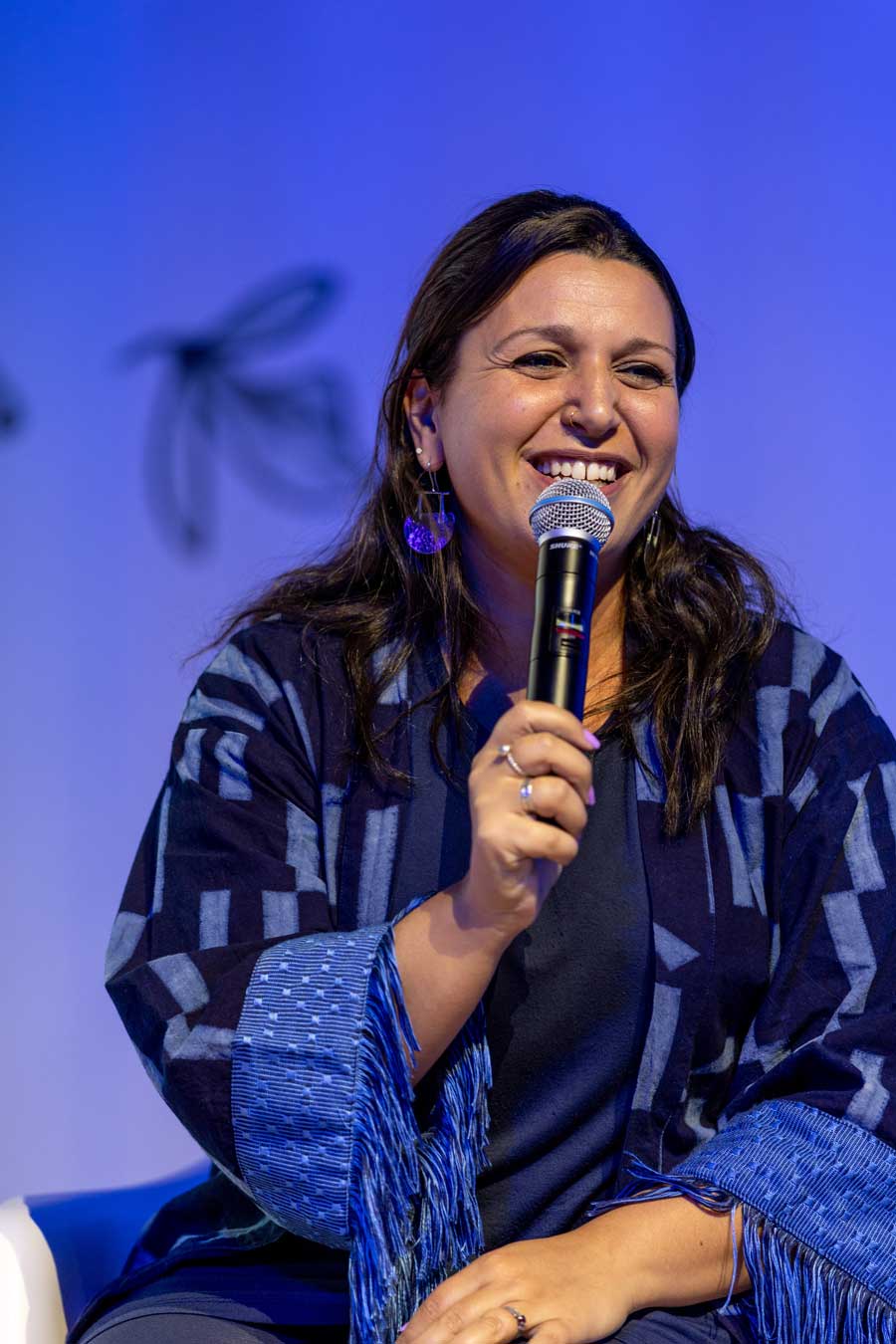
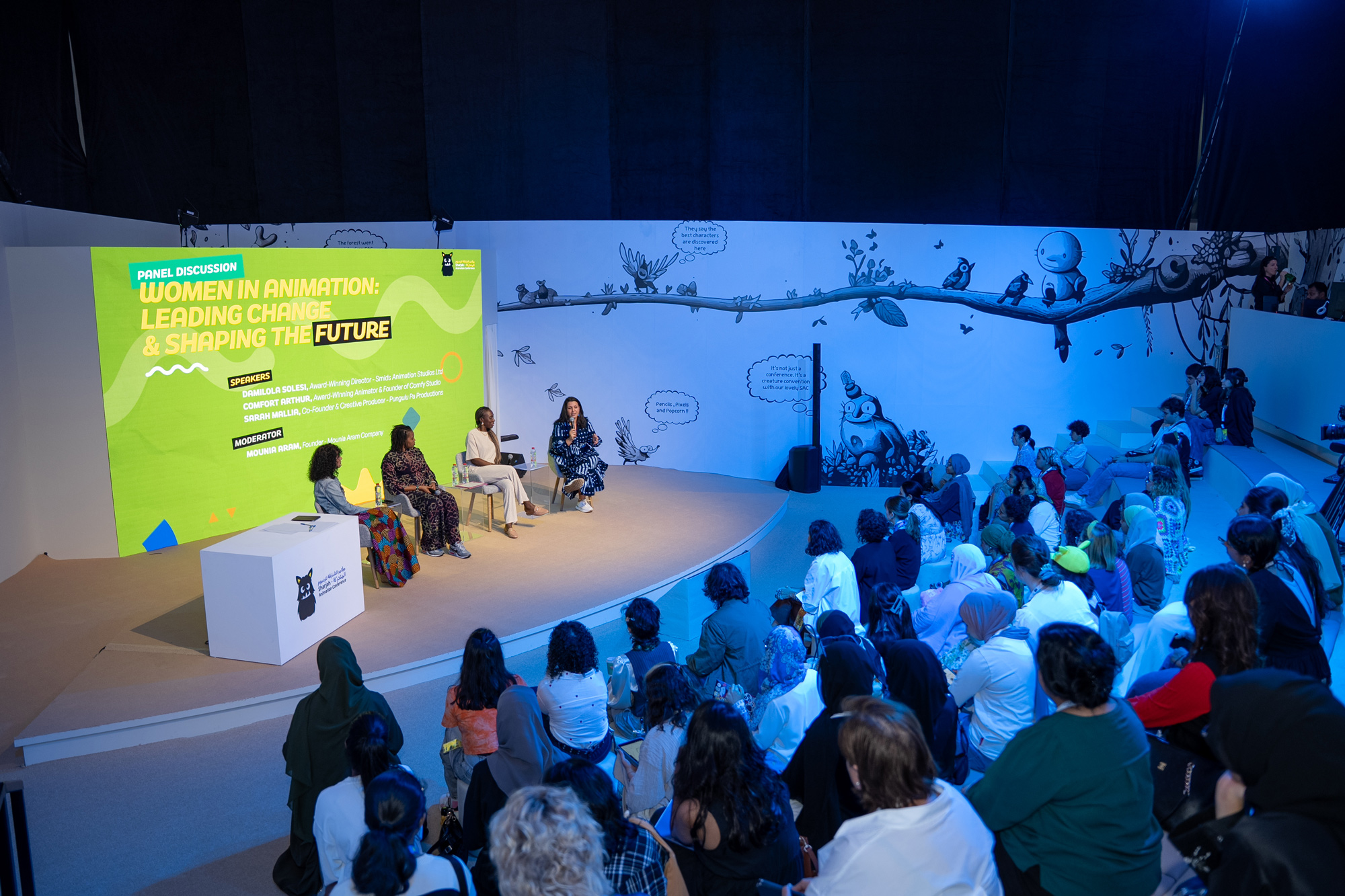
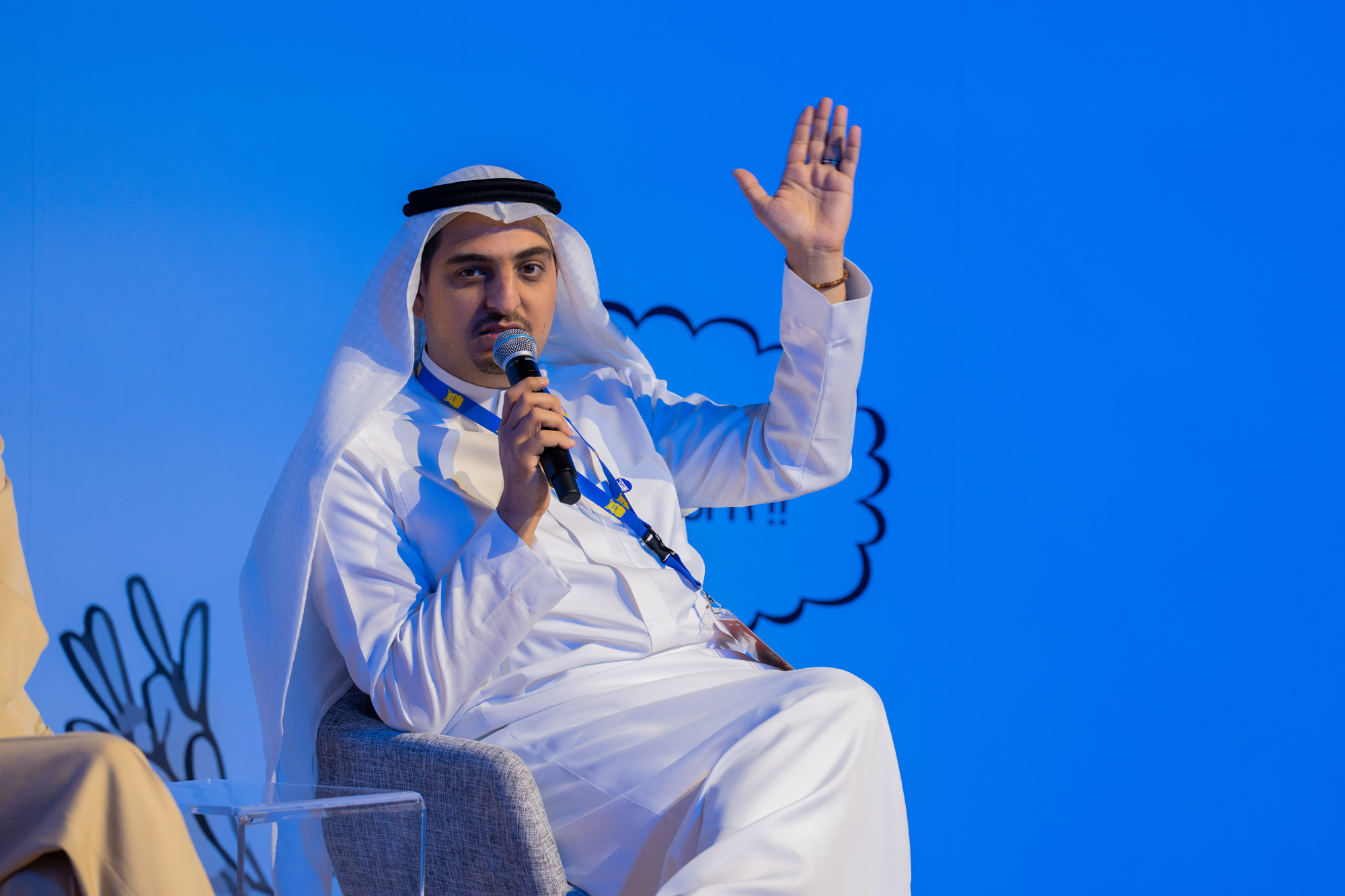
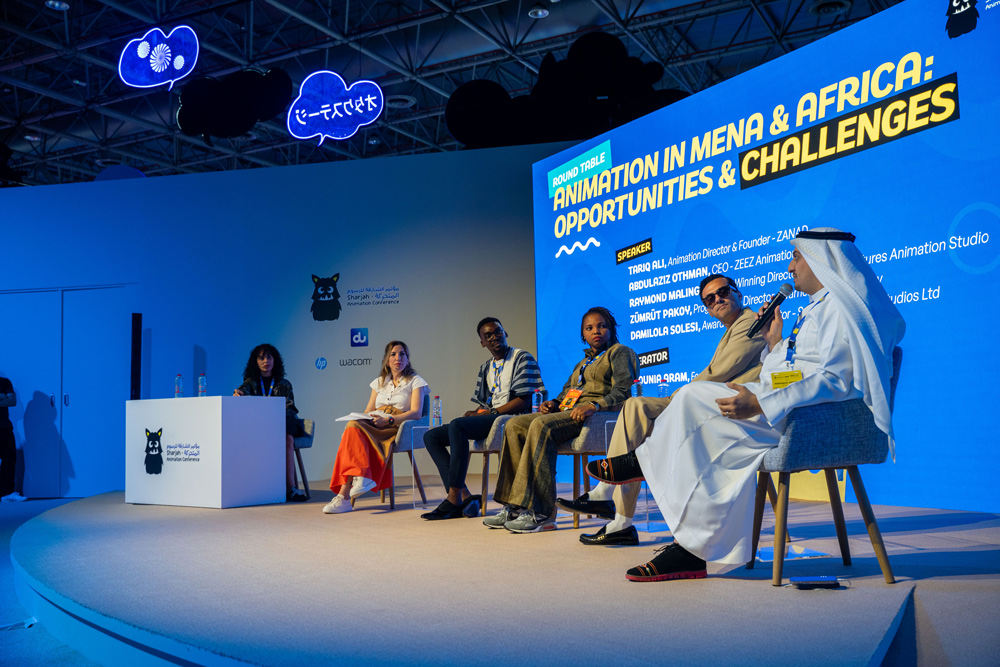
Images from the 2025 edition of the Sharjah Animation & Comics Conference, [courtesy of SACC]
3. Ilaria Mazzonis, Italy – Breaking the European Model 'Myth'
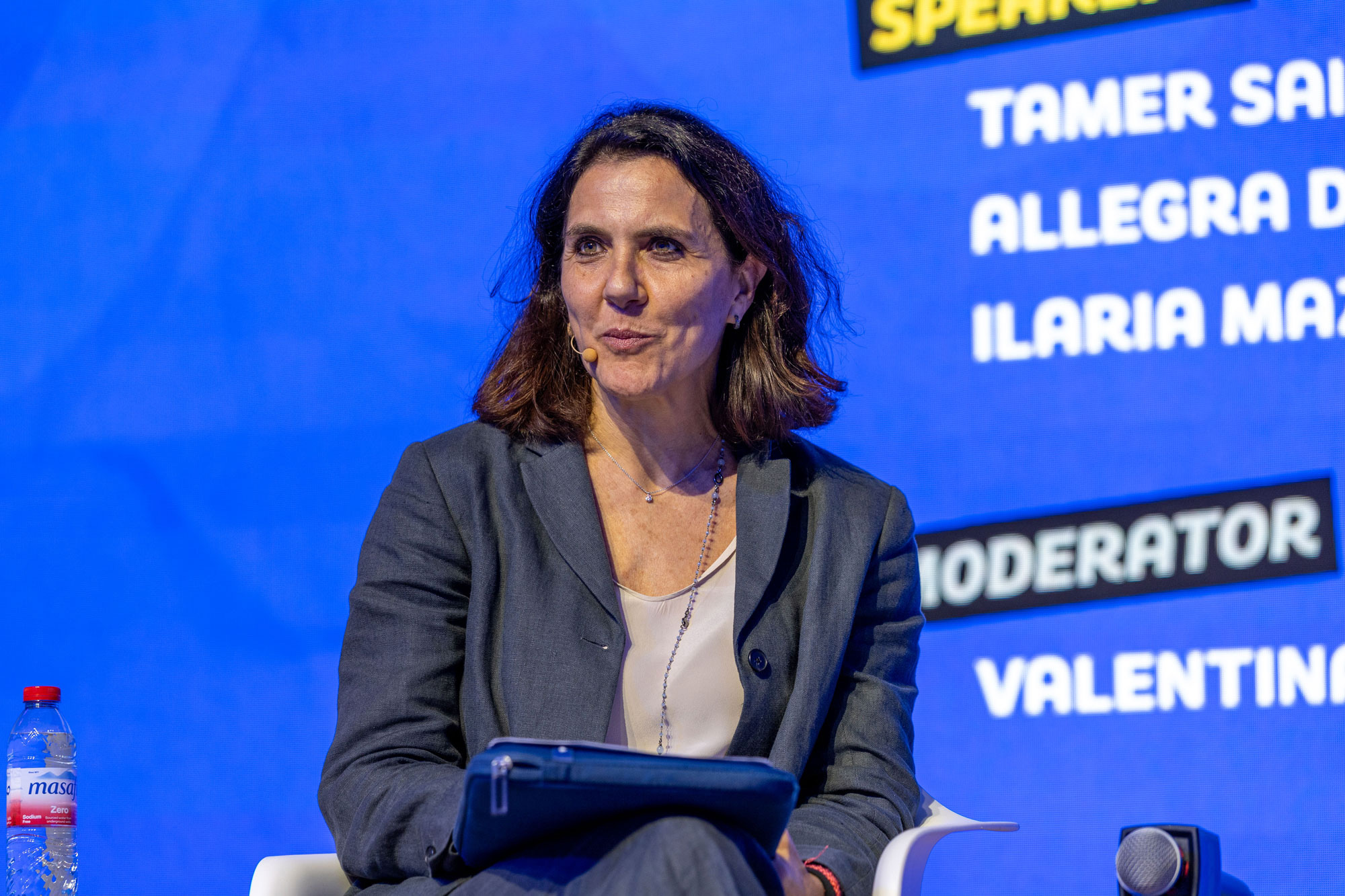
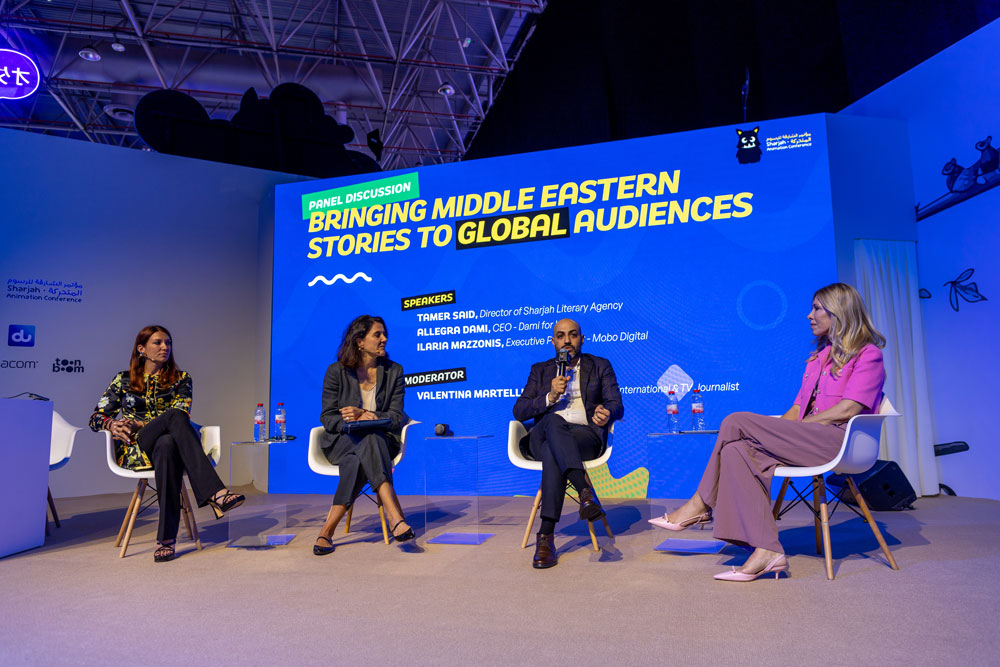
Ilaria Mazzonis arrived at SACC like a bridge between two worlds: publishing and animation. Yes, the list of series she's produced is long and impressive, but it was her approach to content development that stayed with me. She spoke with clarity about what it takes to create an IP that truly works: understanding your audience, securing funding, finding the right format—and pitching until you get it right.
She also addressed a common misconception head-on—that European models, particularly in Italy, are fully formed and functional.
“People often think we’ve figured it out in Italy, but we also have major funding gaps, and we’re still searching for models that actually work. It only works when co-productions come through.”
That honesty resonated with me. After the session, I overheard an Emirati writer say, “I think I finally understood what it takes to actually put a series together. Listening to her talk gave me the insights I needed to get my YouTube show out there.” That kind of shift in thinking is exactly what SACC is for.
4. Raymond Malinga, Uganda – Navigating Through AI
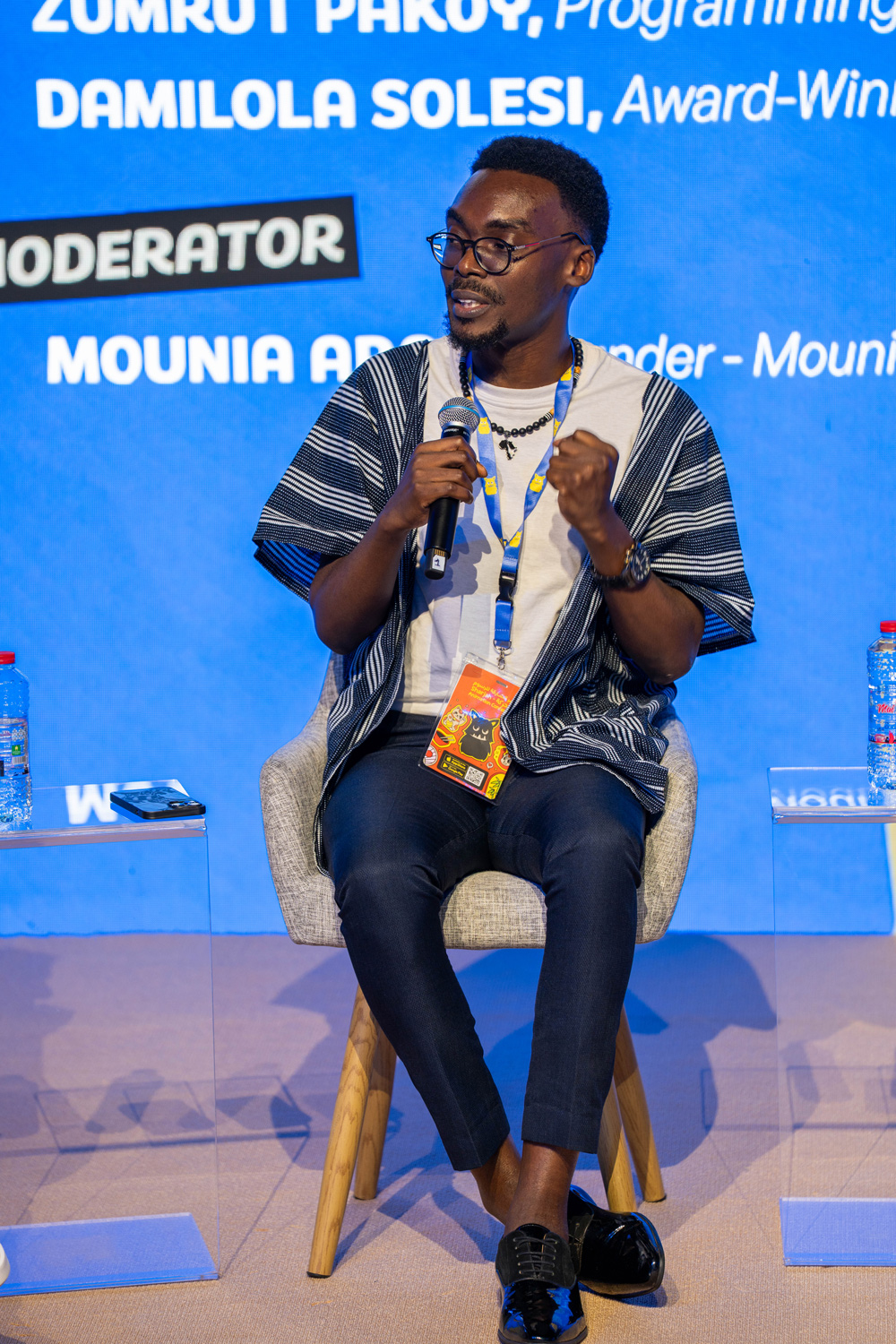
Raymond Malinga doesn’t speak in buzzwords, he speaks in fire and always with sharp humour. The Ugandan animation director and founder of Creatures Animation Studio has been steadily reshaping what animation in Africa looks like, and who it’s for.
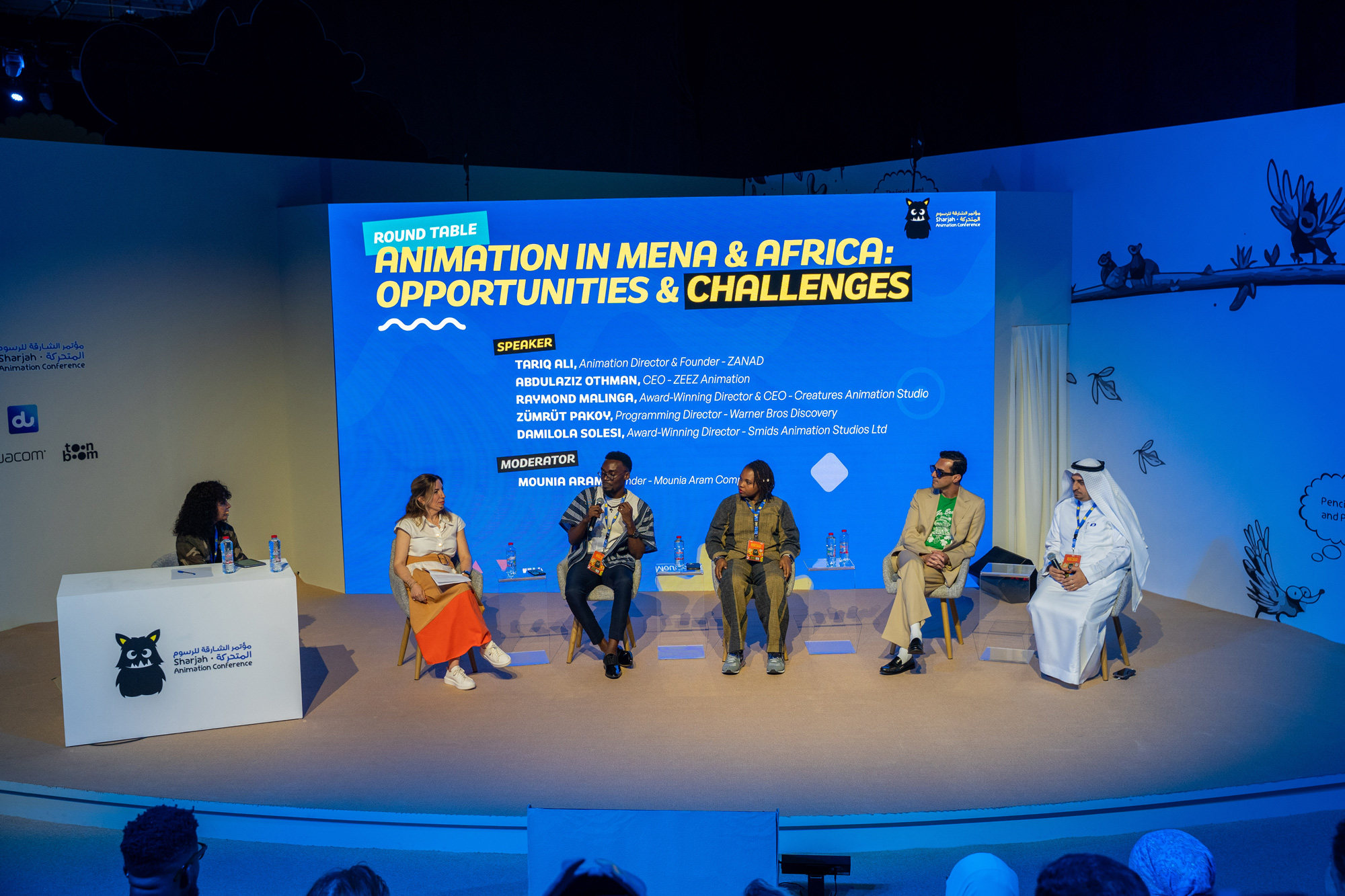
On one of the panels, Raymond addressed a familiar regional challenge often referred to as 'animation envy' — the urge to replicate Pixar-style visuals or European aesthetics in the hope of gaining international legitimacy. But as he reminded the audience, originality isn't a visual benchmark; it's a cultural one.
Then came the elephant in the room: AI. It surfaced repeatedly throughout the conference, often sparking the same binary debate. Will it take our jobs, or won’t it? But Raymond’s take stood out for its honesty and nuance.
“We started playing with AI two years ago, and every time we got closer to what we wanted, a new tool came out and we had to start all over again. I think if the future is in AI, it’s inevitable that studios build their own models and train them rooted in their own culture and traits.”
While others gave black-and-white answers, Raymond offered something more valuable: a grounded, pragmatic outlook. His perspective didn’t deny the threats of AI but reframed the conversation, moving it from fear to ownership.
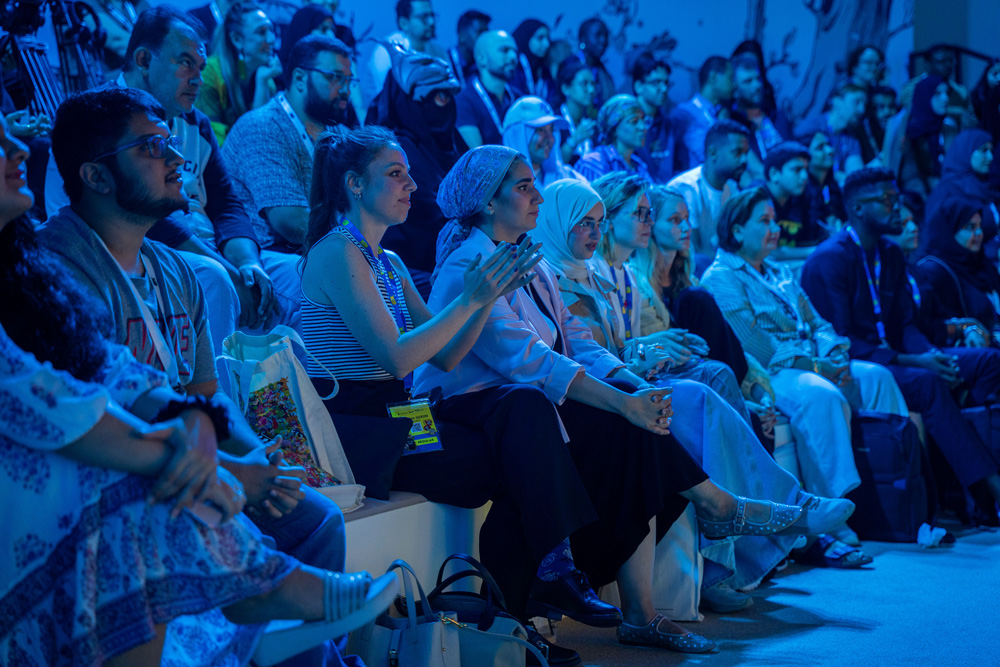
Images from the 2025 edition of the Sharjah Animation & Comics Conference, [courtesy of SACC]
5. Mohamed Ghazala, Egypt – Removing the Western Gaze
Listening to Dr. Mohamed Ghazala talk about animation history doesn’t feel like a lecture, it feels like an excavation. During his talk with Mt7rk about 90 Years of Animation in the Arab World, it felt like time travel guided by someone deeply and emotionally invested in the past. If he can’t find the information he’s looking for about a pioneer animator, he’ll literally get on a plane and track down a surviving family member to ask them in person.
What’s even more compelling is the way he talks about how we frame animation itself. In a quiet moment after his talk, he told me he avoids using the phrase 'Arab animation'—too narrow, too simplistic.
"There’s no such thing as Arab animation or Japanese animation. There’s just animation, made in particular socio-political contexts."
He reminded us that the first animated film in the Arab world, Mish-Mish Effendi, wasn’t created by native Egyptians, but by the Frenkel brothers—Jewish immigrants from Belarus who found a home in Cairo. Ghazala doesn’t just preserve history. He interrogates it and reminds us that where stories come from is just as important as how they’re told.
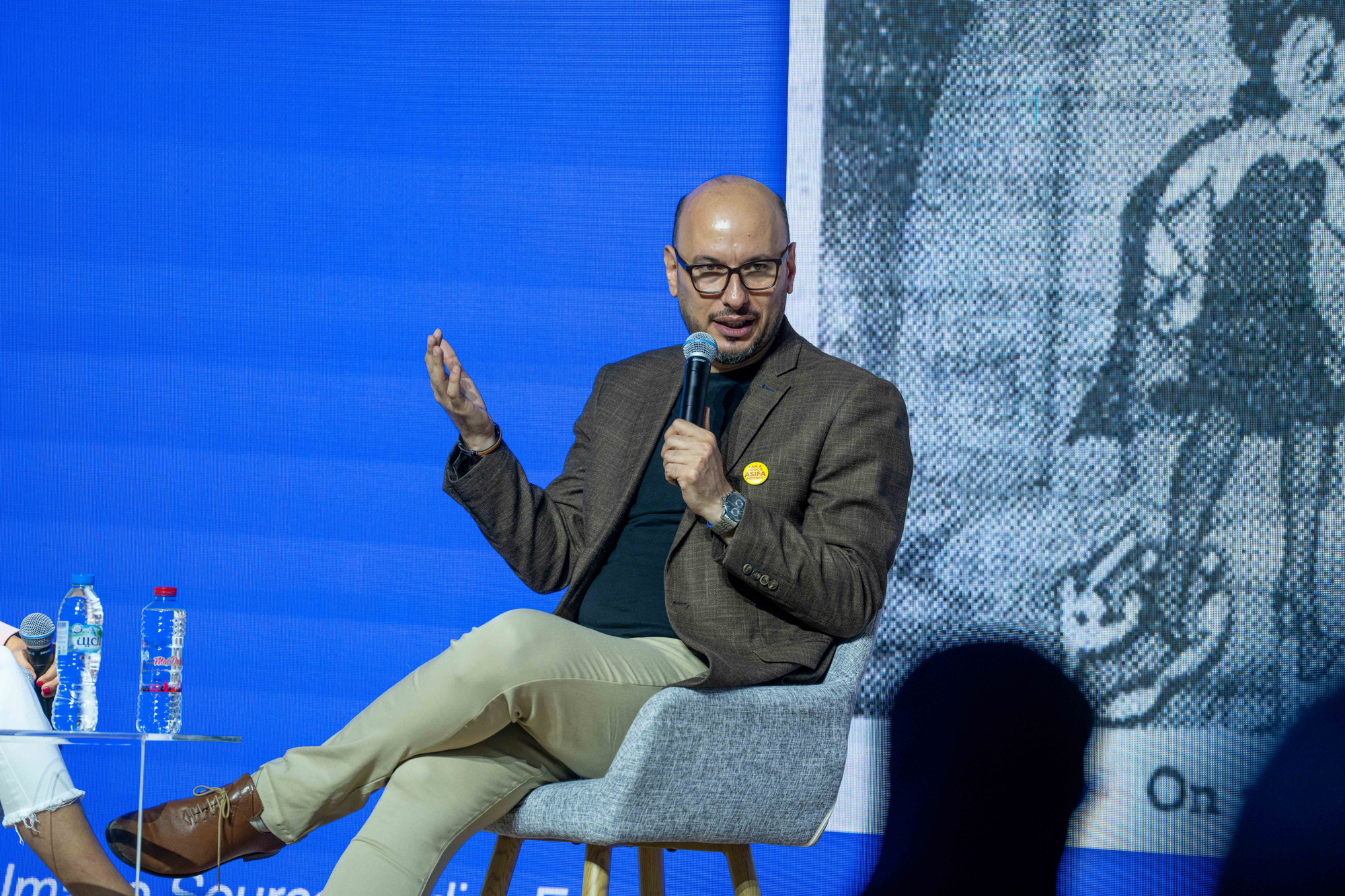
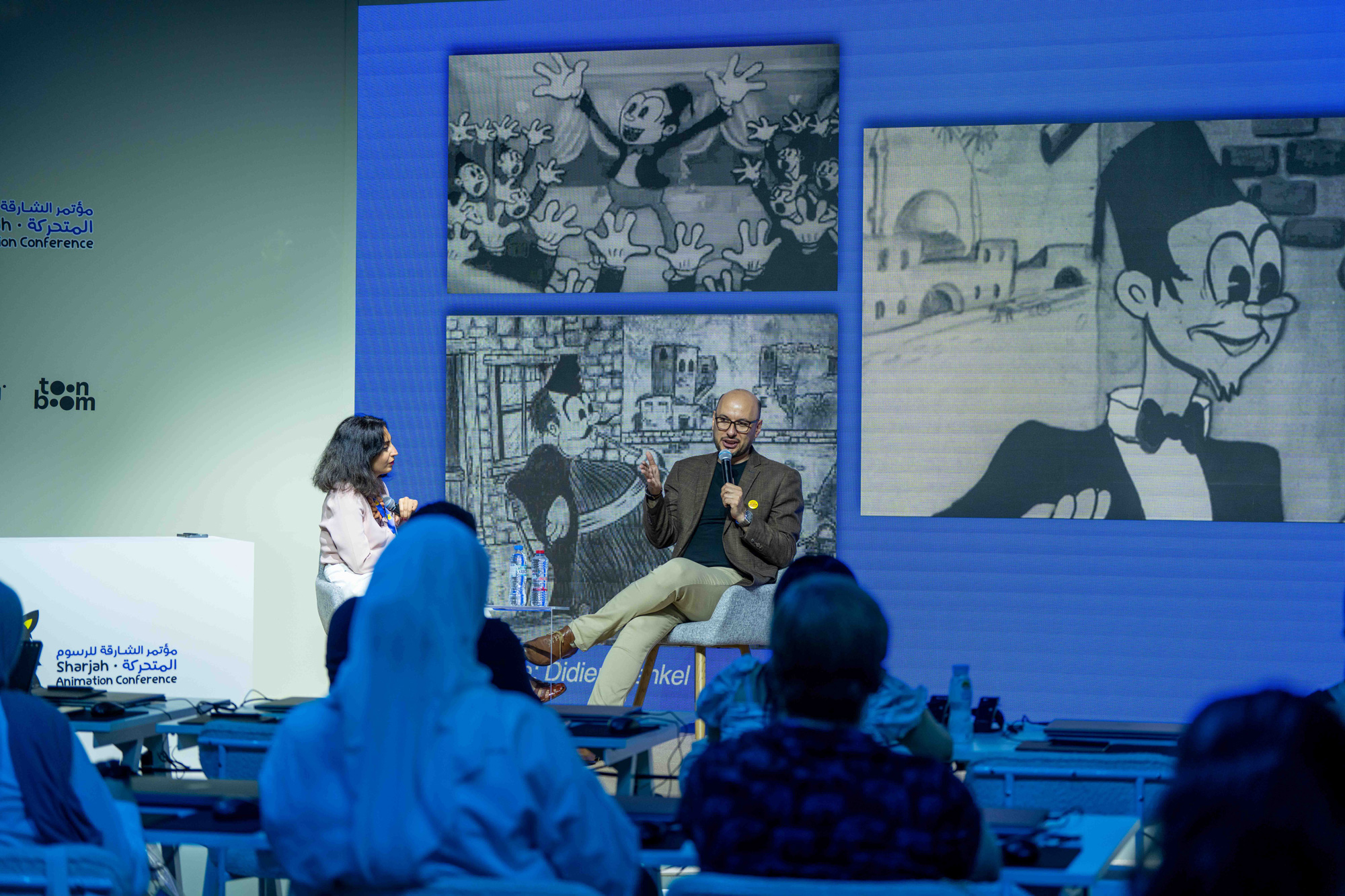
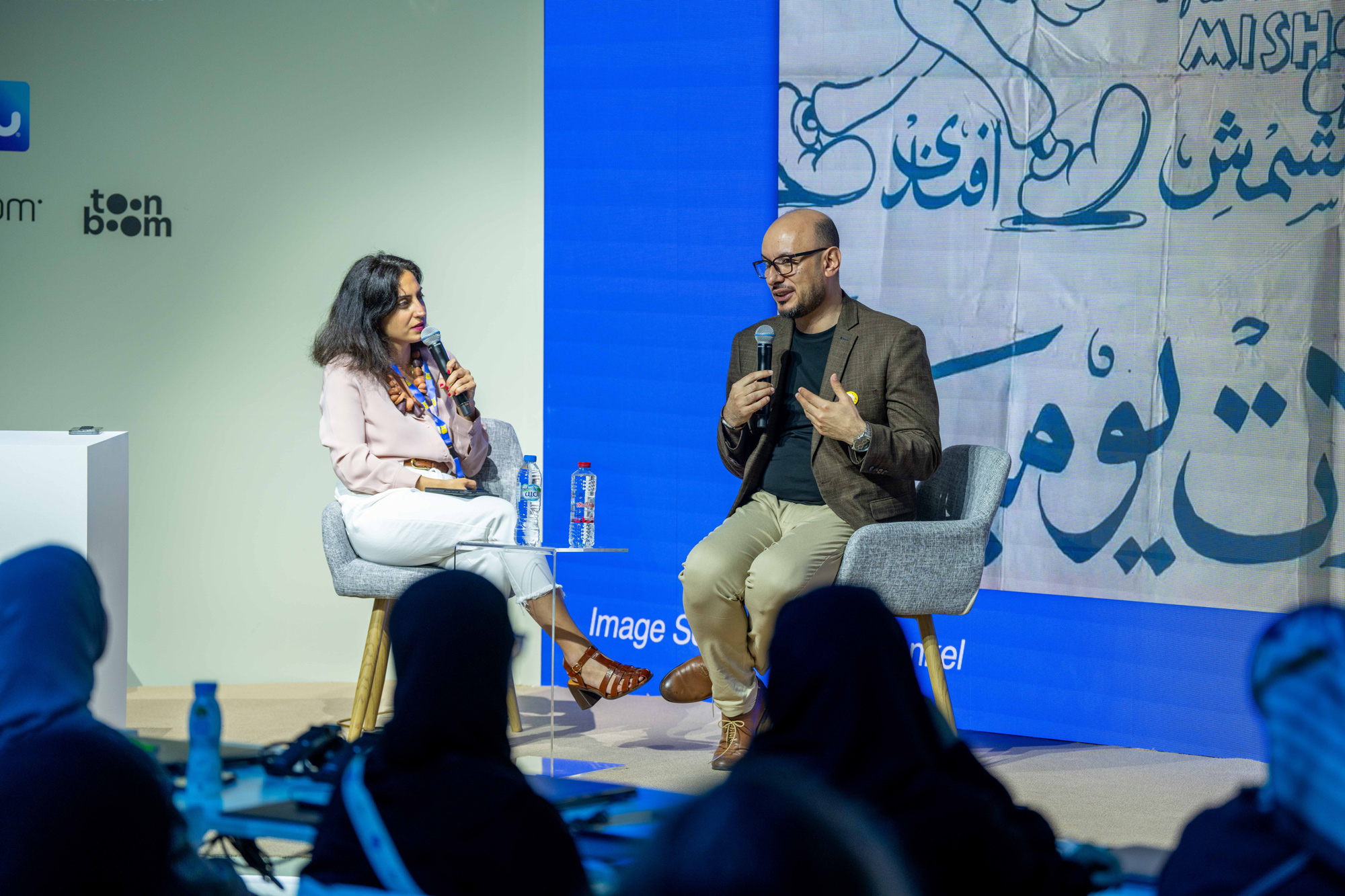
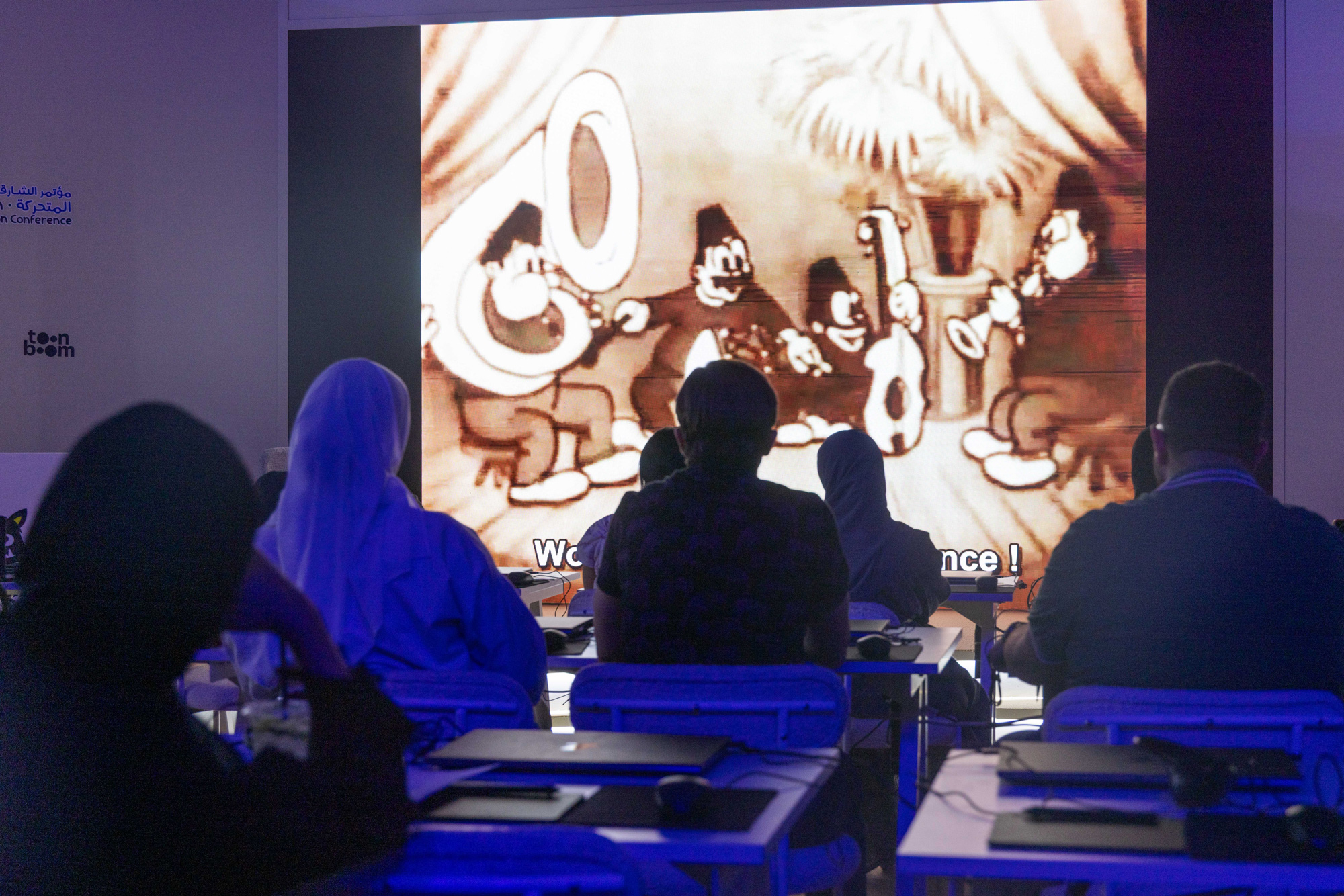
Images from the 2025 edition of the Sharjah Animation & Comics Conference, [courtesy of SACC]
There’s a particular kind of clarity that emerges when you listen to people who are deep in the work—not selling it, not theorising it, but living it. Each of these practitioners operates from a unique context and set of struggles, yet all are united by a refusal to settle for borrowed frameworks. Whether it’s the revival of nursery rhymes in Swahili or the excavation of 90 years of animation history, what threads them together is a fierce, unwavering sense of why they do this work.
I left Sharjah with a to-do list I still haven’t fully unpacked. But more than anything, I left with a thought: maybe the future of our region’s animation industry isn’t about breaking into international markets. Maybe it’s about building our own ecosystem—on our own terms.
"The Sharjah Animation & Comics Conference feels like it’s becoming just that: not only a pillar, but an increasingly unmissable meeting point for regional and international professionals who are committed to shaping an animation industry that reflects who and where we are."