Blender, or the Infinite Value of the Free and Open Source
After long being shunned as the weird, self-righteous kid in the corner of the 3D playground, Blender has finally garnered mainstream appeal, gaining wider adoption within both the industry and mainstream crowds.
Will it Blend?
Popular studios are jumping aboard the open source hype train and switching over to Blender, most notably Epic Games, with its 1.2 million dollar grant, and Ubisoft Animation Studio, which switched completely to Blender. Numerous Blender-centric productions received critical acclaim, including the Oscar-nominated animated feature “I Lost My Body”, helmed by Jeremy Clapin, as well as the Canadian-based Tangent Animation’s new Netflix series, “Maya and the Three”, following the success of its Netflix commissioned feature, “Next Gen”. Other recent standouts made with Blender also include Love Death Robot’s Automated Customer Service and Alberto Vazquez’s latest animated epic, Unicorn Wars.
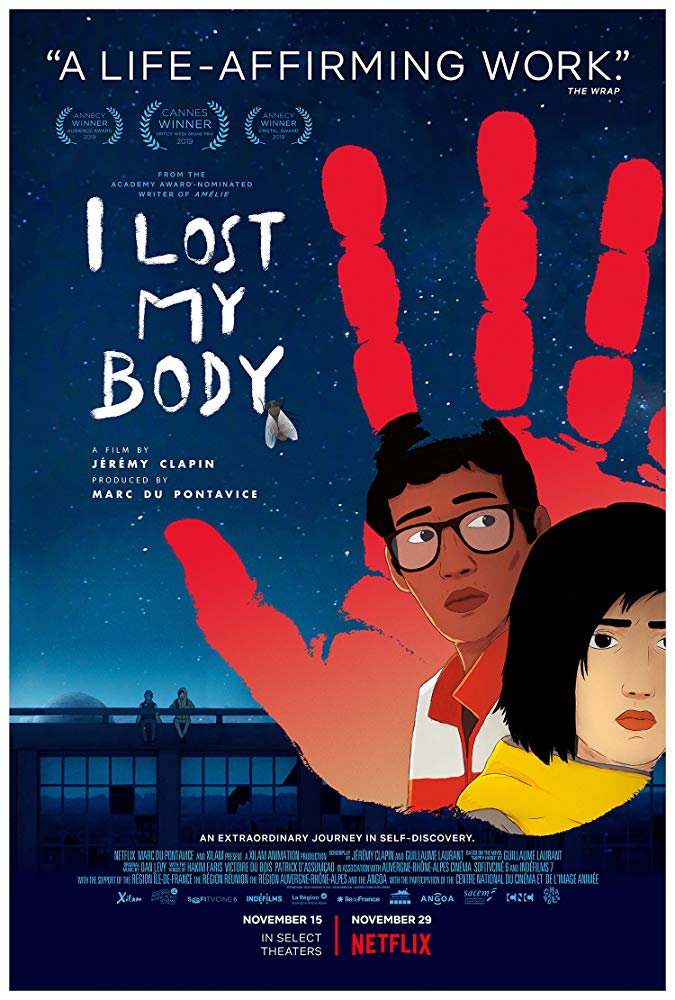
on Blender and released by Netflix.
Blender has proven its chops as a “serious” battle-tested contender to the behemoths of the 3D industry, all while being one hundred percent open source and free.
That being said, the e-ther still echoes with faint but persistent sighs, lamenting the hassle of upending tried and tested workflows, all while grappling with Blender’s infamous interface. Sigh no more! Blender 2.8 and onward not only streamlined much of the nightmare-inducing UI but in the process transformed itself into a solid, viability for any non-Western studio or artist.
A Financial Contender To the Hassle of Piracy
Blender is not only offered at the wallet-warming price of $0; it is also open source. Being open source has many perks, one of them being that any party can add advantageous features to the software. Over the years, this has led Blender to grow into an all-in-one software capable of handling any animation project from start to finish — having its own render engines, compositor, and video editor, in addition to a full 2D and 3D toolset.
Blender also has bleeding-edge capabilities usually covered by specialized software, such as smoke and fluid simulation, hair and cloth solvers, Grease Pencil which is a groundbreaking 2D animation framework in 3D space, the revolutionary EEVEE real-time rendering engine, the production-proven GPU path-tracer Cycles, to name a few. For an Arab outfit competing against unfavorable exchange rates (due to weaker currencies and lower GDPs) than their Western counterparts in general, this could amount to massive savings, which gives room for bigger teams and bigger projects.
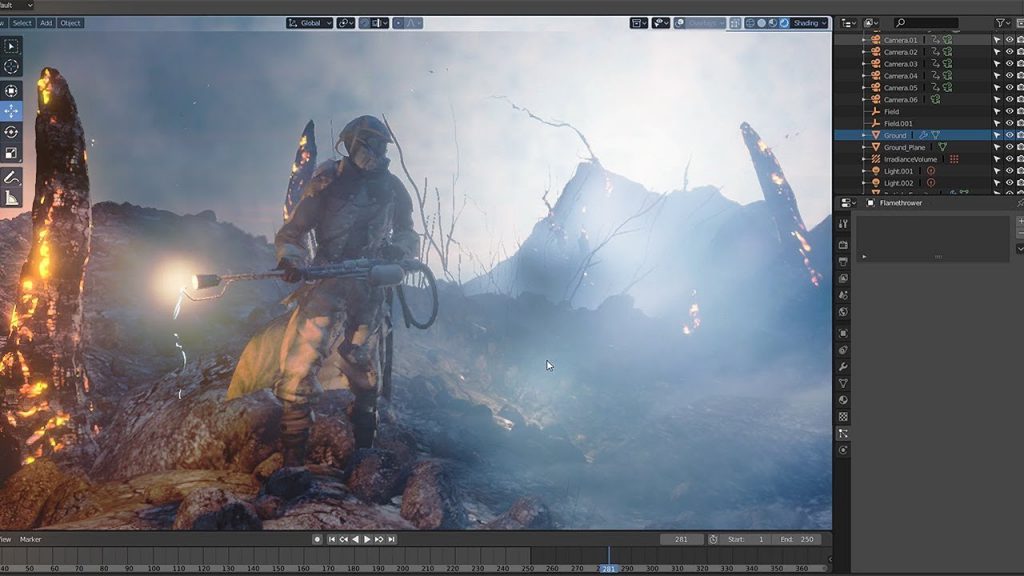
real-time viewport render engine, EEVEE.
Here is some rough math to demonstrate the potential savings on one station (per year) for each phase of an animation project:
- 2D/animation/storyboarding/video/editing: $360 Adobe Creative Suite subscription
- 3D modeling and animation: $3,090 for a 3DS Max and a Maya yearly subscription
- Sculpting software: $895 for a Zbrush license
- Compositor: $4,988 for a Nuke license
- Texture painting: $219 for a Substance Painter yearly subscription
- Renderer: $500 for a yearly Redshift subscription
This totals $10,052 for only one license per software, which covers only one seat in a studio. Extrapolate this calculation over a larger team, and the unsustainability of these costs becomes evident to smaller, MENA-based outfits, especially when envisaging a double-digit team for bigger animation projects. Japanese anime studio Khara delved deeper into the issue of larger teams with moderate to low budgets being better served by the free and open-source model in an interview after switching their production to Blender.
Blender, as such, is free and feature-complete, presenting itself as an ideal alternative to the widespread practice of piracy, the glaring elephant in the studio. Individual and smaller outfits in the region were willing to accept increased security risks, stability and compatibility issues, as well as obvious legal and moral issues, in exchange for being able to work professionally and competitively in animation at all. Blender 2.8 offers a stable, safe, legal, and cutting-edge 3D environment without harboring any unwanted large trunked mammals around.
Like and Subscribe
For a while now, the 3D software industry has been moving towards a subscription pricing model, spearheaded by the two massive “A” corporations: Autodesk and Adobe. Adobe recently purchased Allegorithmic, the maker of the critically acclaimed Substance shading and texture painting suite, and promptly switched their pricing model from license-based to subscription-based, drawing the ire of the consumers at large. Subscription models are particularly dangerous for studios and artists based outside the global West, in regions prone to disturbances in the political economy.
Adobe made headlines when it announced it was cutting off users in Venezuela due to US sanctions, sending thousands of professionals into a frenzy as they tried to download what they could save from the cloud before getting locked out. They later rescinded this decision after some political maneuvering, but this incident exposed the vulnerability of emerging markets relying on subscription-based software.

The current Lebanese financial crisis revealed another brick in the paywall: The Lebanese banks are imposing draconian restrictions on international dollar payments, and are in many cases banning any foreign and online purchases completely, locking out many artists and professionals from their subscription-based software of choice. This devolution took place in the space of mere weeks, taking most of the affected by surprise.
Other than being impervious to the capricious nature of corporations and their ever-shifting interests, Blender’s free and open-source model proved superior in one more unexpected case: It is pandemic proof. While the animation industry’s ITs and TDs banged their (masked) heads to tame the quagmire of server licenses and online authenticators needed for the suit of proprietary software to run in a work-from-home environment, Blender’s migration was a simple matter of re-downloading the freely available executable, installing it, and carrying on.
Blender is thus immune to the whims of global politics and financial markets, and (you can quote me on this) even from apocalyptic events.
100 Lonely Deaths
Blender as an open-source software offers two more advantages: Community-sustained longevity and modularity.
Since its first release in 2002, Blender has lived through the unfortunate deaths of numerous 3D software, those suffocated by the competition or led astray by bad management trying to appease shareholders, including many previous juggernauts such as Softimage XSI, Carrara 3D, and Bryce 3D, to name a few. By design, Blender can’t face this fate, thanks to having a huge community contributing to it daily, with many studios developing their own Blender forks especially suited for their in-house needs— the GPL license ensures that all modifications made to Blender are freely available.
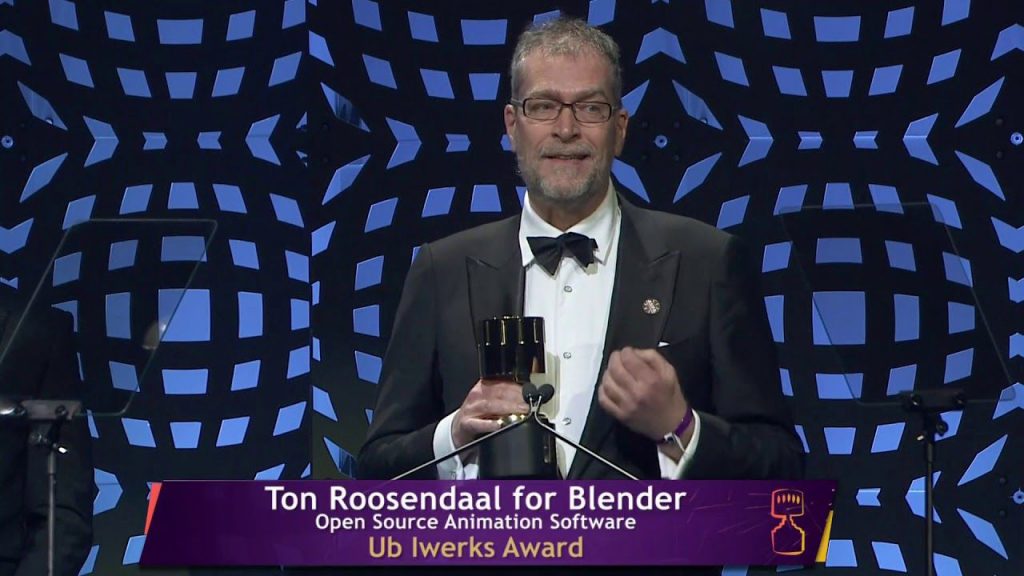
the prestigious Ub Iwerks Award.
This longevity provides the necessary stability for the nascent animation industry in the Arab region to grow, freeing studios from the burden and cost of having to retire software every few years, after all the time and money they invested in it.
The huge community and modularity of Blender also offer a novel avenue for support, where plug-ins and hotfixes can be quickly developed within the local and/or international user base, such as this user-created Arabic Text add-on. Thousands of free add-ons exist for Blender already, covering all use cases imaginable. With Blender downloads numbering in the tens of millions, any issue or question can be immediately dealt with within the community and language of choice, which is a particularly enticing option for regional studios oceans away from “headquarters” and support centers.
Open-ended
There has been no better time to jump into open-source ecosystems because of how mature they have become and how locked down their proprietary closed-source counterparts are. This proposition becomes even more attractive viewed from an emerging animation market perspective.
The cherry on top: All of Blender’s award-winning might is packed in a lean 133MB package, braving the slowest internet speeds and the smallest bandwidths, fit for the most telecom-challenged studios of our region.
Categories: Trends