Anime in the KSA: A Cultural Project Spanning Decades
The story of Saudi's passion for anime spans across decades, leading to today, where it seems to be encouraging a revolution in animated content creation.
In November 2019, Saudi Arabia held the biggest Anime Expo the region had ever seen as part of the Riyadh Season Festival. To long-time fans’ delight, the CEO of Saudi Arabia’s General Entertainment Authority, Faisal Bafarat, announced plans to return "Captain Tsubasa" to the small screen on MBC. Better known to our part of the world as "Captain Majid", the 80s anime’s popularity is still prominent in Arab popular culture, alongside the red and yellow space robot "Grendizer", both of which rank at the top of all-time favorite anime series among Saudis according to a YouGov survey conducted by Arab News in October 2019.
Japanimation’s history in the Middle East dates back to the 1970s when the fast economic development in the Gulf manifested in demand for broadcast entertainment programming, especially targeted at the youth. As a result, the GCC Joint Program Production Institution was founded in Kuwait in 1976, pushing programming on a pan-Arab scale.
Under conditions of low financial investment in entertainment and a need to provide children’s programming quickly, the institution resorted to one of the most prolific entertainment industries at the time: Japan.
Several anime series were dubbed into Arabic, altering scripts to fit Arab values and tradition. The themes of social responsibility, family obligations, honor, duty, and unity tackled in cartoons like "Captain Tsubasa", "Grendizer", and others, echoed many cultural values of the developing Gulf countries at the time, contextualizing anime as a source of inspiration and reflection for Arab youth.
Japanimation’s history in the Middle East dates back to the 1970s when the fast economic development in the Gulf manifested in demand for broadcast entertainment programming, especially targeted at the youth.
By the time the Middle East Broadcasting Center (MBC) launched in the early 1990s, Japanimation was a regular feature in television programming in Saudi Arabia. Its accessibility through free-to-air satellite broadcasting and the impeccably done adaptation and dubbing work drew audiences into the worlds of shows like "Dragon Ball" and "Pokémon".
Y2K anime and manga comics inspired a whole generation of Saudi artists to pursue animation and cartoon work, artists who are now integral in laying the foundations for the Saudi anime and manga industries. One such artist is Saudi manga artist Samah Kamil, who made headlines in 2020 as the first artist in Saudi Arabia to receive a master’s degree in the art of manga from King Abdulaziz University. Her story reads similar to that of her peers: getting inspiration from growing up in the 1990s and early 2000s MBC1 era.
“'Pokémon' first appeared on MBC1 in the early 2000s, and I loved it,” she tells mt7rk. “I loved the Japanese drawing style, with big eyes and small noses. It was my first inspiration to draw anime and manga.”
"Tale of Proverb Manga" is one of two books Kamil wrote during her studies, a collection of popular Arab and Saudi proverbs interpreted through manga art. Her work reflects how deeply rooted anime and manga are in Saudi Arabian heritage.
“There is a similarity between Japanese and Arabic culture in some traditions, such as respecting the elderly, being kind to children, giving greetings when entering the house, food etiquette, and more. I think these things are similar between us and it shows in Arabic anime and manga,” she explains.
Animation company Manga Productions emerged in 2017 as a subsidiary of the Prince Mohammed bin Salman MiSK Foundation. In line with its mission of producing animated projects that “promote Saudi ideas and messages internationally,” the company’s work seamlessly utilizes Japanimation’s nostalgia-evoking medium to portray locally relatable and relevant stories and retellings and reimaginations of Saudi Arabian history and heritage. Over the span of five years, Manga Productions has worked on joint productions with Japan’s own Toei Animation, the animation house behind legendary titles like "Sailor Moon", "Dragon Ball", and "One Piece".
The Saudi animation house’s first venture with Toei, "Woodcutter’s Treasure" (Kanz al-Hattab), draws on Saudi Arabian folklore to tell an epic treasure-hunting story through anime. The 13-episode show was dubbed in both Arabic and Japanese and aired on Japanese television in 2018 before being aired regionally in Arab countries. More recently, in April 2020, Manga premiered "Future Folktales" (Asatir Fi Kadem al-Zaman), a 13-episode anime television series set in 2050 Riyadh. The show centers around a grandmother enlightening her grandchildren with retellings of some of the Arabian Peninsula’s beloved folktales, positioning the wisdom of these stories as the most powerful tool against modern-day dilemmas.
In early 2020, the company also announced that work on its biggest project to date, "The Journey" (Al Rehla), was completed. Originally slated for a release in the same year at the Cannes Film Festival, the film was then released on June 25, 2021. "The Journey" is one of the kingdom’s first animated feature films, an epic retelling of Saudi Arabia’s history, documenting the events from the founding of the Kingdom in 1932 to the present day. Produced both Japan and Saudi Arabia, Manga Productions fully financed the film, funneling a hefty $10-15 million into the project pipeline, which had renowned director Koubun Shizuno ("Detective Conan", "Knights of Sidonia", "Godzilla: Planet of the Monsters") at its creative helm.
The collaboration came during a turning point in Saudi Arabia’s film entertainment industry: "The Woodcutter’s Treasure", "Future Folktales", and "The Journey", then unnamed, were announced in November 2017, one month after the country’s ban on cinemas was lifted. Additionally, MiSK Foundation signed a memorandum with Japan’s Digital Hollywood University in October 2017 to train Saudi designers and programmers in animation and video game creation.
Recently, Manga Productions went a step further in its production plans and announced a "strategic partnership" with the Japanese company Dynamic Planning to license all rights across the Middle East to “Grendizer". The deal also includes using the anime’s characters “in amusement parks and events in the Middle East,” according to a joint statement by the companies.
And while Saudi audiences are rightfully hungry for more locally-produced content, they were treated to a fully immersive on-ground experience at the 2022 Jeddah Season with Anime Village, which opened on May 19 and ran until the end of June. The village, set up at City Walk in Jeddah, is the first of its kind in the region to provide local anime fans with a variety of activities like cinematic shows and musical performances, inspired by fan favorites "Attack on Titan", "Naruto", "Captain Tsubasa", and more.
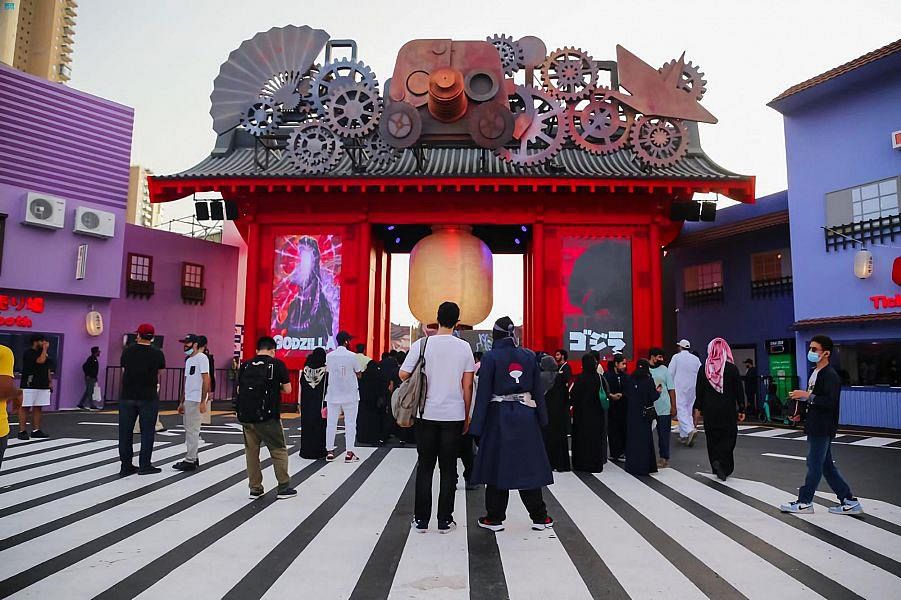
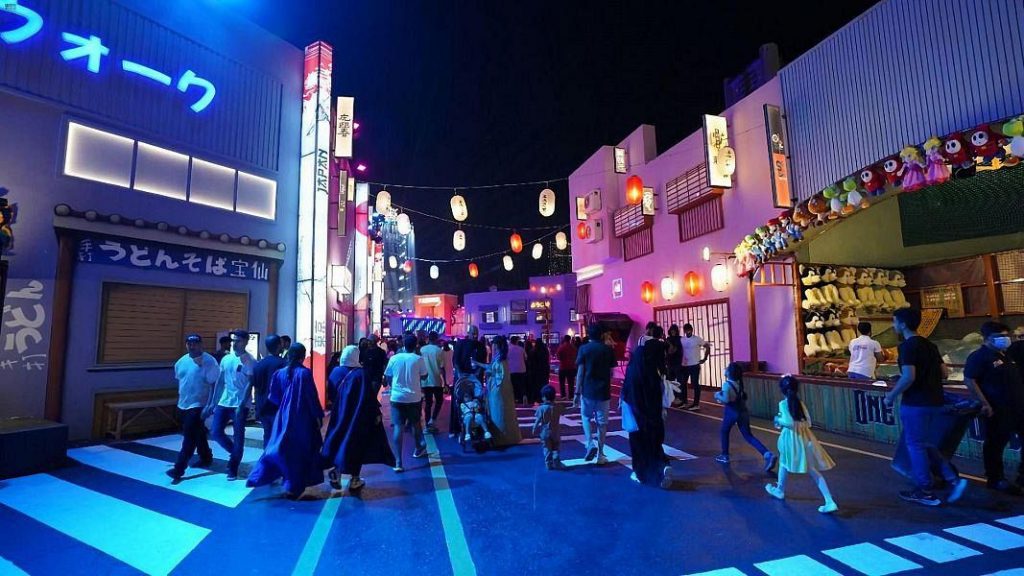
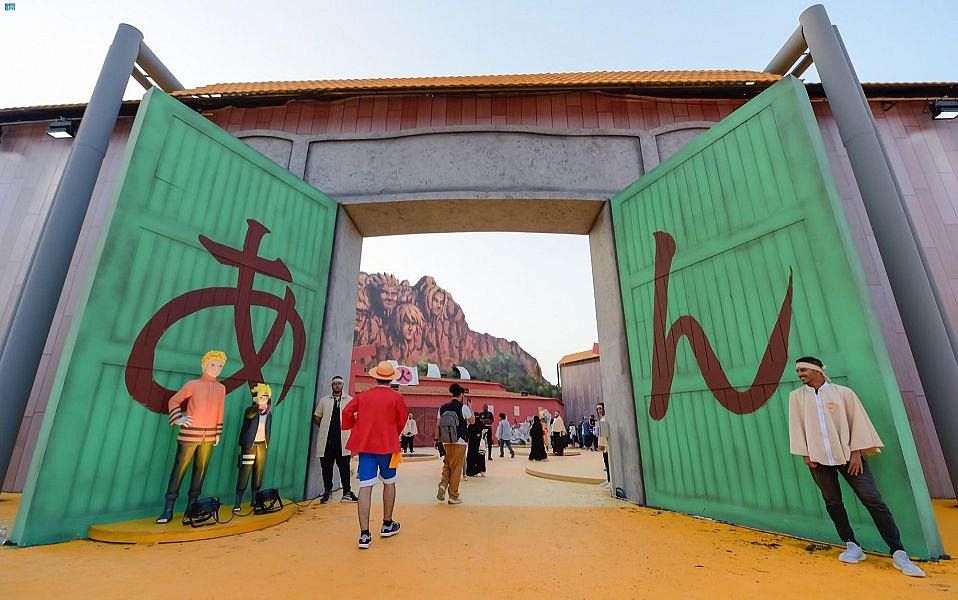
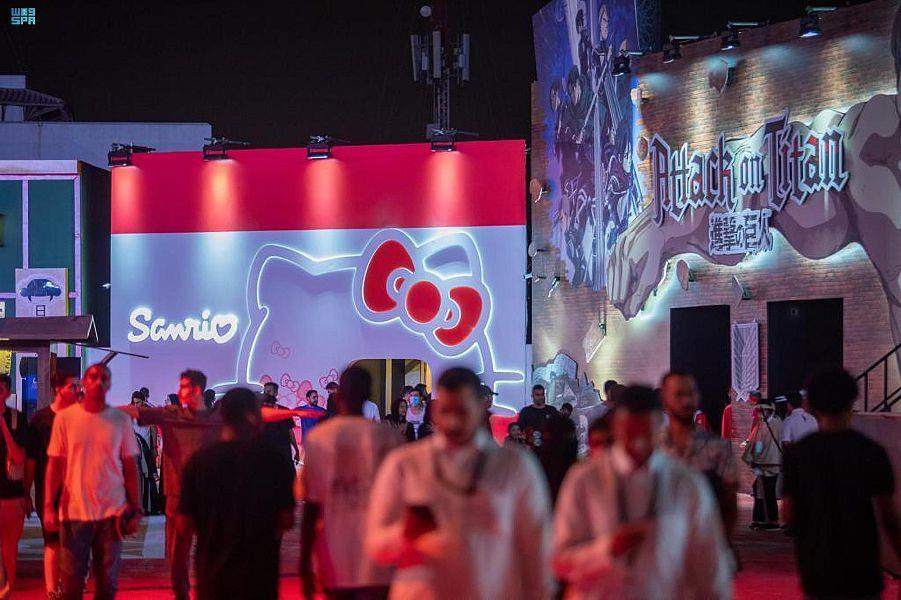
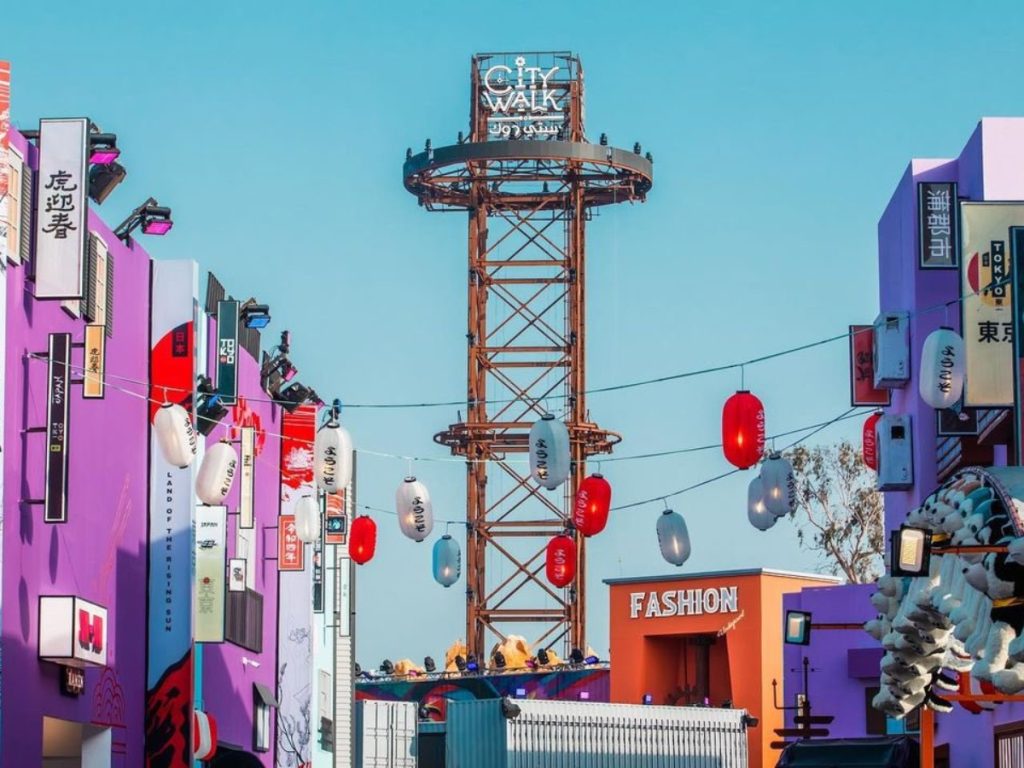
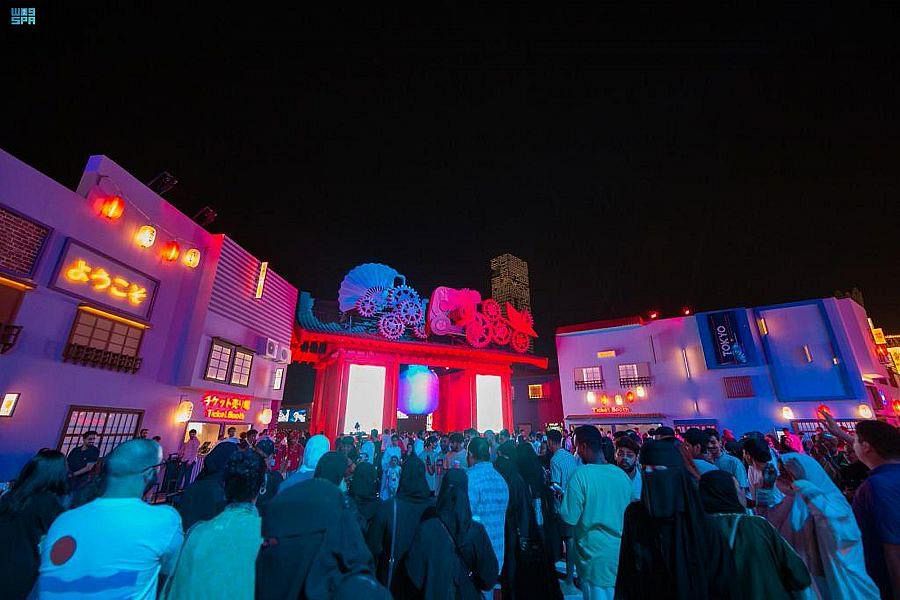
Various shots of Anime Village. [SPA]
Taking part in the event was Saudi Research and Media Group’s Manga Arabia, which was established in August 2021 as an “ambitious cultural project” to inspire creative manga productions inspired by Arab culture and suitable for audiences of all ages. Much like Manga Productions, Manga Arabia’s mission is to fill a gap in the demand for localized storytelling and original content.
In September 2022, Manga Arabia signed an agreement with Malaysian comic publisher Kadokawa Gempak Starz for the debut of the new series of "X-Ventures". The second season of the comic book will follow three young Saudi heroes, granting readers “insight into the fascinating world of oil and energy sources while sparking their imagination,” as reported by SRMG’s Asharq Al-Awsat.
In a region infamous for an underfunded and underdeveloped animation sector, Saudi Arabia has managed to kickstart a revolution in animated content creation[...]
Many of these efforts come within the context of Saudi Vision 2030, a development program launched in the Kingdom in 2016 aimed at reducing the country’s dependence on oil and diversifying its economy by developing public sector services, notably the entertainment sector.
In a region infamous for an underfunded and underdeveloped animation sector, Saudi Arabia has managed to kickstart a revolution in animated content creation by producing local anime that continues the tradition shows like "Grendizer" and "Captain Tsubasa" started many years ago. This time around, the stories are more local, the values closer to home, and the intent more forward-looking than ever.
Categories: Trends