Ahmad Saleh’s Stop Motion Short “Ayny” Warrants a Double Take
Ahmed Saleh's "Ayny" is a poetic fable made in stop-motion that unveils itself the more you watch it.
Years ago, I watched “Ayny” (“My Second Eye”) and wrote a short review of the award winning, stop motion short that never got published. A few traumatic years on and I find myself drawn back to this short film as a potent example of how one processes the kind of trauma common in the region for both its creator and the audience.
“Ayny” is an eleven minute stop-motion film directed and written by Ahmed Saleh and co-produced by Germany, Jordan, and Palestine in 2016. Since its release, the film has won over 20 international awards, including the Student Academy Award for Best Foreign Film in 2018. It became the first animated film from the Arab world to win an Academy Award.
“Ayny” is a surrealist poem about two young brothers who leave their mother’s protection and journey into a world beset by danger of war, both dreaming of playing music on a magical oud. Not much else should be said about the “plot” other than urging audiences to take the time to watch this film- twice if possible- to allow it to really sink in.
Despite being over seven years since its release, the film still means a lot to Saleh. “I feel I never left it to reflect back on it. I still tour with my short films in a mixed performance of film screening and storytelling on the stage. I just shared the story with an audience in Singapore last Friday. I did really mean it when I said in the acceptance speech [for an award] that I want to keep telling the story again and again and again. Also, while developing new stories, it became natural practice for me to look back at "Ayny", I keep analyzing it over and over to remind myself of my own voice of storytelling. Symbolic, magical, and yet, very real,” wrote Saleh when asked.
“Ayny” was inspired by a memory (or a “scar”) lingering within Saleh from an incident years ago during a visit to his relatives in a refugee camp in Palestine. As Saleh tells it, while on a walk with his cousin in the camp in the occupied West Bank one quiet day, suddenly an explosion occurred. It seemed children had triggered a bomb leftover by the Israelis and Saleh found himself carrying the bodies of two young boys to the hospital. That encounter with chaos, debris, and blood left deeply impacted Saleh, so much so that he felt an immense personal responsibility to share that experience with as many as possible - hence, “Ayny” began to take shape.
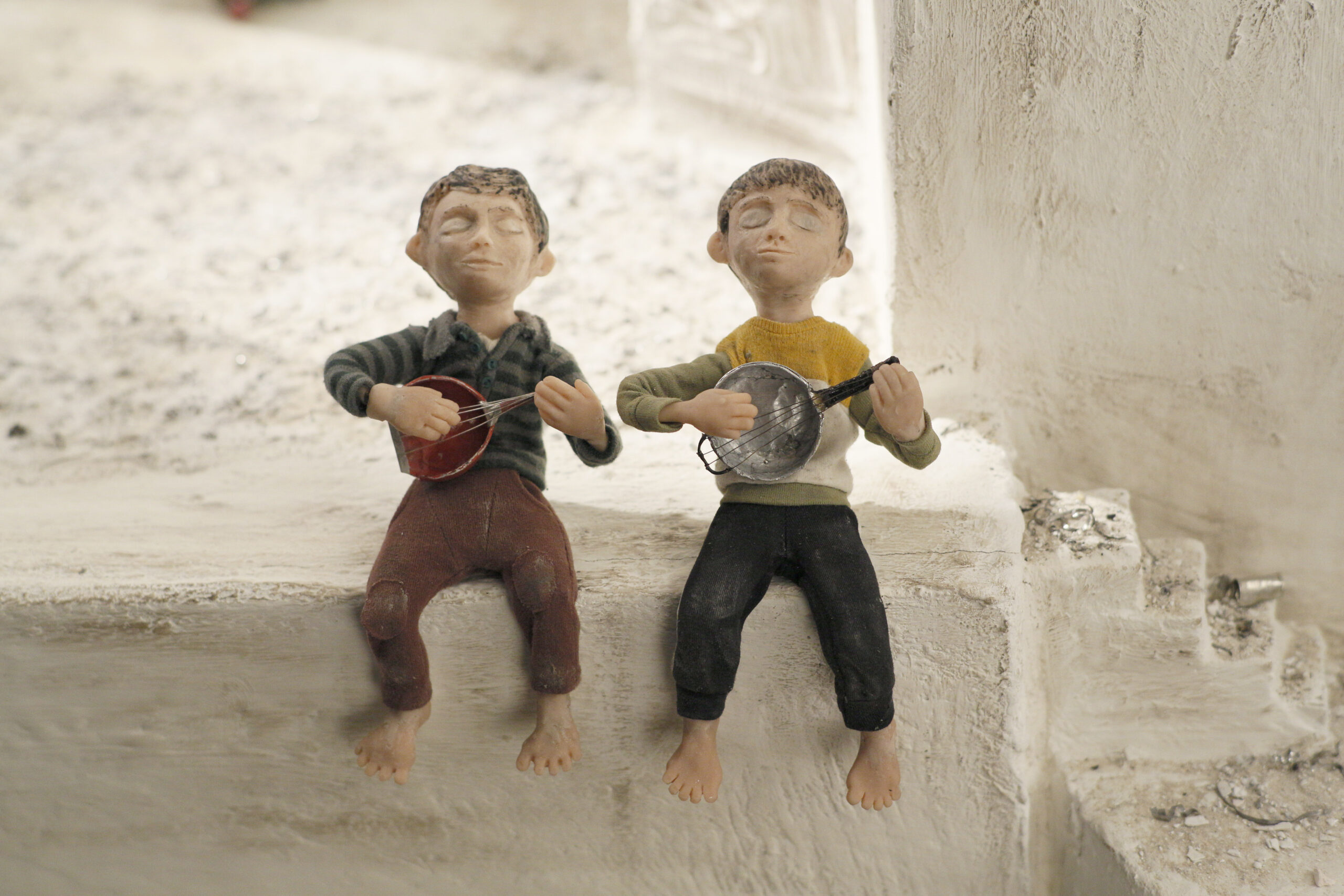
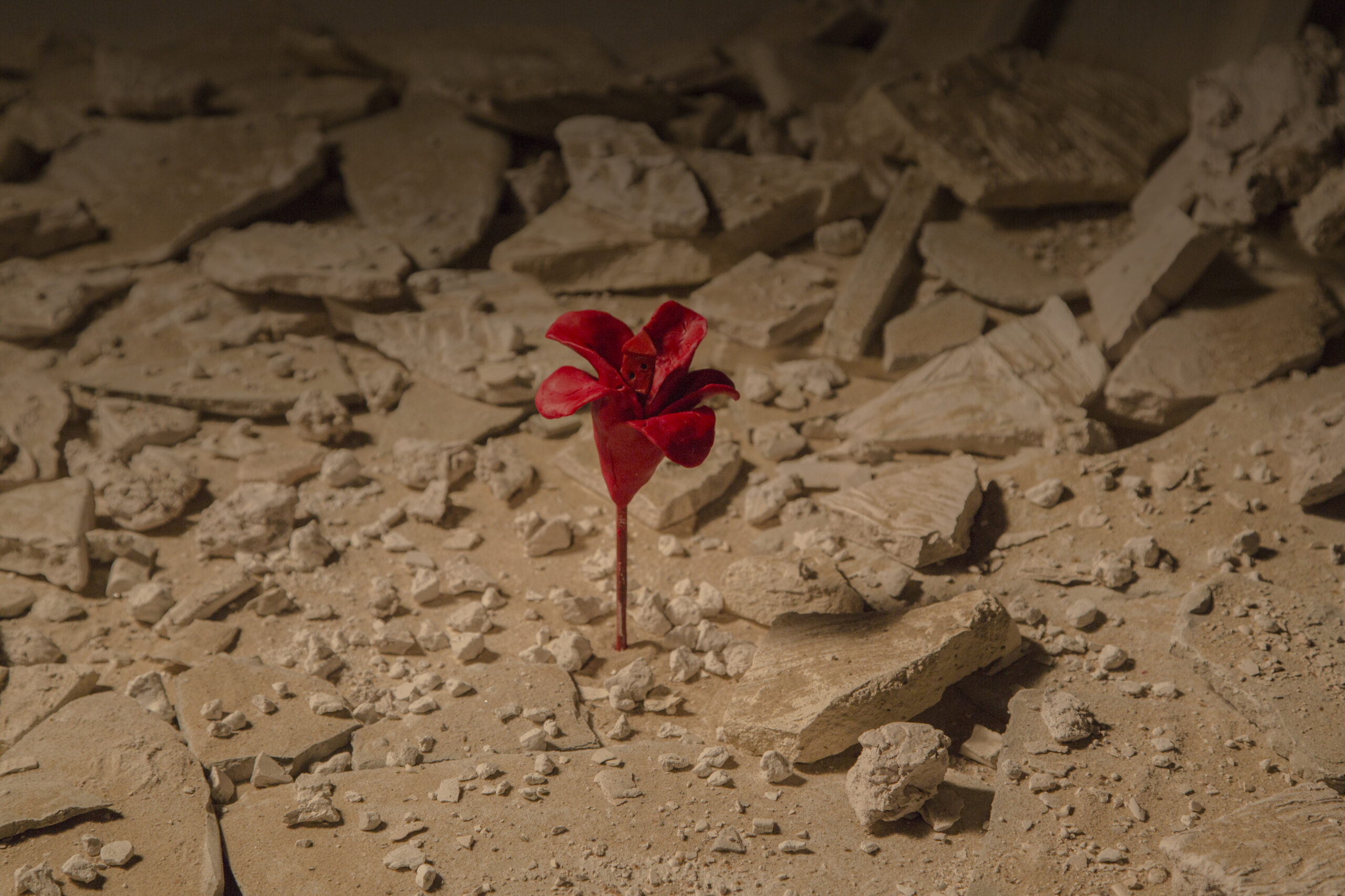
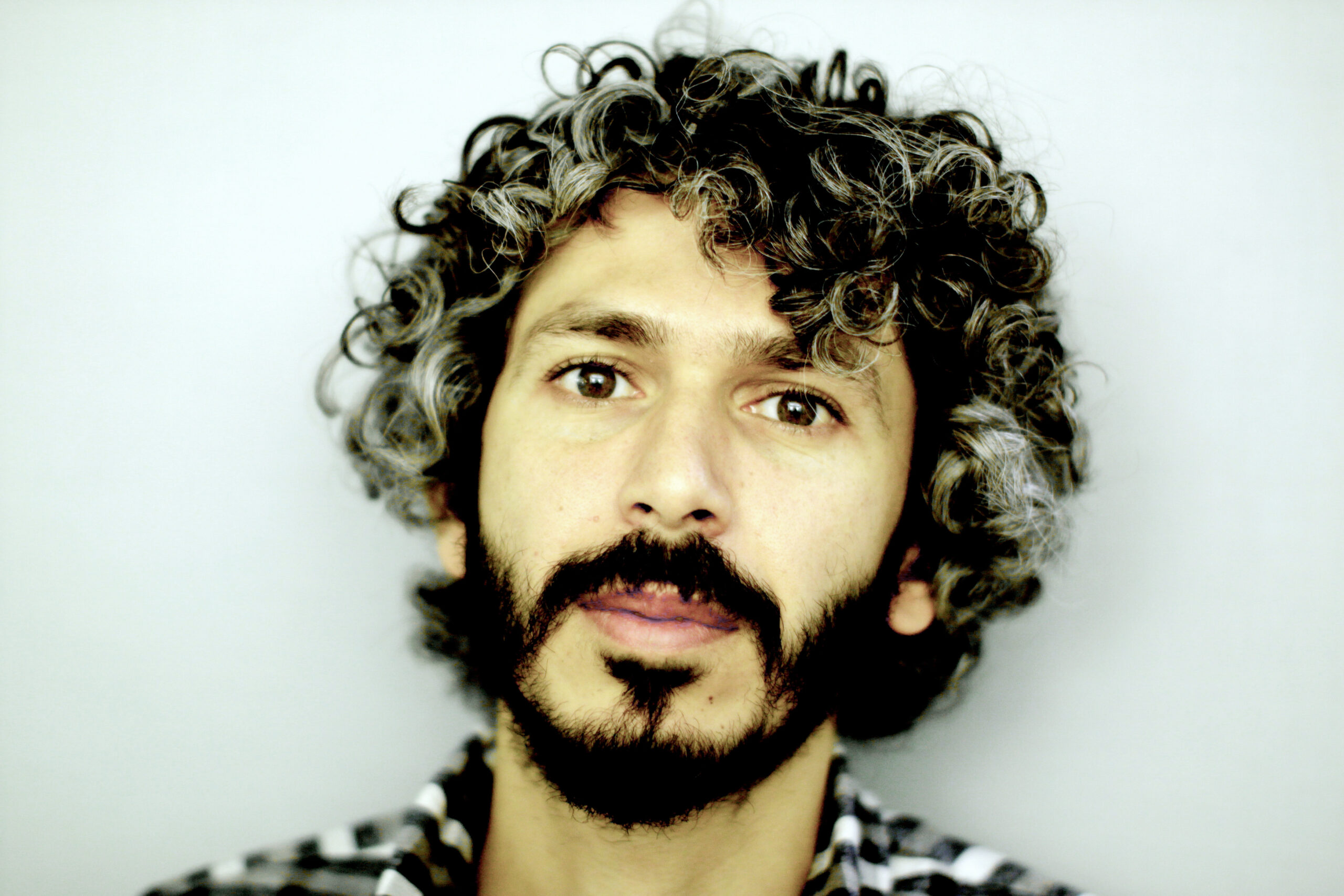
Ahmad Saleh and stills from "Ayny".
This is a story about traumatic topics: war, destitution, and dispossession. But there are no direct depictions of violence in this haunting, emotionally heavy story, with the fear, pain, and sacrifice looming off-screen. To universalize his tale, Saleh relies on allegory and symbolism, with viewers not explicitly told what is happening, instead becoming silent witnesses as they are guided through this dream-like journey by music and a poetic voiceover by Saleh himself. No names, dates, or distinct geographic indicators are represented; this could be anywhere and anytime. This is a fable with conflicts conveyed allegorically. Instead of a firm “no”, a mother tries to dissuade her children from going on their fateful walk , by saying, “The tree is not a tree, and the sky is not free.”
To further help in making this tale accessible, Saleh points to the technique of stop-motion animation.
“Animation in general opens the door to specific storytelling; it breaks the physical boundaries and gives room for abstraction. Our choice to use stop-motion animation is driven by the need to make the line between magic and real as thin as possible,” Saleh noted.
“[T]elling the story through animated figures helps reduce the heaviness of the situation, which allows the audience to stay close to the subject without blocking their thoughts and feelings. At some points of watching the film, you feel like you are looking at real people and real environments and at others, you feel like you are looking at handmade characters and setups,” he added. “To me, that reflects the feeling I had while witnessing the real stories. That realization of the realness of the situation but at the same time not believing how people were acting in the real event, feeling that I was witnessing something magical.”
I agree with Saleh’s intention. Stop-motion invokes a sense of sentimentality and innocence, summoning memories of playing with toys in a sandlot. The story fits snugly within this medium since it disarms the viewer, and allows heavy emotions to seep in. We are drawn to these two boys, we want them to succeed in their dreams of playing music for everyone. We fear what gets in their way. It is as if the medium strips away the harsh reality enabling the viewer to empathize with innocent poppets and understand this animated world outside of the confines of politics.
On the other hand, the process of making the film itself acts as catharsis for Saleh,. Stop-motion, like all of other types of animation, requires focus. Every shot, set, and action is crafted and sculpted manually through a highly labor-intensive process.
“Stop-motion animation is definitely the most time-consuming and hardest to produce among the animation techniques. But there is something magical about the realness of it and how the textures and the imperfection add to its charm. Using the camera and lighting to capture scenes, makes it the closest to live-action cinema. I often joke that making a stop-motion film is just like making a live-action film, with one difference, you work with actors who never existed and you need to make them. And after you make them they are not willing to move or do anything. They just stare at you waiting for you to come and move them,” Saleh remarked.
This is a beautiful brief fable, heavy with massive emotions about war and loss. It beckons to be engaged over and over again like a faded scar over time.
Categories: Reviews